The Value of NT-ProBNP in Predicting Cardiovascular Events in Patients Hospitalized for Decompensated Heart Failure
Abstract
Background:
Serum levels of natriuretic peptides at hospital admission and discharge, as well as their percentage reduction (delta NT-proBNP), have been associated with cardiovascular outcomes in decompensated heart failure.
Objective:
To evaluate the prognostic accuracy of NT-proBNP parameters and determine the usefulness of in-hospital percentage reduction targets.
Methods:
This was a retrospective cohort study including patients ≥18 years old admitted to a heart failure protocol between January 2022 and December 2023 at a tertiary hospital. The primary outcome was a composite of all-cause mortality and readmission for heart failure within 6 months.
Results:
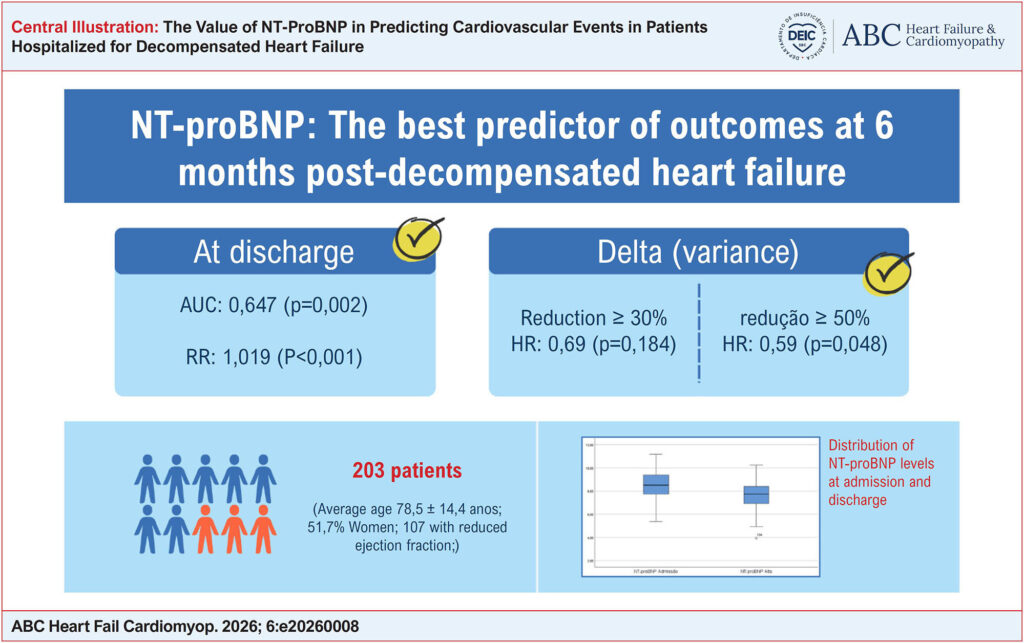
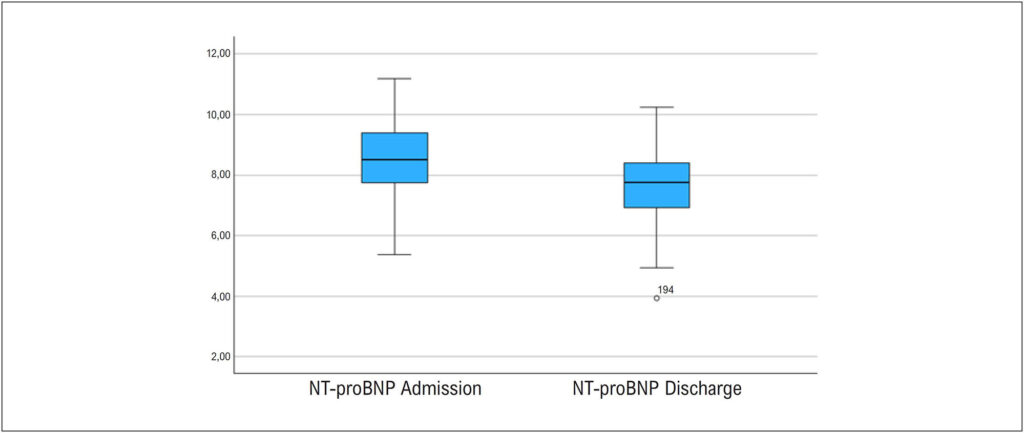
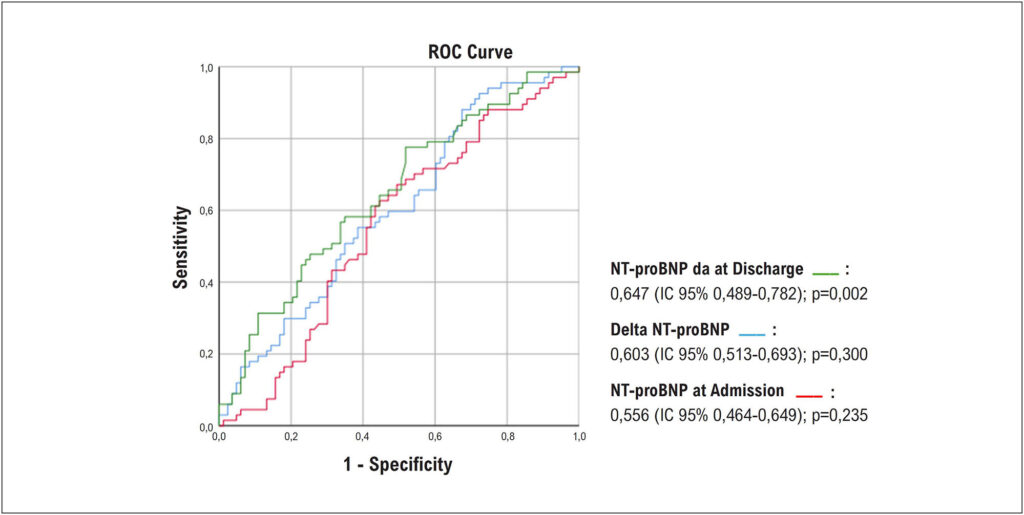
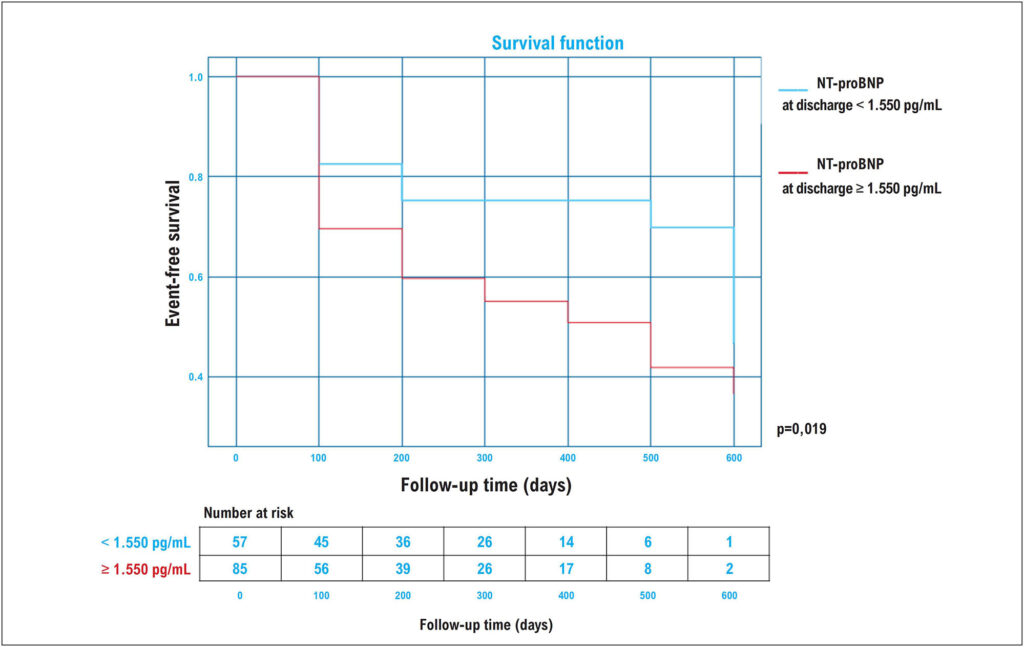
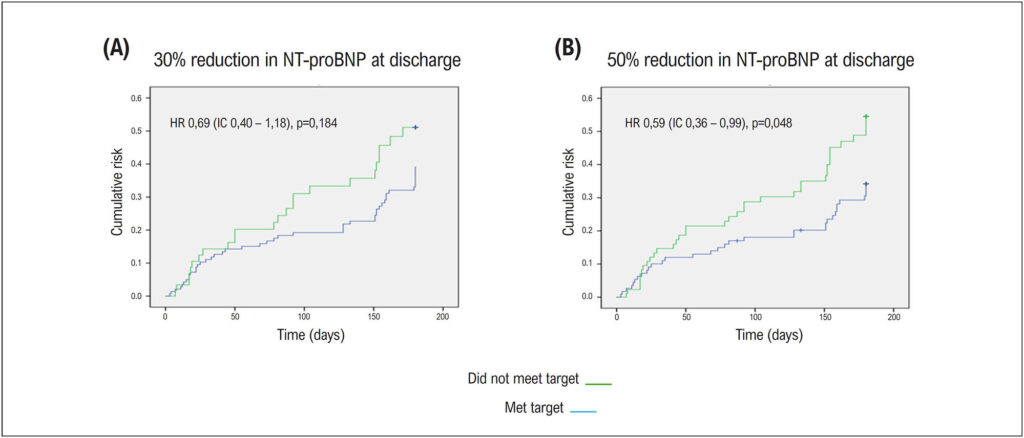
Two hundred and three patients were included (mean age 78.5 ± 14.4 years; 51.7% women). The outcome occurred in 67 (33.0%) within 6 months. The NT-proBNP at discharge showed the best accuracy (AUC 0.647; 95% CI 0.559–0.735; p=0.002). In multivariate analysis, only the NT-proBNP at discharge remained an independent predictor (p<0.05), outperforming continuous variation (delta). Regarding therapeutic goals, a reduction of ≥ 50% was associated with a lower risk of events (HR 0.59; 95% CI 0.36–0.99; p=0.048), while a reduction of ≥ 30% showed no association (p=0.184).
Conclusion:
NT-proBNP at discharge was the best independent predictor of outcomes at 6 months. Additionally, achieving an in-hospital reduction of ≥ 50% was associated with better prognosis, suggesting its usefulness as a therapeutic target.
Images
Image gallery fullscreen viewer
Comments are moderated by the editorial team before publication. Discussions should be evidence-based and use scientific language. Conflicts of interest should be declared.