Prognostic Value of Growth Differentiation Factor-15 in Heart Failure: A Systematic Review with Meta-Analysis
Abstract
Background
Growth differentiation factor-15 (GDF-15) has emerged as a promising biomarker in heart failure (HF), reflecting multiple pathophysiological mechanisms, including inflammation, oxidative stress, and cardiac remodeling. However, evidence regarding its prognostic value remains inconsistent.
Objective
To systematically evaluate the association between circulating levels of GDF-15 and adverse clinical outcomes, including all-cause mortality and HF hospitalization.
Methods
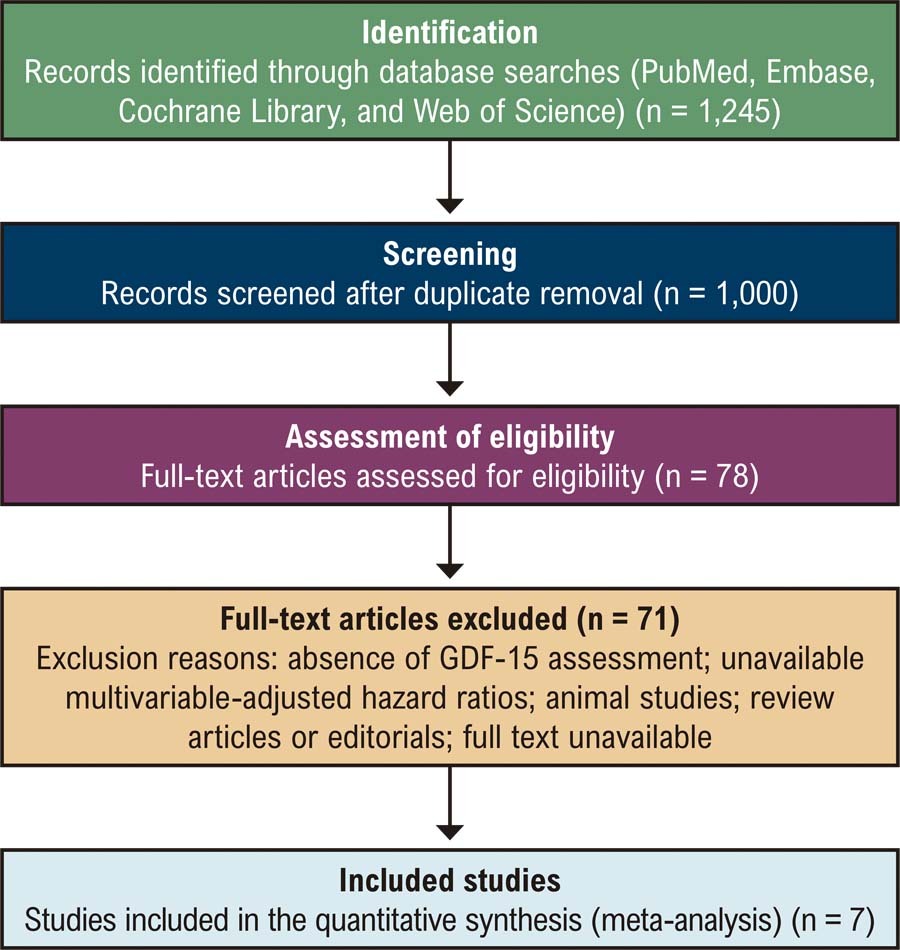
A systematic review was conducted in accordance with Preferred Reporting Items for Systematic Reviews and Meta-Analyses 2020 guidelines. PubMed, Embase, Cochrane Library, and Web of Science were searched through April 2025. Studies reporting baseline levels of GDF-15 and adjusted hazard ratios (HRs) for mortality and/or HF hospitalization were included. Pooled HRs were calculated using a random-effects model (DerSimonian and Laird method). Statistical heterogeneity was assessed using Higgins’ I2 statistic, and publication bias was evaluated using Egger’s test.
Results
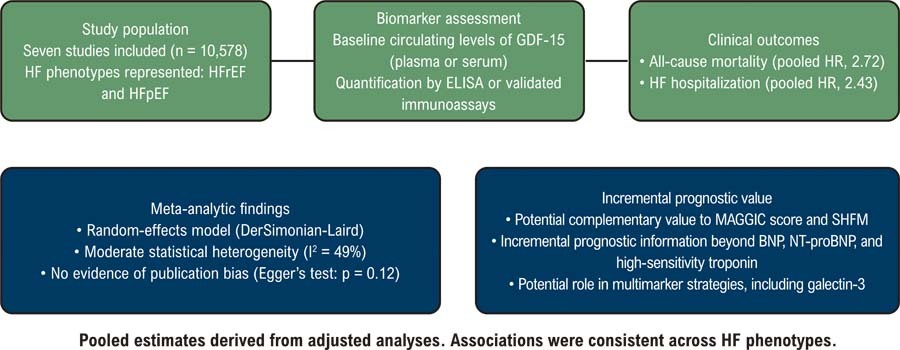
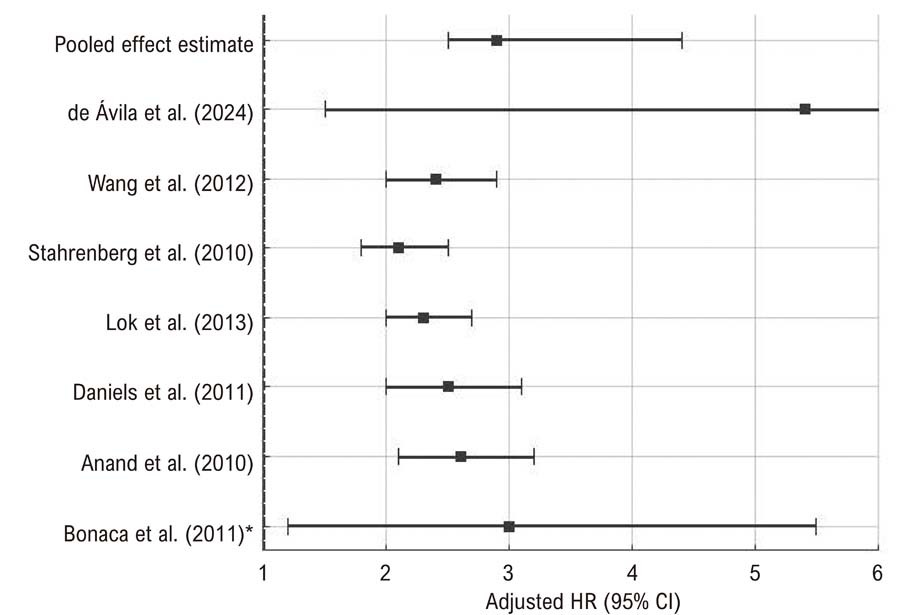
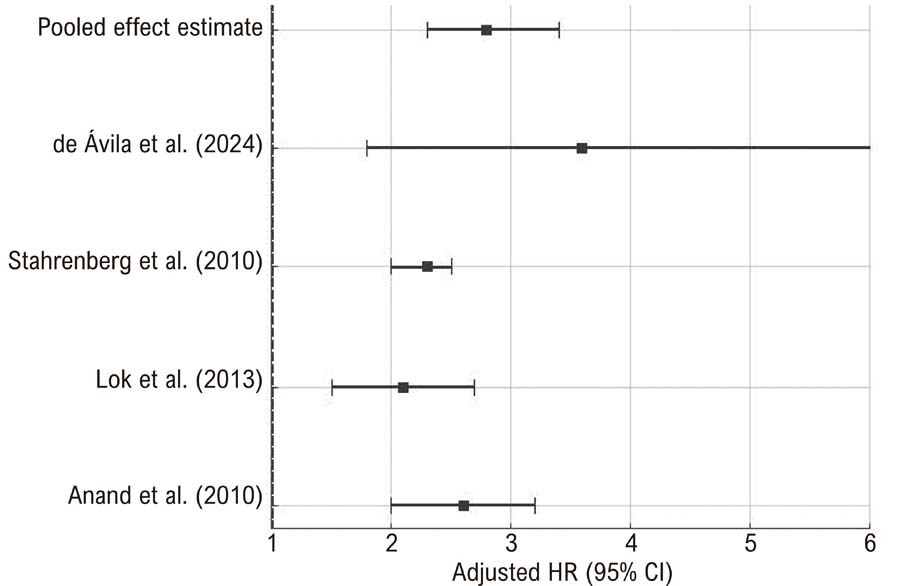
Seven studies (n = 10,578 patients [mean age, 67 ± 11 years; 58% male]) met the inclusion criteria. Increased levels of GDF-15 were significantly associated with increased all-cause mortality (pooled HR, 2.72; 95% CI, 1.55-4.17; p < 0.001; I2 = 49%) and HF hospitalization (HR, 2.43; 95% CI, 1.79-3.30; p < 0.001). Subgroup analyses demonstrated consistent associations across different HF phenotypes. Funnel plot assessment and Egger’s test (p = 0.12) showed no evidence of publication bias.
Conclusions
Higher circulating levels of GDF-15 are independently associated with increased risks of mortality and HF hospitalization. Incorporating GDF-15 into multimarker prognostic models may improve risk stratification and support earlier, more individualized management strategies in HF.
Images
Image gallery fullscreen viewer
Comments are moderated by the editorial team before publication. Discussions should be evidence-based and use scientific language. Conflicts of interest should be declared.