Echocardiographic Changes Associated With Sacubitril/Valsartan Therapy in Patients With Heart Failure With Reduced Ejection Fraction (HFrEF): A Descriptive 12-Month Follow-Up Analysis
Abstract
Background:
Although randomized controlled trials have demonstrated the efficacy of Sacubitril/Valsartan in heart failure (HF), real-world evidence regarding its impact on cardiac remodeling, particularly in Heart Failure With Reduced Ejection Fraction (HFrEF), remains limited.
Objectives:
This real-world study aimed to evaluate echocardiographic changes, including ejection fraction (EF), in a cohort of patients with HFrEF treated at a public hospital in Curitiba, Brazil, and to assess clinical outcomes at 6 and 12 months of follow-up.
Methods:
Longitudinal data were collected from 200 patients with HFrEF at baseline and at 6- and 12-month follow-up. Echocardiographic assessments included EF, left ventricular (LV) dimensions, and other cardiac parameters. Clinical outcomes included HF-related hospitalizations and New York Heart Association (NYHA) functional class.
Results:
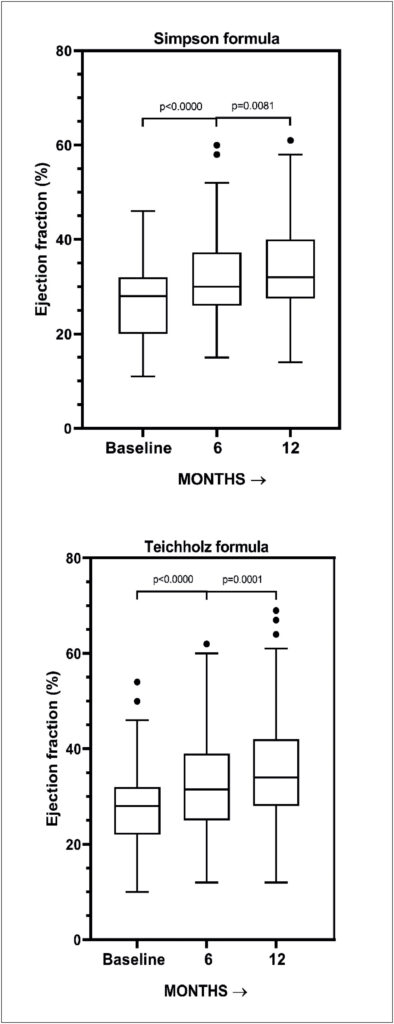
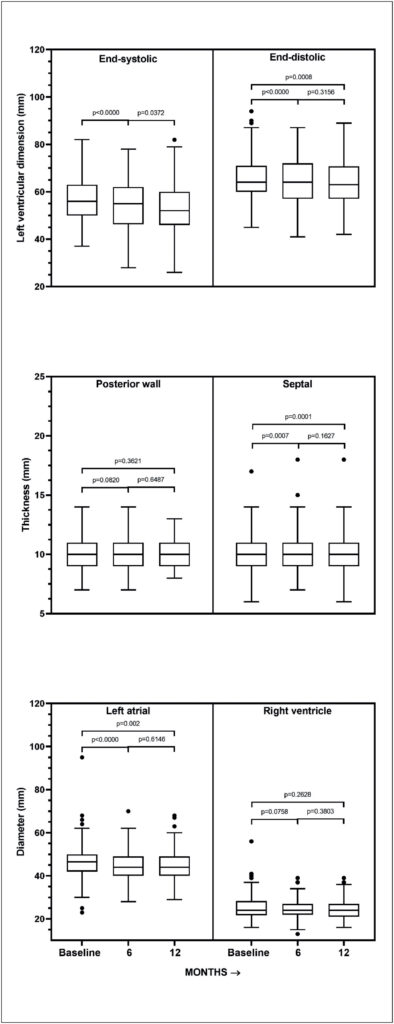
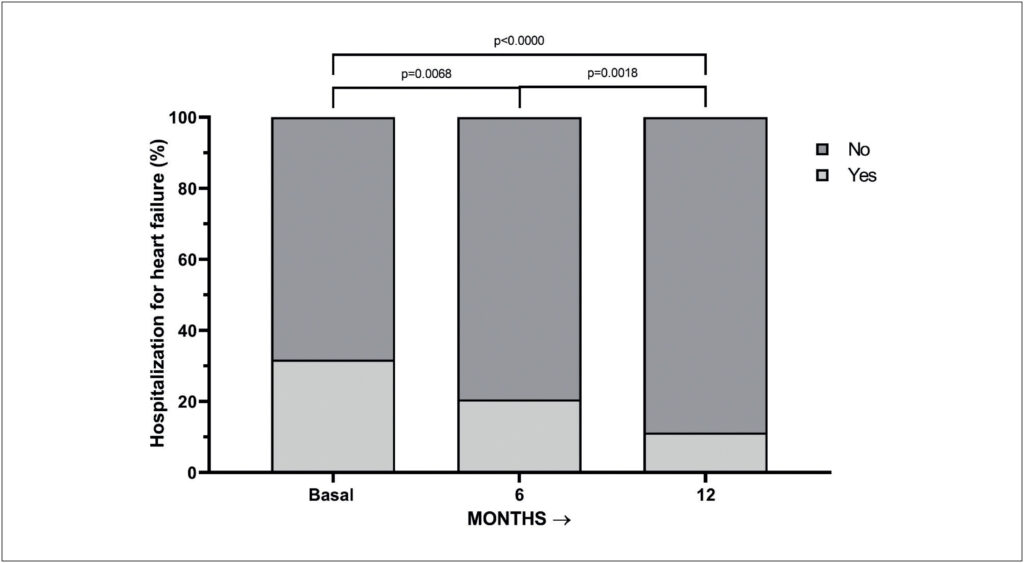
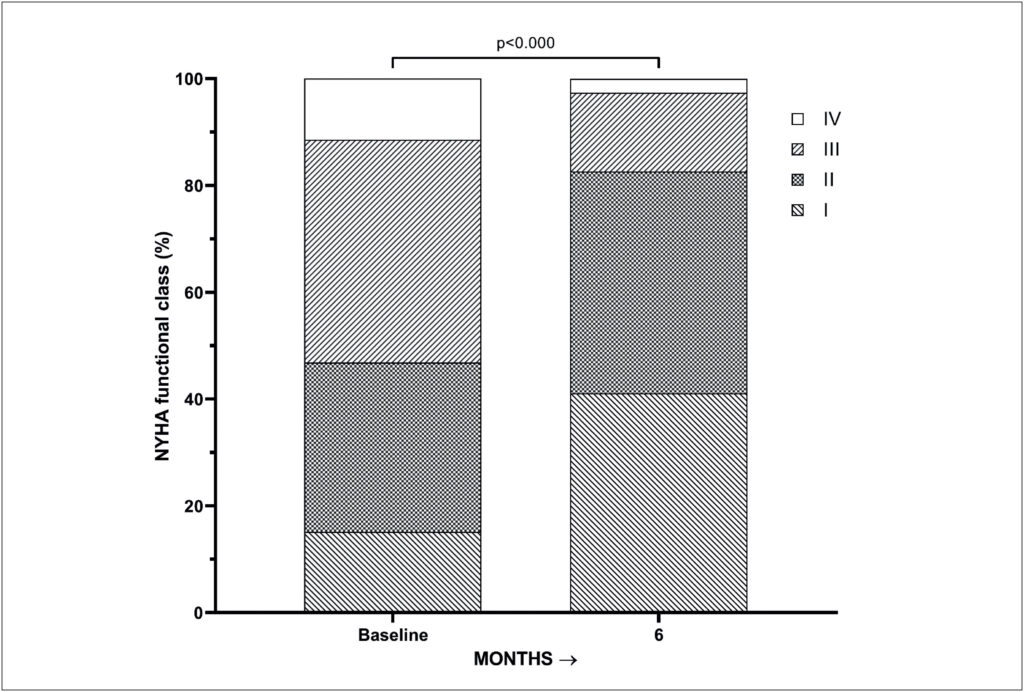
Sacubitril/Valsartan therapy was associated with improvements in EF, with the median increasing from 28% at baseline to 31.5% at 6 months and 34% at 12 months (Teichholz method). Structural remodeling was observed, including reductions in LV end-systolic and end-diastolic dimensions, as well as left atrial (LA) diameter. HF-related hospitalization rates decreased from 31.8% at baseline to 20.6% at 6 months and 11.3% at 12 months. NYHA functional class improved, with the proportion of patients in Classes III and IV decreasing from 53.2% at baseline to 17.4% at 6 months. Renal function remained stable throughout treatment. Improvements in EF were associated with a lower risk of hospitalization at 6 months (OR = 0.95) and 12 months (OR = 0.93), whereas a larger LA diameter was associated with a higher risk of hospitalization at 12 months (OR = 1.06).
Conclusions:
Sacubitril/Valsartan therapy was associated with improvements in EF, echocardiographic parameters, and NYHA functional class, as well as reductions in hospitalization rates. These findings underscore the role of the therapy in promoting reverse remodeling and suggest that its clinical benefits may extend beyond direct effects on cardiac structure.
Images
Image gallery fullscreen viewer
Comments are moderated by the editorial team before publication. Discussions should be evidence-based and use scientific language. Conflicts of interest should be declared.