Applicability of SAPS 3 and APACHE II Scores in a Cardiac Intensive Care Unit: A Prospective Study
Abstract
Background
Prognostic scores such as the Simplified Acute Physiology Score (SAPS) and the Acute Physiology and Chronic Health Evaluation (APACHE) are essential for assessing performance and predicting mortality in Intensive Care Units (ICUs).
Objectives
To evaluate the performance of SAPS 3 (including the Latin America [LA] and Brazil [BR] versions) and APACHE II in predicting mortality in a cardiac intensive care unit (CICU).
Methods
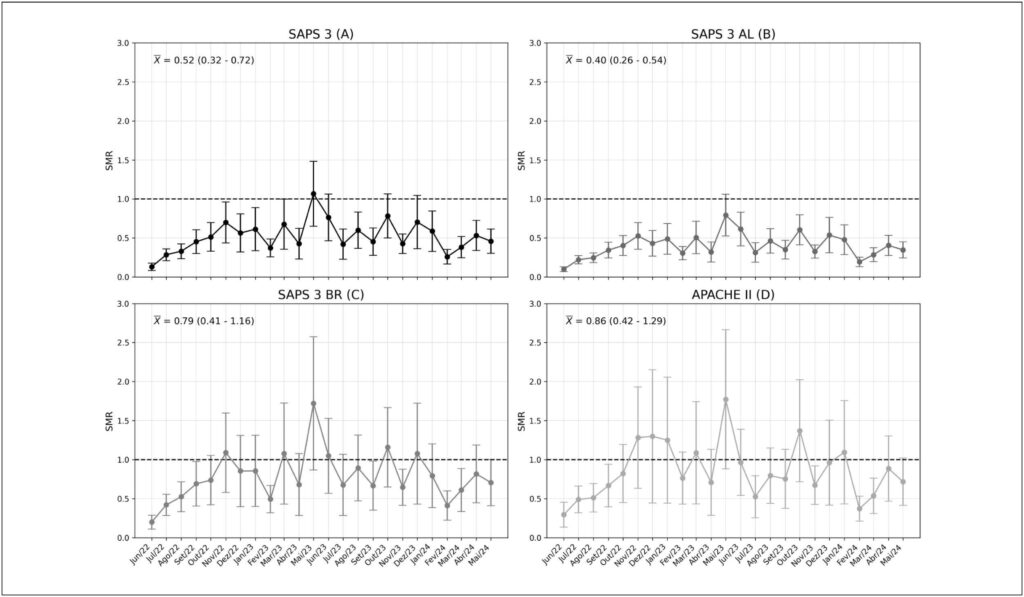
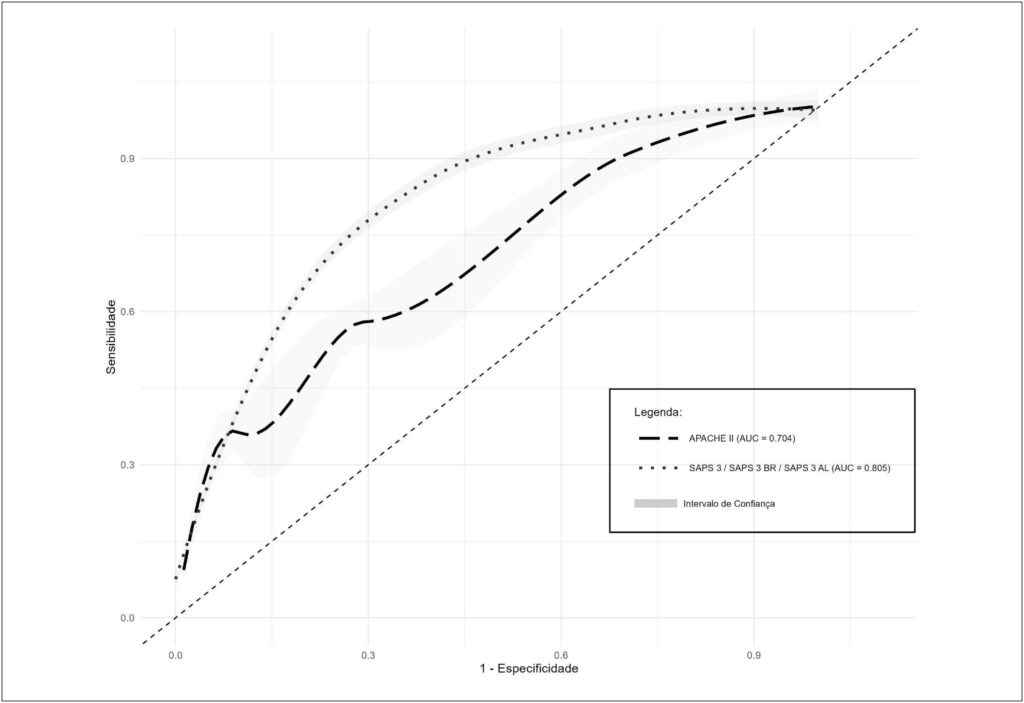
Prospective cohort of patients admitted between June 2022 and May 2024, followed until discharge or death. Data were extracted from electronic medical records. The relationship between observed and predicted mortality was calculated using the Standardized Mortality Ratio (SMR), and discrimination was assessed by the Receiver Operating Characteristic (ROC) curve.
Results
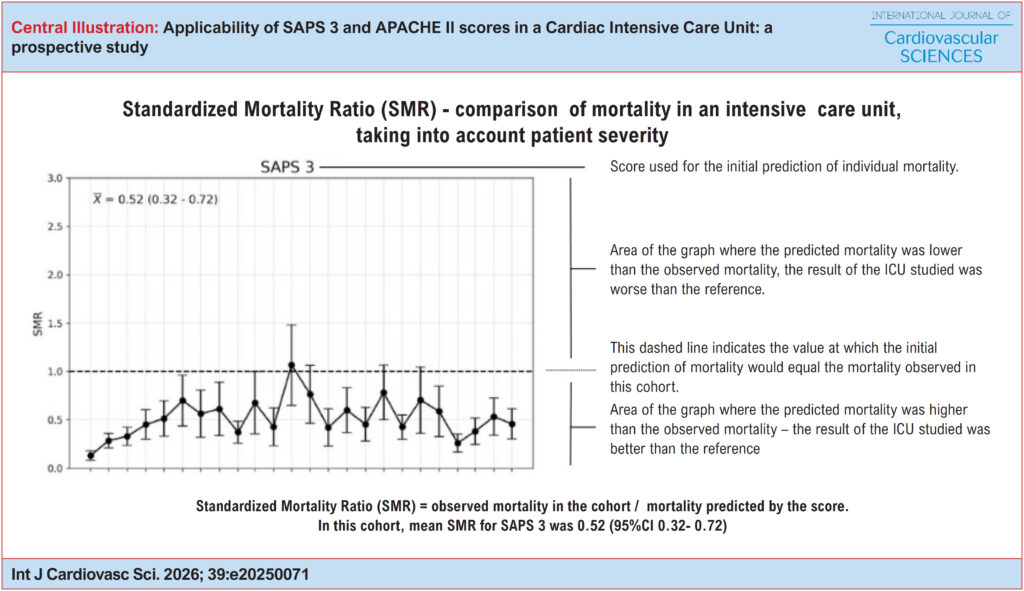
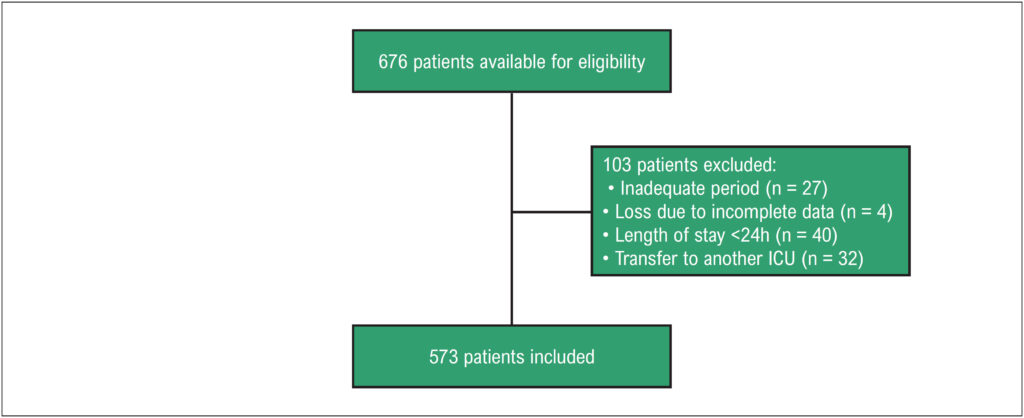
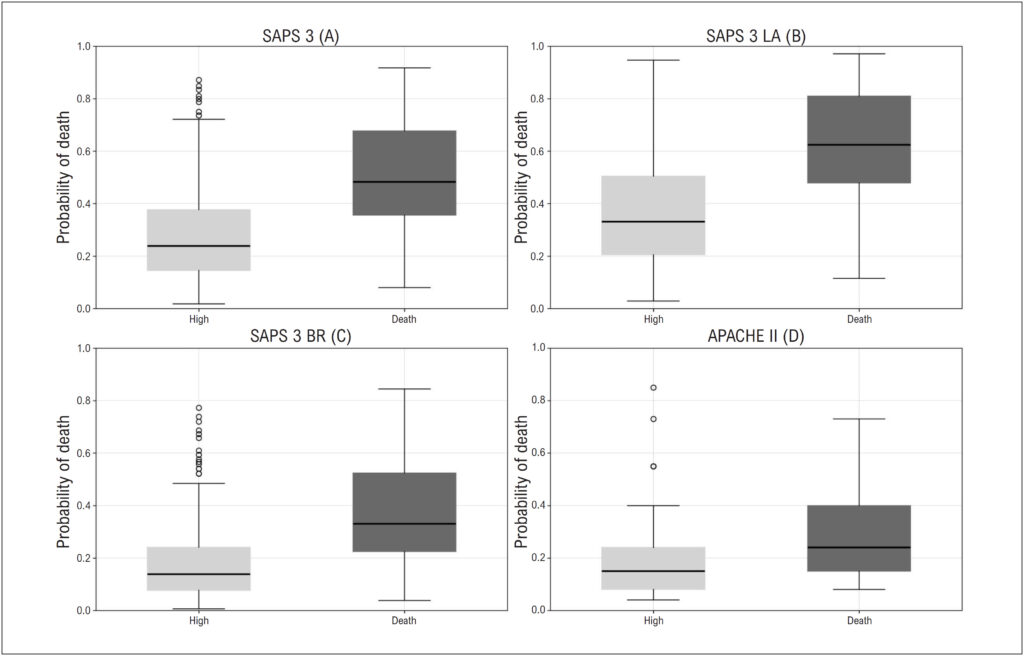
A total of 573 patients were included, 288 (50%) with three or more comorbidities, median age 63 years [IQR: 53–72], and 344 (60%) male. Cardiovascular diseases accounted for 76% of admissions. Overall mortality was 15%. Mean SMR values were: 0.52 (95% CI: 0.32–0.72) for SAPS 3; 0.40 (95% CI: 0.26–0.54) for SAPS 3 Latin America (AL); 0.79 (95% CI: 0.41–1.16) for SAPS 3 Brazil (BR); and 0.86 (95% CI: 0.42–1.29) for APACHE II. The analysis of the area under the curve (AUC) was 0.805 for SAPS 3 and its adapted versions, and 0.704 for APACHE II.
Conclusions
SAPS 3, particularly SAPS 3 Brazil (BR), demonstrated greater accuracy than APACHE II. Despite mortality being above the national average, the SMR indicated that observed mortality was lower than predicted, suggesting good care performance in the unit.
Images
Image gallery fullscreen viewer
Comments are moderated by the editorial team before publication. Discussions should be evidence-based and use scientific language. Conflicts of interest should be declared.