Use of Diuretic Therapy in Patients with Decompensated Heart Failure and Acute Kidney Injury. What to do in this Dilemma?
Heart failure (HF) is a severe public health problem due to its high prevalence, morbidity and mortality. It is the main cause of hospitalization in the United States. The prevalence of the disease increases with age, making elderly patients even more susceptible to the repercussions of this disease. This increases the importance of precise treatment of HF and its complications, including decompensated HF (dHF).
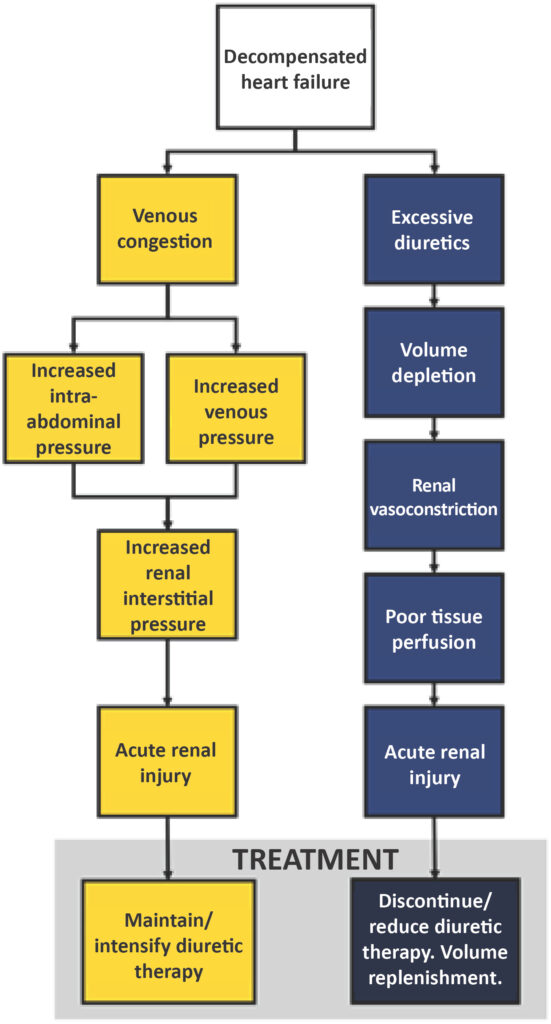
In patients with dHF, who require diuretic therapy, concomitant acute kidney injury (AKI) is a common finding. The big question when it comes to treatment with diuretics in situations where kidney function is altered is to know the reason for the dysfunction: Is the patient is still congested, requiring optimization of diuretic therapy (type I cardiorenal syndrome)? Or is it a patient whose diuretic therapy was carried out excessively, causing hypovolemia, which led to low renal perfusion (pre-renal AKI) or even an acute tubular necrosis?
[…]
Images
Image gallery fullscreen viewer
Comments are moderated by the editorial team before publication. Discussions should be evidence-based and use scientific language. Conflicts of interest should be declared.