Efficacy of lifestyle change psychological intervention in coronary risk reduction
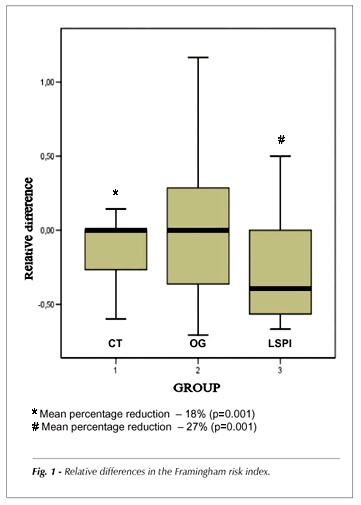
OBJECTIVE: To evaluate the efficacy of a program of lifestyle change through psychological intervention, combined with pharmacological therapy, for coronary risk reduction in uncontrolled hypertensive patients with overweight and dyslipidemia over 11 months of follow-up. METHODS: A randomized controlled trial with 74 patients assigned to three different treatment programs. One group (CT) only received conventional pharmacological treatment. Another group (OG) received pharmacological treatment and participated in a guidance program to control cardiovascular risk factors. A third group (LSPI) received pharmacological treatment and participated in a brief psychological intervention program for reduction of estresse levels and changing of eating behavior. The main measure was the Framingham risk index. RESULTS: CT patients presented an average reduction of 18% (p = 0.001) in coronary risk; OG patients elevated the risk by 0.8% (NS) and the LSPI group showed an average reduction of 27% on the Framingham risk index (p = 0.001). CONCLUSION: Pharmacological treatment combined with psychological intervention for reduction of estresse level and changing of eating behavior resulted in additional benefits in coronary risk reduction.
Images
Image gallery fullscreen viewer
Comments are moderated by the editorial team before publication. Discussions should be evidence-based and use scientific language. Conflicts of interest should be declared.