Type 1 Brugada Pattern Unmasked During the Recovery Period of an Exercise Stress Test
Introduction
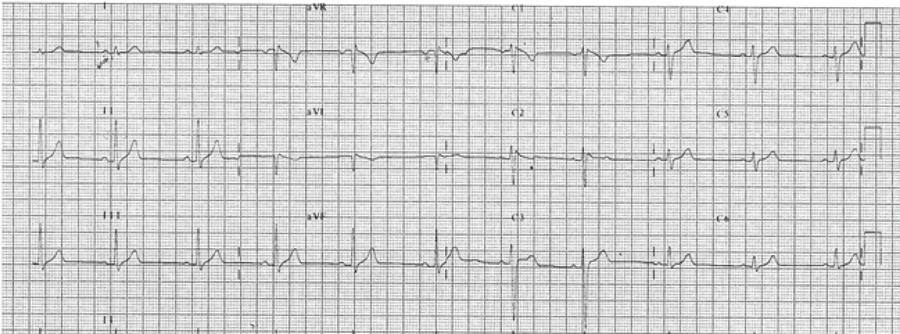
Brugada syndrome (BrS) is an autosomal dominant channelopathy considered to be responsible for 4% to 12% of all sudden cardiac deaths and up to 20% of sudden cardiac deaths that occur in normal hearts. It is characterized by specific electrocardiographic findings in the right precordial leads. Although three patterns have been described, BrS is only diagnosed in patients with ST-segment elevation with type 1 morphology > 2 mm in at least 1 lead among the right precordial leads (V1, V2) occurring either spontaneously or after provocative drug test with intravenous administration of Class I antiarrhythmic drugs.
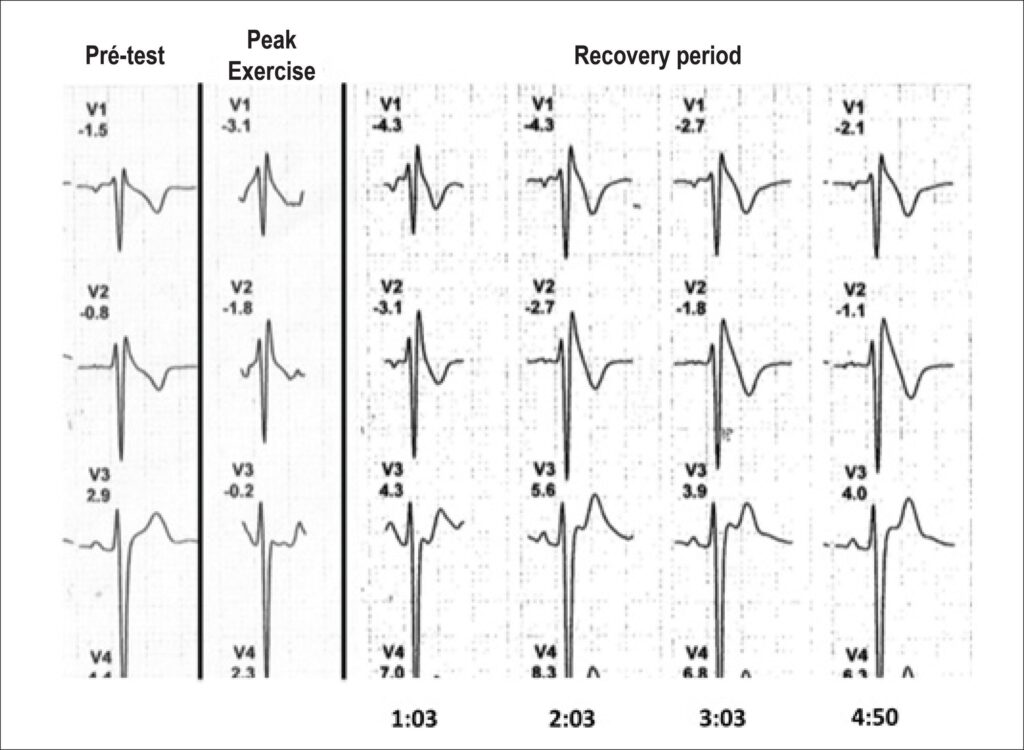
Symptoms often occur during rest or sleep, during febrile state, or in vagotonic conditions, as the recovery period of an exercise test could be considered. In fact, attenuation of ST-segment elevation at the peak of exercise stress test followed by its appearance during the recovery phase is considered not only supportive for the diagnosis of BrS, but also as a possible predictor of adverse outcomes. These data have been obtained from series of patients previously diagnosed because of a spontaneous or pharmacologically-induced type 1 pattern, but cases without previous evidence of this pattern where the diagnosis was unmasked by exercise testing are scarce.
[…]
Images
Image gallery fullscreen viewer
Comments are moderated by the editorial team before publication. Discussions should be evidence-based and use scientific language. Conflicts of interest should be declared.