Triceps skinfold as a prognostic predictor in outpatient heart failure
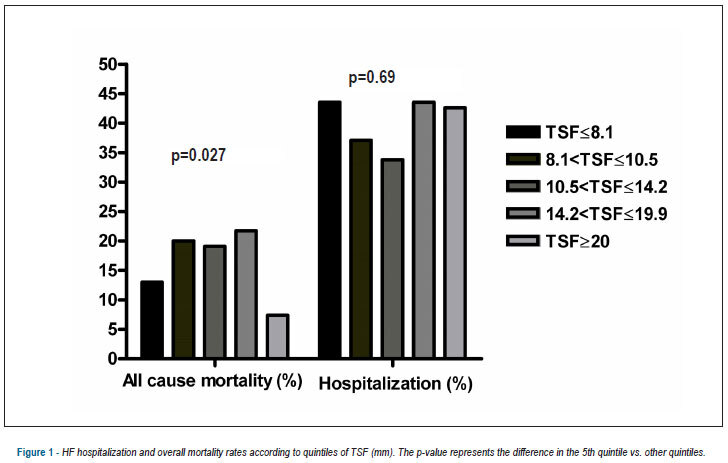
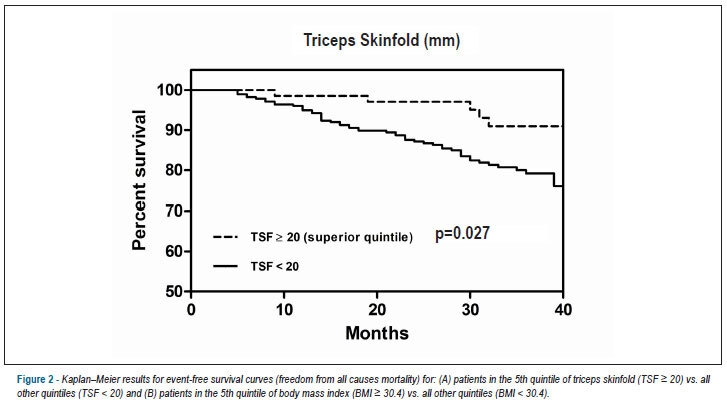
BACKGROUND: Most reports regarding the obesity paradox have focused on body mass index (BMI) to classify obesity and the prognostic values of other indirect measurements of body composition remain poorly examined in heart failure (HF). Objective: To evaluate the association between BMI and other indirect, but easily accessible, body composition measurements associated with the risk of all-cause mortality in HF. METHODS: Anthropometric parameters of body composition were assessed in 344 outpatients with a left ventricular ejection fraction (LVEF) of 20 mm was present in 9% of patients that died and 22% of those who survived (p = 0.027). Univariate analysis showed that serum creatinine level, LVEF, and NYHA class were associated with the risk of death, while Cox proportional hazard regression analysis showed that TSF > 20 was a strong independent predictor of all-cause mortality (hazard ratio = 0.36; 95% confidence interval = 0.13-0.97, p = 0.03). CONCLUSION: Although BMI is the most widely used anthropometric parameter in clinical practice, our results suggested that TSF is a better predictive marker of mortality in HF outpatients.
Images
Image gallery fullscreen viewer
Comments are moderated by the editorial team before publication. Discussions should be evidence-based and use scientific language. Conflicts of interest should be declared.