Real-World 2-Year Outcomes of the Inspiron™ Biodegradable Polymer Sirolimus-Eluting Stent
Abstract
Background
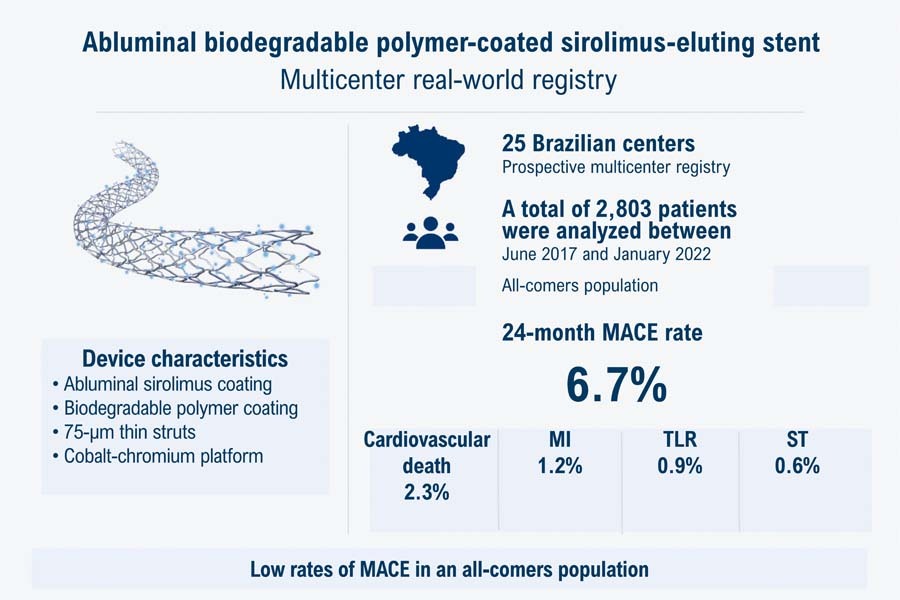
The Inspiron™ sirolimus-eluting stent (SES) is a third-generation coronary stent featuring thin struts and an abluminal biodegradable polymer coating. Although it is widely used in Brazil, long-term real-world evidence remains limited.
Objectives
To evaluate the safety and effectiveness of the Inspiron™ SES over 24 months in an unselected population undergoing percutaneous coronary intervention (PCI).
Methods
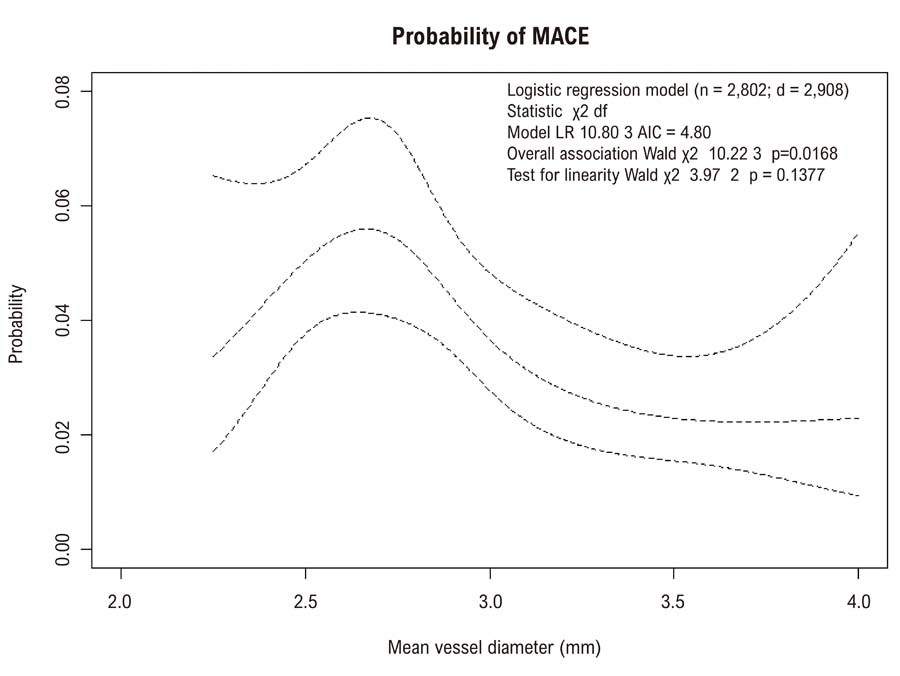
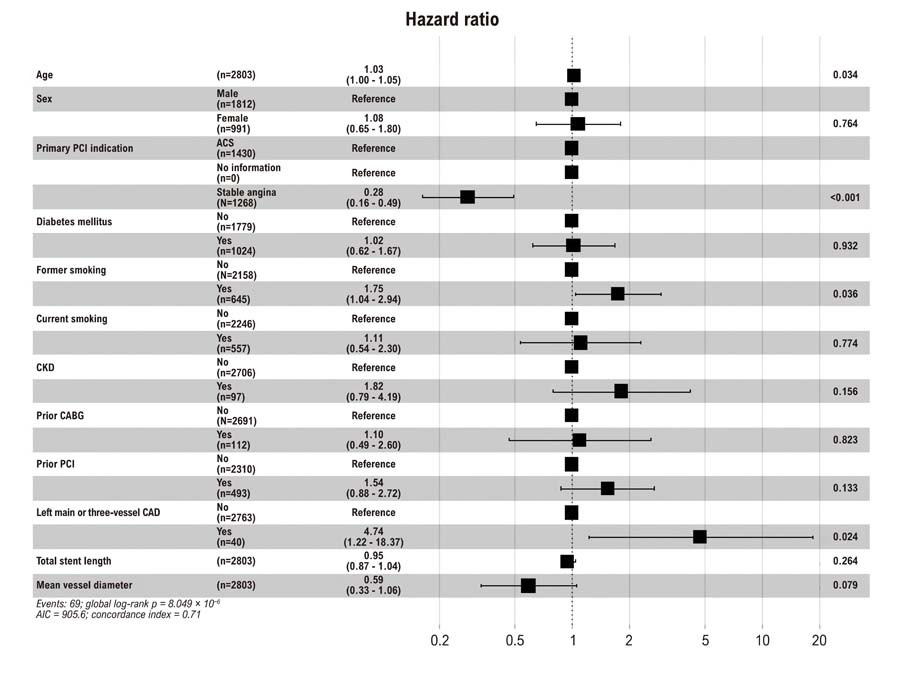
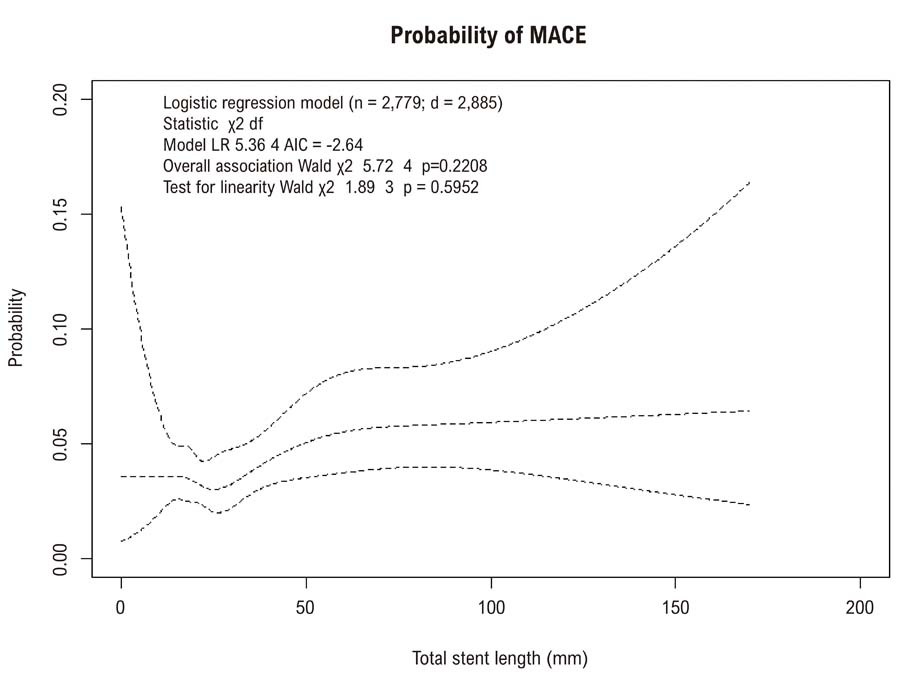
This pooled analysis included 2,803 consecutive patients who underwent Inspiron™ SES implantation between June 2017 and January 2022 at 25 Brazilian centers. The primary endpoint was major adverse cardiovascular events (MACE), defined as the composite of cardiovascular death, MI, and target lesion revascularization (TLR) at 24 months. Kaplan-Meier survival analysis, Cox proportional hazards regression, and restricted cubic spline models were used. A two-sided p-value < 0.05 was considered statistically significant.
Results
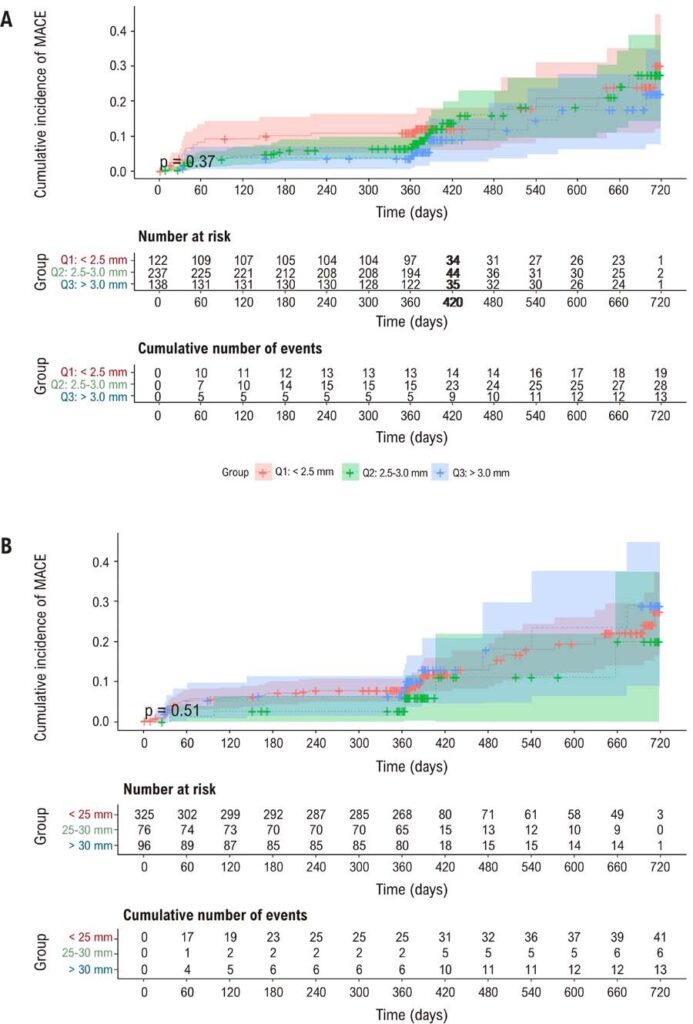
At 24 months, the cumulative incidence of MACE was 6.7%, with rates of 5.4% for all-cause mortality, 2.3% for cardiovascular mortality, 1.2% for MI, 0.9% for TLR, and 0.6% for definite or probable stent thrombosis (ST). Patients with a vessel diameter < 2.5 mm had significantly higher rates of MACE, cardiovascular death, repeat revascularization, and ST (p = 0.022). Independent predictors of MACE included older age (p = 0.034), left main or three-vessel coronary artery disease (p = 0.024), and acute coronary syndrome as the indication for PCI (p < 0.001).
Conclusions
In this large real-world registry, the Inspiron™ SES demonstrated favorable safety and effectiveness through 24 months, with low rates of ST and repeat revascularization despite the inclusion of complex coronary lesions.
Images
Image gallery fullscreen viewer
Comments are moderated by the editorial team before publication. Discussions should be evidence-based and use scientific language. Conflicts of interest should be declared.