Pregnancy in Woman with Kawasaki Disease and Multiple Coronary Artery Aneurysms
Introduction
Kawasaki disease (KD), first described in 1967, is a systemic vasculitis of unknown cause. It is an important cause of cardiac diseases in children aged younger than five years. KD is an autoimmune disorder whose clinical features include high fever, exanthema, conjunctivitis, cervical linfadenopathy and peripheral edema. Laboratory tests are compatible with acute inflammatory condition.
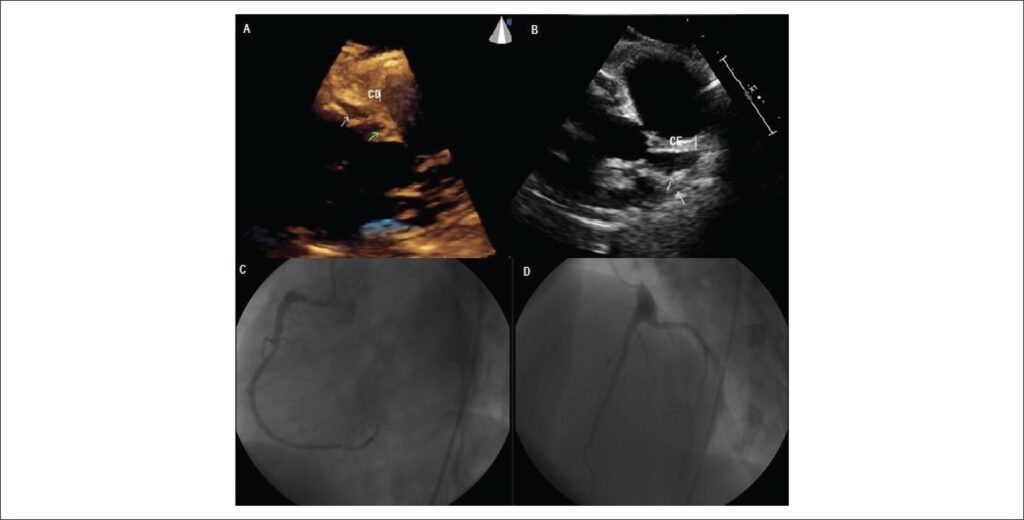
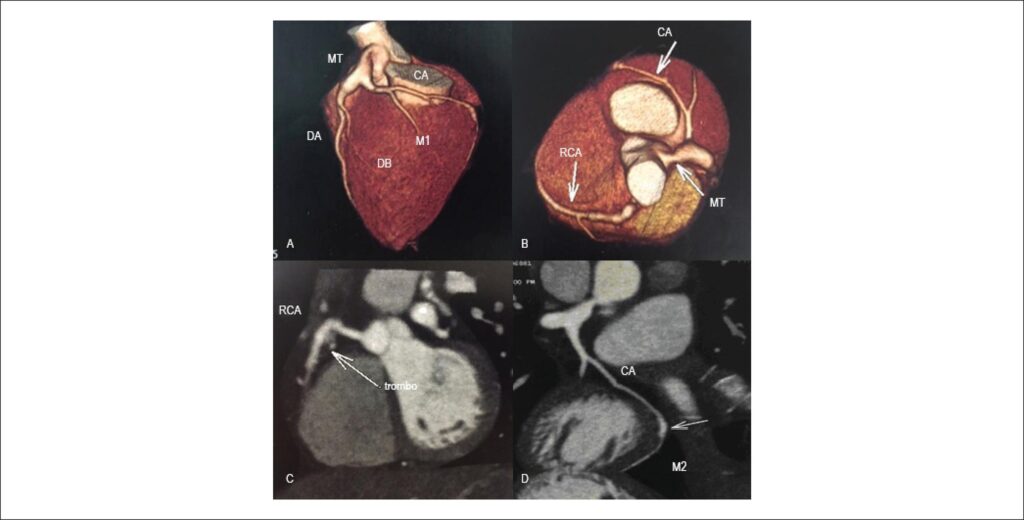
KD predominantly affects the coronary arteries, which is the most important clinical manifestation of the disease, varying from dilation and stenosis to aneurysm (incidence of 5% in patients with adequate treatment, and 25% in untreated patients). Giant coronary artery aneurysms (CAAs), i.e., CAAs with diameters > 8 mm, are associated with increased risk of thrombosis, acute myocardial infarction (AMI) and sudden death.
[…]
Images
Image gallery fullscreen viewer
Comments are moderated by the editorial team before publication. Discussions should be evidence-based and use scientific language. Conflicts of interest should be declared.