Low-Flow Aortic Stenosis and Reduced Ejection Fraction: New Insights
With the aging of the population, the incidence of degenerative cardiovascular diseases has steadily increased, especially aortic stenosis (AS), present in 3%-5% of the population older than 75 years , . In the last decade, severe AS is characterized taking into account several functional aspects between the left ventricle and the aorta, especially by echocardiography, such as mean transvalvular gradient > 40 mmHg, transvalvular jet velocity > 4 m/s and aortic valve area < 1 cm, as well as anatomical aspects such as the degree of the aortic valve calcification. Studies carried out in the 70s – describing the hemodynamic parameters and ventricular function characterized the diagnosis of severe AS only by aortic valve gradient peak > 50 mmHg by hemodynamic analysis and > 70 mmHg by echocardiography. At that time, they questioned the real benefit of surgery in the correction of severe AS and left ventricular dysfunction due to the fact that these exams showed difficulties identifying patients that could benefit from such treatment. In the 80s and 90s, still with limitations in ventricular function assessment, the intervention indication was only feasible in patients with severe AS (aortic transvalvular gradient peak > 70 mmHg by echocardiography), regardless of the degree of left ventricular dysfunction , .
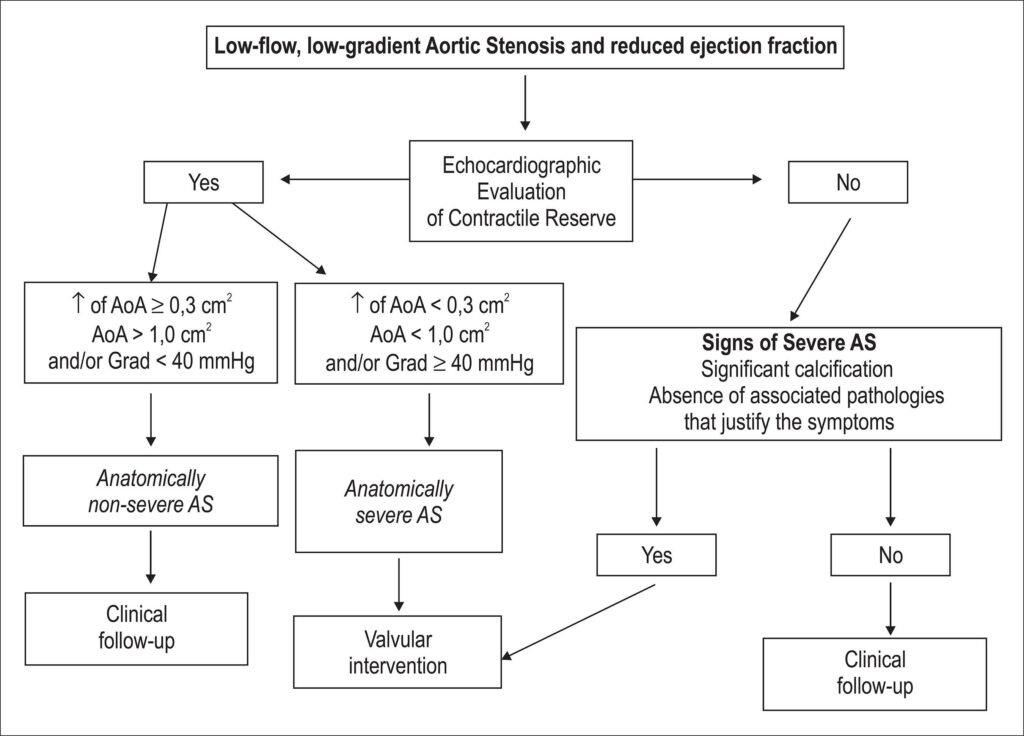
It is noteworthy that in the last two decades, with the incessant search for answers to these questions and the advent of pharmacological stress echocardiography, emphasis has been given to these peculiar forms of AS, particularly to severe AS with low-flow low-gradient and reduced ejection fraction, with or without contractile reserve. The latter has been the subject of great scientific interest due to the difficulty in diagnosing it and evaluating the real benefits of surgical intervention.
[…]
Images
Image gallery fullscreen viewer
Comments are moderated by the editorial team before publication. Discussions should be evidence-based and use scientific language. Conflicts of interest should be declared.