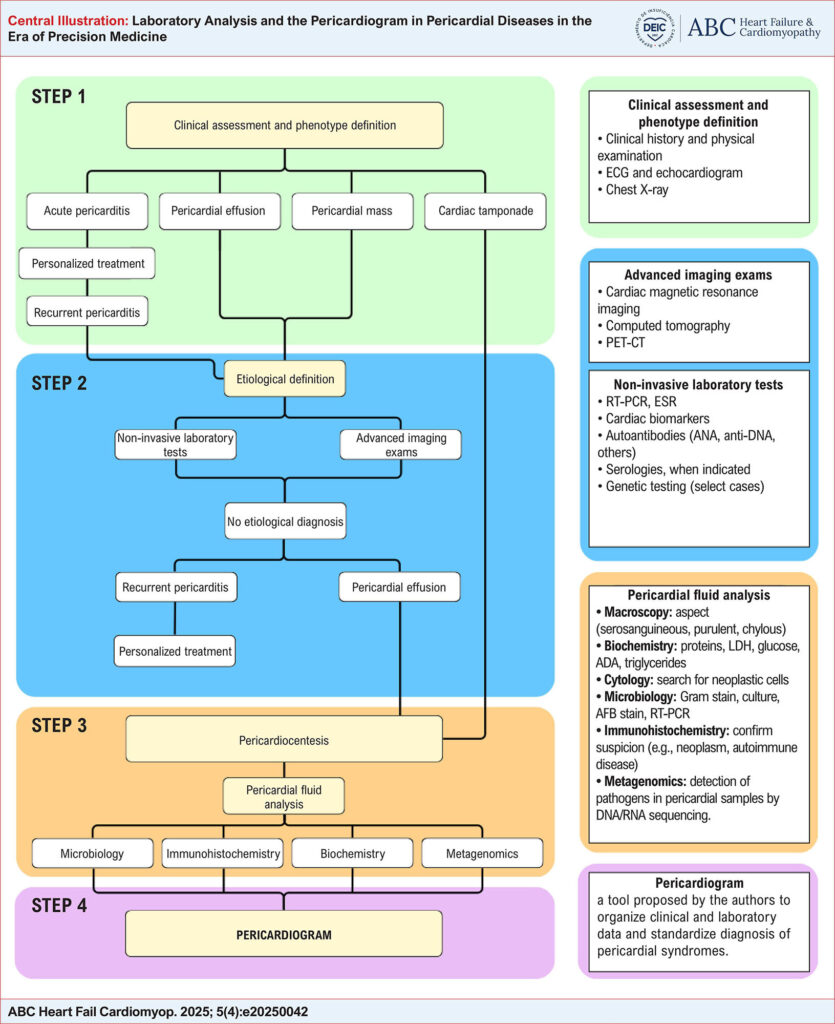
Laboratory Analysis and the Pericardiogram in Pericardial Diseases in the Era of Precision Medicine
Abstract
Pericardial syndromes constitute a heterogeneous group of diseases affecting the pericardium, with varied clinical presentations and multiple etiologies (infectious, autoimmune, traumatic, post-surgical, metabolic, among others). This diversity demands increasingly refined diagnostic approaches, aligned with the principles of precision medicine. A significant transformation has taken place in the understanding of these conditions and their complexity, driven by the development of advanced diagnostic and therapeutic methods.
In the context of precision medicine, the aim is to improve the identification of the causal mechanism, allowing for individualized treatment. Significant advances in pericardiology have been driven by methods including cytopathology, immunohistochemistry, analysis of serum and pericardial biomarkers (including novel tumor markers), and the metagenomic detection of microorganisms.
In parallel, advances in molecular biology and emerging methodologies enable the detailed identification of pathogens and the characterization of multiple phenotypes of pericardial diseases, promoting increasingly accurate and individualized diagnoses. Furthermore, genetic markers have played an important role in elucidating the causes of recurrent pericarditis by identifying genes associated with autoinflammatory diseases and hereditary predispositions.
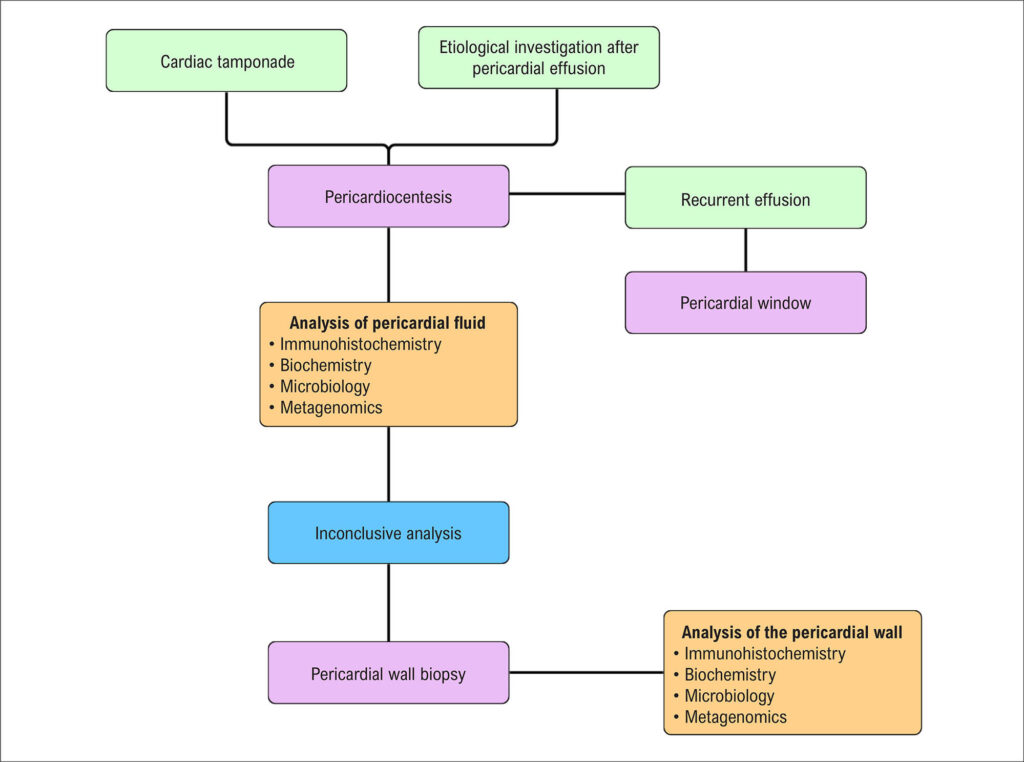
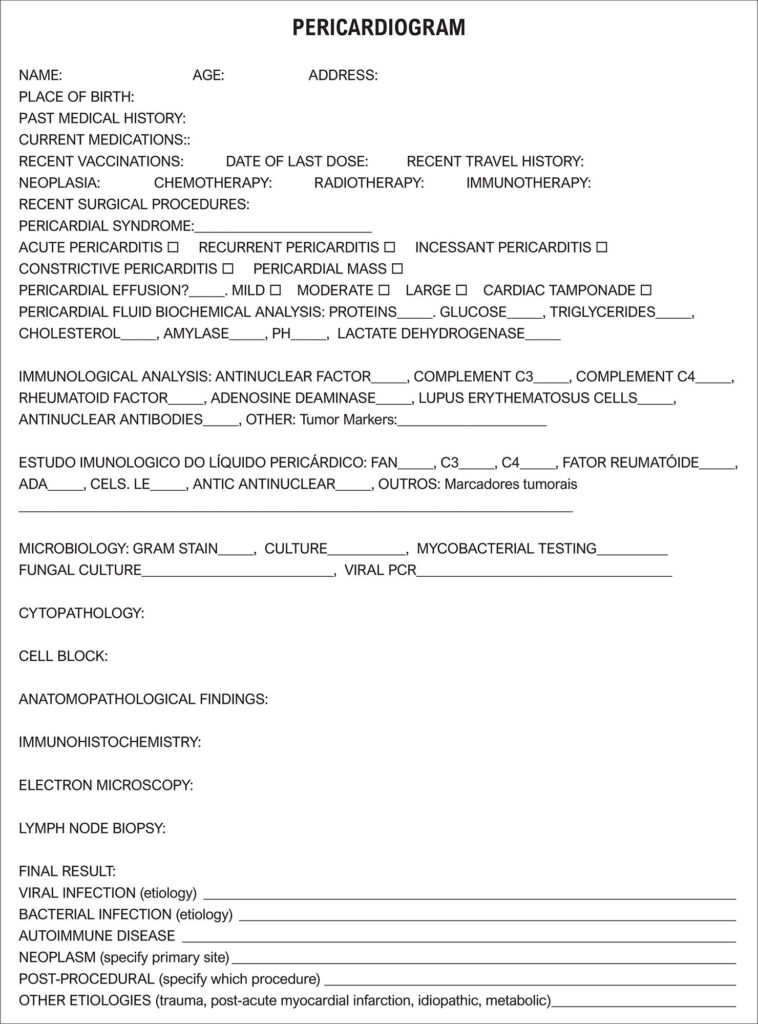
The objective of this review is to present the state of the art in the diagnosis of pericardial diseases, focusing on techniques that directly assess pericardial fluid and, therefore, effectively assist in the etiological investigation of various pericardial syndromes. A new tool, the “pericardiogram,” is also proposed to organize clinical reasoning and ensure the best use of complementary tests in assisting the investigation of pericardial syndromes.
Images
Image gallery fullscreen viewer
Comments are moderated by the editorial team before publication. Discussions should be evidence-based and use scientific language. Conflicts of interest should be declared.