Endomyocardial Fibrosis as a Rare Cause of Heart Transplantation and its Association with Thrombophilia: A Case Report
Introduction
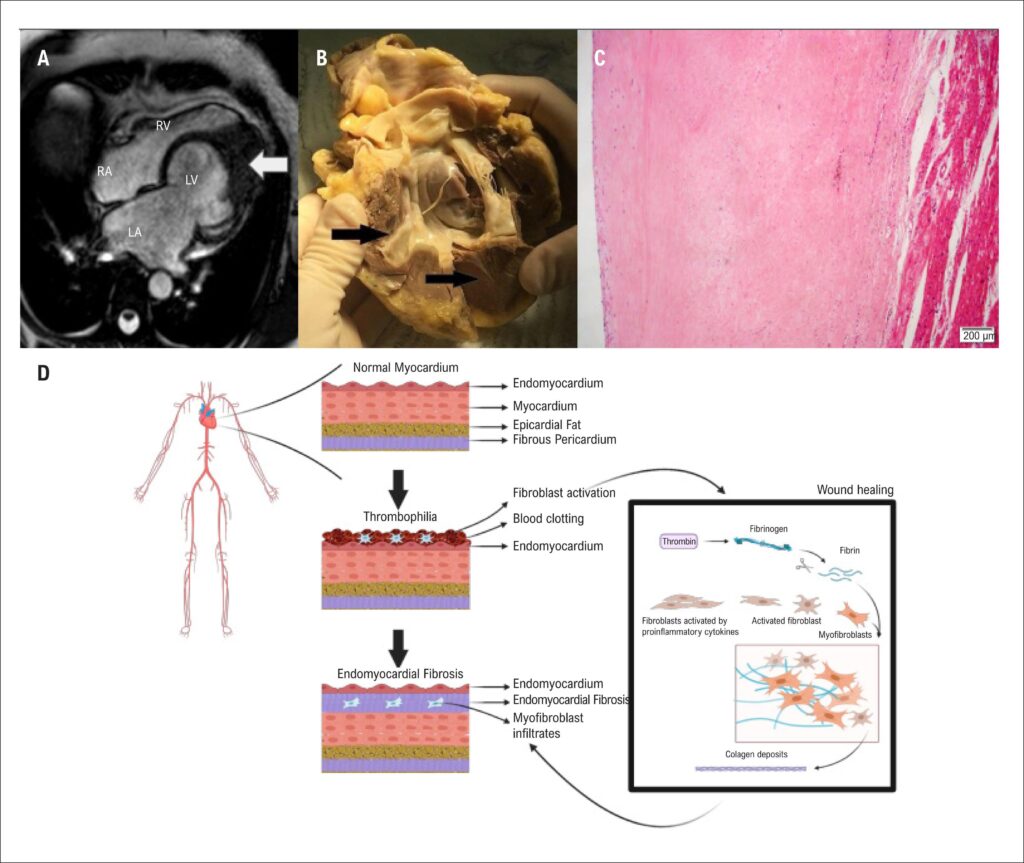
Endomyocardial fibrosis (EMF) is a rare disease of unknown etiology characterized by endomyocardial fibrous tissue deposition affecting either one or both ventricles and the atrioventricular valve apparatus. Increased stiffness and progressively reduced diameter of the involved ventricle lead to a restrictive pattern, which appears as heart failure, thromboembolic events, non-fatal arrhythmias, or less frequently, sudden cardiac death.. Though earlier studies report poor survival rates among EMF patients, in contemporary series prognosis, it is uncertain. Genetic, immune, infectious, and environmental factors, among others, have been proposed to explain its pathogenesis; however, there is no consensus on a unified causal theory., Despite its poor prognosis and limited disease modifying therapeutic options, endocardectomy among them as a palliative measure, there is a paucity of data in the literature reporting heart transplantation as a therapeutic alternative for patients with EMF. The present study describes the favorable outcome of a patient with EMF who underwent heart transplantation. In the present case, there was also an association of EMF with both factor V Leiden and prothrombin gene mutation as part of the phenotypic presentation, which has not been previously reported.
[…]
Images
Image gallery fullscreen viewer
Comments are moderated by the editorial team before publication. Discussions should be evidence-based and use scientific language. Conflicts of interest should be declared.