A Probable Relationship between Physical Exercise and COVID-19 Mediated by the Renin-Angiotensin-Aldosterone System
The Pathways of the RAAS
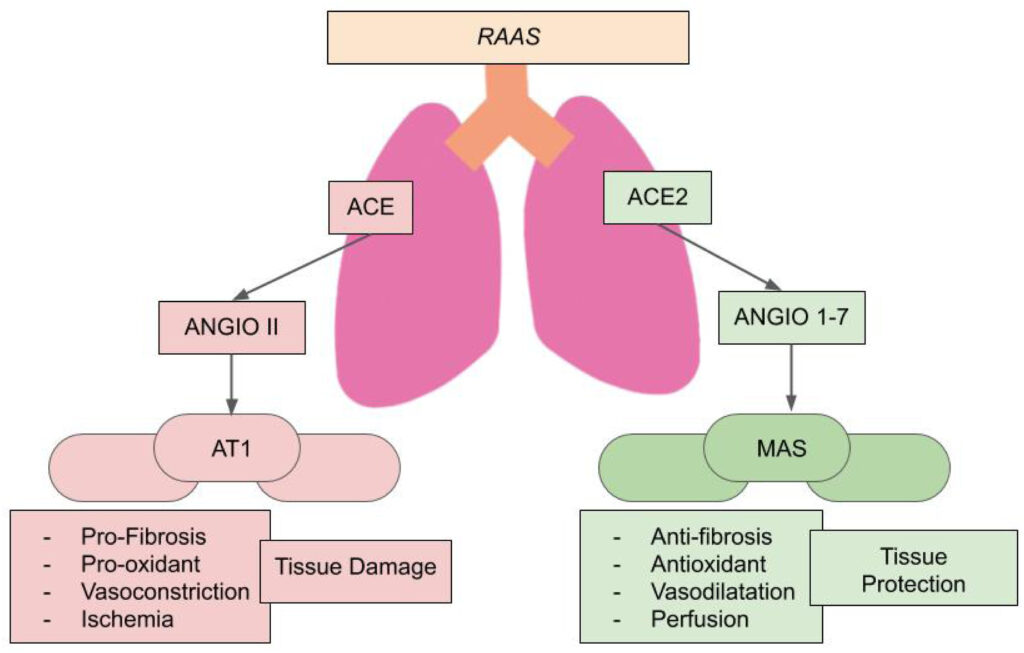
The classical pathway of the RAAS is initiated by the release of angiotensinogen by the liver, which, combined with renin secreted by the kidneys, produces angiotensin I (Angio I). Angio I is converted to angiotensin II (Angio II) by the action of the angiotensin-converting enzyme (ACE) in the lungs. The physiological effects of Angio II are mediated primarily through membrane receptors, especially of the Angio II type 1 (AT1) receptor. These receptors, when stimulated, promote vasoconstriction, hypertrophy and hyperplasia of vascular cells, sodium retention, generation of reactive oxygen species (ROS), and inflammatory, thrombotic and fibrotic processes, which can cause tissue damage.
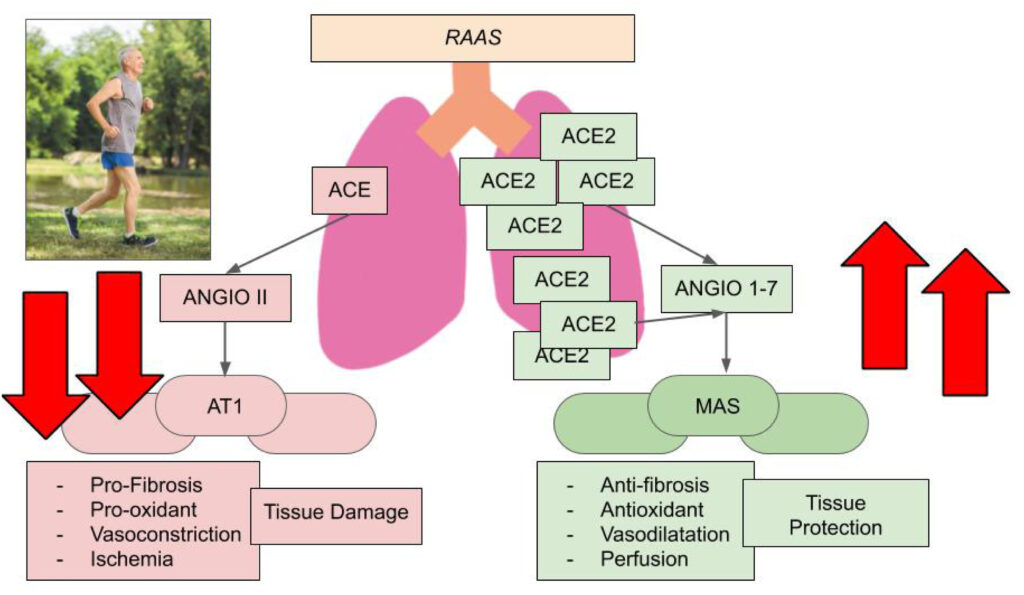
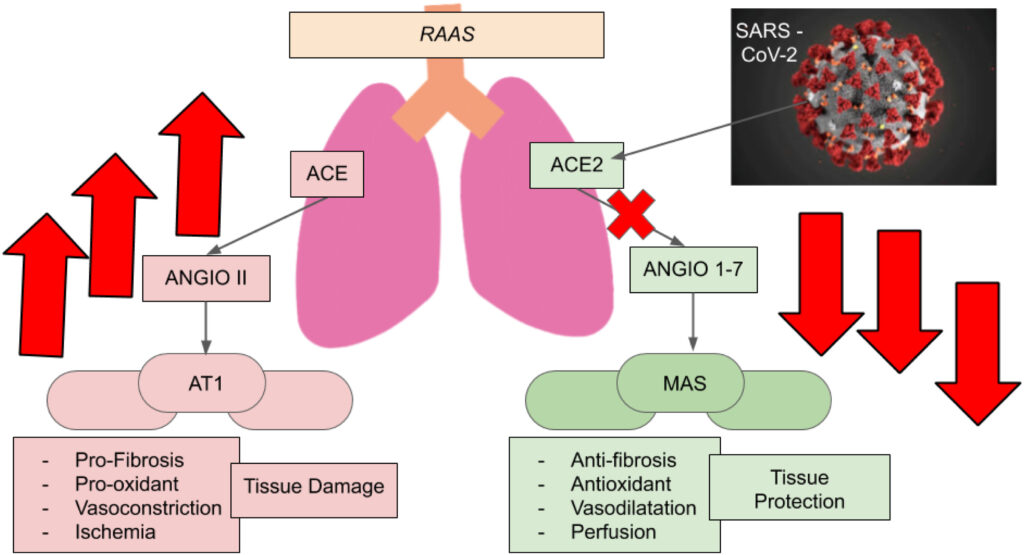
A counter-regulatory pathway of the RAAS involves the conversion of Angio II to angiotensin 1–7 (Angio-1–7) and membrane receptors (MAS) through the enzymatic activity of angiotensin-converting enzyme 2 (ACE2), which promotes a vasodilatory, anti-inflammatory, anti-fibrotic, and anti-proliferative effect on the tissues. Under appropriate physiological conditions, there is a balance between these two RAAS pathways ().
[…]
Images
Image gallery fullscreen viewer
Comments are moderated by the editorial team before publication. Discussions should be evidence-based and use scientific language. Conflicts of interest should be declared.