ABC Family Arquivos Brasileiros de Cardiologia International Journal of Cardiovascular Sciences ABC Heart Failure & Cardiomyopathy ABC Imagem Cardiovascular
Português English
ABC Family
Português English
  • About
    • About ABC Family
    • Internal Regulation
    • Editorial Board
    • Brazilian Society of Cardiology (SBC)
  • Issues
  • SBC Guidelines
  • Content
    • Videos
    • Podcasts
    • News
  • About
    • About ABC Family
    • Internal Regulation
    • Editorial Board
    • Brazilian Society of Cardiology (SBC)
  • Issues
  • SBC Guidelines
  • Content
    • Videos
    • Podcasts
    • News

ABC Family

  • ABC Family
  • Arquivos Brasileiros de Cardiologia
  • International Journal of Cardiovascular Sciences
  • ABC Heart Failure & Cardiomyopathy
  • ABC Imagem Cardiovascular
Search in

No content found.

Journals
Ordering
Article types
Others

  1. Home
  2. Keyword: Software
ABC
Editorial

Ventricular Repolarization as a Tool to Monitor Electrical Activity of the Heart

Marcelo Souto Nacif

Acute pulmonary embolism has a heterogeneous clinical presentation and the development of clinical tools for better stratification of the patients prognosis is extremely desired. Being able to discern which patient is most likely to have complications or even death is critical in the age of precision medicine. This may assist in choosing a more intensive and individualized treatment.

Computed tomography pulmonary angiography (CTPA) is already the most used method in emergencies for the diagnosis and stratification of patients with APE. The great variability of clinical presentations, whether in patients with cancer or different thrombogenic conditions, makes some quantitative data more attractive than just the qualitative analysis of the exam.–

[…]

  • acute
  • Algorithms
  • Artificial Intelligence/trends
  • Compute Tomography/methods
  • Precision Medicine
  • Prognosis
  • Pulmonary Embolism/complications
  • Software
Read Full Article
Creative Commons Attribution (CC BY) Creative Commons license
07/12/2020 DOI: 10.36660/abc.20200959 Views 1
Figure 1
ABC
Viewpoint

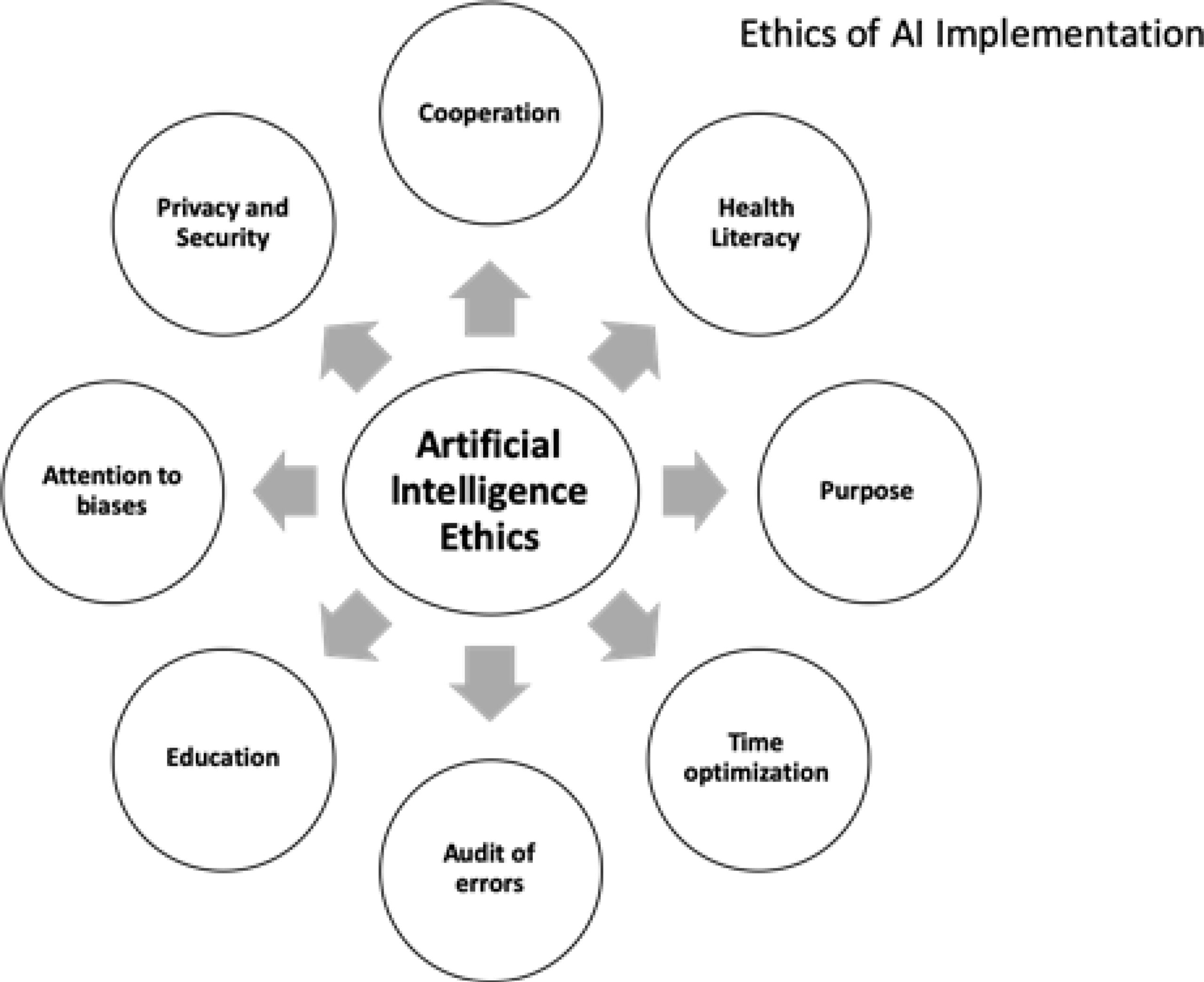
Ethics, Artificial Intelligence and Cardiology

Erito Marques de Souza Filho et al. Fernando de Amorim Fernandes Nikolas Cunha de Assis Pereira Claudio Tinoco Mesquita Ronaldo Altenburg Gismondi

Introduction

In the not too distant future, an artificially intelligent computer program will probably diagnose heart conditions more accurately than a board-certified cardiologist. Biomedical knowledge grows significantly, making it impossible for contemporary health professionals to be updated on all content published in their field. Similarly, the amount of information about the patient is increasingly larger and more accessible, making real-time management, filtering and selection impractical for an individual. In this context, Artificial Intelligence (AI) has a relevant role in health decision-making. It is the result of the combination of sophisticated mathematical models and computation to produce refined algorithms capable of emulating (or imitating) human intelligence. It has allowed for interesting applications in virtually all fields of medicine and human knowledge. In particular, in cardiology, several applications have been shown to be successful. Han et al., for instance, used machine learning (ML), a subset of AI, to analyze if this tool would be helpful to identify patients at risk of future rapid coronary plaque progression. Clinical epidemiological features and quantitative and qualitative information from coronary computed tomographic angiography were used (all of which were obtained from the PARADIGM study). They included 1,083 patients in the study and tested 10 different models. LogitBoost performed better. The area under the receiver operating characteristic curve (AUC) was 0.83 — better than the 10-year atherosclerotic cardiovascular disease risk score (ASCVD risk score), which was 0.59. In another study, Than et al. evaluated whether Gradient Boosting (also a ML algorithm) would be beneficial in predicting the likelihood of type 1 acute myocardial infarction. Features such as sex, age, rate of change of cardiac troponin I concentration and paired cardiac troponin I of a sample with 11,011 patients were considered. AUC was 0.96 and the ML model had better performance than the traditional European Society of Cardiology 0/3-hour pathway. Hedman et al. developed a ML algorithm to describe heart failure with preserved ejection fraction groups of patients based on their phenotype. They used clinical and electrocardiogram data. Six different groups were identified, with different levels of inflammatory and cardiovascular proteins and also with different outcomes. In light of that, in cardiology, the process of incorporating AI into the clinical practice is accelerated. The use of AI in cardiology is present in our daily lives, such as recognition of disease phenotypes, diagnosis, prognosis, and in treatment algorithms. AI has a huge disruptive potential and some advocate the possibility of the emergence of a new species, Homo incredibile, which supports its decisions on data and promotes a revolution in the digital ecosystem. However, this paradigm shift has unfortunately brought with it a myriad of challenges. Ethical issues are a great concern regarding these new technologies, and we will discuss some of them, as well as possible solutions and precautions.

[…]

  • Artificial Intelligence
  • Decision Making,Compter-Assisted
  • Information Management
  • Software
Read Full Article
Creative Commons Attribution (CC BY) Creative Commons license
28/09/2020 DOI: 10.36660/abc.20200143

How to cite this article

EndNote RIS

Electronic Document Format (Vancouver)

Nacif MS. Ventricular Repolarization as a Tool to Monitor Electrical Activity of the Heart. Arquivos Brasileiros de Cardiologia 2020;115(5):819-20.

Electronic Document Format (ABNT)

Nacif, Marcelo Souto. Ventricular Repolarization as a Tool to Monitor Electrical Activity of the Heart. Arquivos Brasileiros de Cardiologia, v. 115, n. 5, p. 819-820, Dec. 2020.

Electronic Document Format (APA)

Nacif, M. S. (2020). Ventricular Repolarization as a Tool to Monitor Electrical Activity of the Heart. Arquivos Brasileiros de Cardiologia, 115(5), 819-820.

Electronic Document Format (ISO)

Nacif, Marcelo Souto. Ventricular Repolarization as a Tool to Monitor Electrical Activity of the Heart. Arquivos Brasileiros de Cardiologia [online]. 2020, vol. 115, n. 5, [cited 2026-10-14], pp. 819-820. Available from: <https://journals.cardiol.br/en/article/ventricular-repolarization-as-a-tool-to-monitor-electrical-activity-of-the-heart-2/>. ISSN 0066-782X

EndNote RIS

Electronic Document Format (Vancouver)

Souza Filho EM, Fernandes FA, Pereira NCA, Mesquita CT, Gismondi RA. Ethics, Artificial Intelligence and Cardiology. Arquivos Brasileiros de Cardiologia 2020;115(3):579-83.

Electronic Document Format (ABNT)

Souza Filho, Erito Marques de; Fernandes, Fernando de Amorim; Pereira, Nikolas Cunha de Assis; Mesquita, Claudio Tinoco; Gismondi, Ronaldo Altenburg. Ethics, Artificial Intelligence and Cardiology. Arquivos Brasileiros de Cardiologia, v. 115, n. 3, p. 579-583, Sep. 2020.

Electronic Document Format (APA)

Souza Filho, E. M. , Fernandes, F. A., Pereira, N. C. A., Mesquita, C. T., & Gismondi, R. A. (2020). Ethics, Artificial Intelligence and Cardiology. Arquivos Brasileiros de Cardiologia, 115(3), 579-583.

Electronic Document Format (ISO)

Souza Filho, Erito Marques de and Fernandes, Fernando de Amorim and Pereira, Nikolas Cunha de Assis and Mesquita, Claudio Tinoco and Gismondi, Ronaldo Altenburg. Ethics, Artificial Intelligence and Cardiology. Arquivos Brasileiros de Cardiologia [online]. 2020, vol. 115, n. 3, [cited 2026-10-14], pp. 579-583. Available from: <https://journals.cardiol.br/en/article/ethics-artificial-intelligence-and-cardiology/>. ISSN 0066-782X

  • About ABC Family
  • Internal Regulation
  • Editorial Board
  • Brazilian Society of Cardiology (SBC)

Issues

SBC Guidelines

  • Videos
  • Podcasts
  • News