ABC Family Arquivos Brasileiros de Cardiologia International Journal of Cardiovascular Sciences ABC Heart Failure & Cardiomyopathy ABC Imagem Cardiovascular
Português English
ABC Family
Português English
  • About
    • About ABC Family
    • Internal Regulation
    • Editorial Board
    • Brazilian Society of Cardiology (SBC)
  • Issues
  • SBC Guidelines
  • Content
    • Videos
    • Podcasts
    • News
  • About
    • About ABC Family
    • Internal Regulation
    • Editorial Board
    • Brazilian Society of Cardiology (SBC)
  • Issues
  • SBC Guidelines
  • Content
    • Videos
    • Podcasts
    • News

ABC Family

  • ABC Family
  • Arquivos Brasileiros de Cardiologia
  • International Journal of Cardiovascular Sciences
  • ABC Heart Failure & Cardiomyopathy
  • ABC Imagem Cardiovascular
Search in

No content found.

Journals
Ordering
Article types
Others

  1. Home
  2. Keyword: Patient Care Planning
Figure 1
ABC
Research Letter

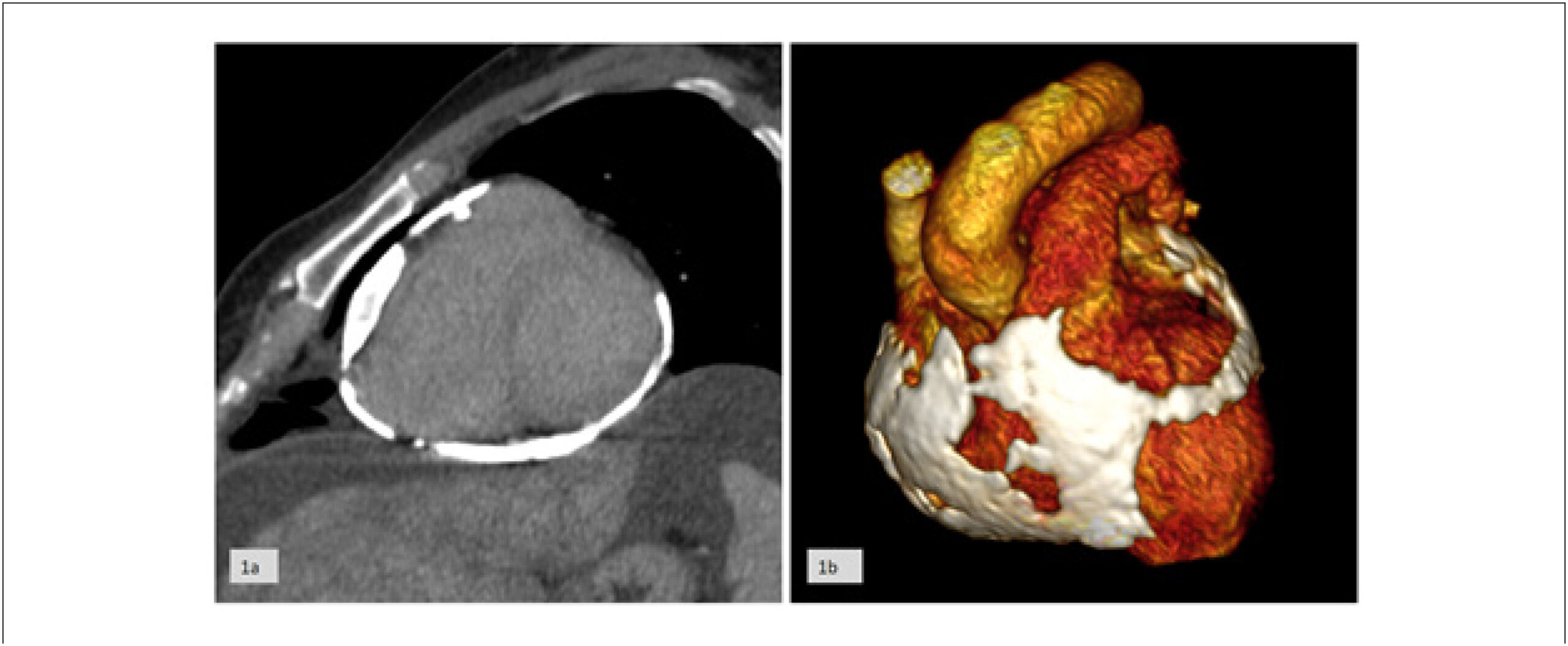
3D Printing in Constrictive Pericarditis Assessment

Juliana Cadilho Abrantes et al. Fernanda Turque Bernardo Fróes Demier Daniel Gama Neves … Davi Shunji Yahiro Tadeu Takao Almodovar Kubo Leonardo Canale Claudio Tinoco Mesquita

Introduction

Constrictive pericarditis is a rare disease, often diagnosed belatedly. Radical pericardiectomy is the recommended procedure in cases of constrictive pericarditis, although it is a complex and time-consuming surgery. These aspects make 3D printing potentially valuable in surgical planning, allowing the healthcare team to study a printed model for better comprehension of the surgical area and more efficient planning.–

Studies have also shown satisfactory results in medical education, particularly in anatomy,, with reports of high-fidelity anatomical models, including those with congenital heart defects. However, until now, there have been no reports of using 3D cardiac printing for surgical guidance or teaching about constrictive pericarditis.

[…]
  • Education, Medical
  • Imaging, Threedimensional/methods
  • Models Anatomic
  • Patient Caare Planning
  • Patient Care Planning
  • Pericardiectomy/surgery
  • Pericarditis, Constrictive/surgery
Read Full Article
Creative Commons Attribution (CC BY) Creative Commons license
05/04/2024 DOI: 10.36660/abc.20220866 Views 1
Effectiveness of a myocardial infarction protocol in reducing door-to-ballon time
ABC
Artigo Original

Effectiveness of a myocardial infarction protocol in reducing door-to-ballon time

Luis Cláudio Lemos Correia et al. Mariana Brito Felipe Kalil Michael Sabino … Guilherme Garcia Felipe Ferreira Iracy Matos Peter Jacobs Liliana Ronzoni Márcia Noya-Rabelo

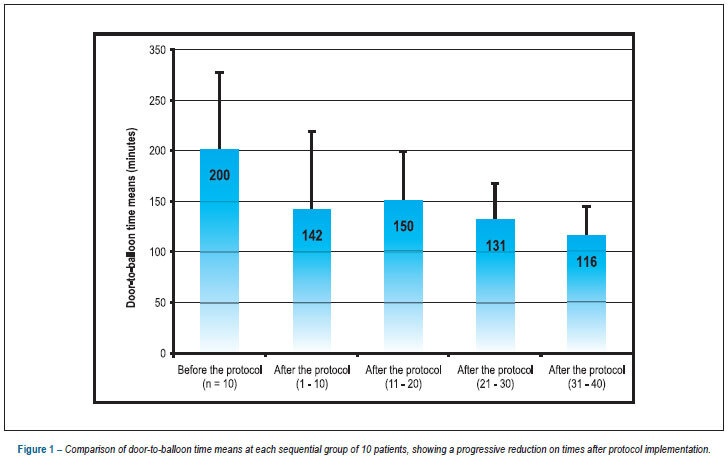
BACKGROUND: An adequate door-to-balloon time (<120 minutes) is the necessary condition for the efficacy of primary angioplasty in infarction to translate into effectiveness. OBJECTIVE: To describe the effectiveness of a quality of care protocol in reducing the door-to-balloon time. METHODS: Between May 2010 and August 2012, all individuals undergoing primary angioplasty in our hospital were analyzed. The door time was electronically recorded at the moment the patient took a number to be evaluated in the emergency room, which occurred prior to filling the check-in forms and to the triage. The balloon time was defined as the beginning of artery opening (introduction of the first device). The first 5 months of monitoring corresponded to the period of pre-implementation of the protocol. The protocol comprised the definition of a flowchart of actions from patient arrival at the hospital, the team's awareness raising in relation to the prioritization of time, and provision of a periodic feedback on the results and possible inadequacies. RESULTS: A total of 50 individuals were assessed. They were divided into five groups of 10 sequential patients (one group pre- and four groups post-protocol). The door-to-balloon time regarding the 10 cases recorded before protocol implementation was 200 ± 77 minutes. After protocol implementation, there was a progressive reduction of the door-to-balloon time to 142±78 minutes in the first 10 patients, then to 150±50 minutes, 131±37 minutes and, finally, 116±29 minutes in the three sequential groups of 10 patients, respectively. Linear regression between sequential patients and the door-to-balloon time (r = – 0.41) showed a regression coefficient of – 1.74 minutes. CONCLUSION: The protocol implementation proved effective in the reduction of the door-to-balloon time.

  • Acute coronary syndrome
  • Angioplasty, Balloon, Coronary
  • Myocardial Infarction
  • Patient Care Planning
Read Full Article
Creative Commons Attribution (CC BY) Creative Commons license
24/05/2013 DOI: 10.5935/abc.20130108 Views 3

How to cite this article

EndNote RIS

Electronic Document Format (Vancouver)

Abrantes JC, Turque F, Demier BF, Neves DG, Yahiro DS, Kubo TTA, Canale L, et al. 3D Printing in Constrictive Pericarditis Assessment. Arquivos Brasileiros de Cardiologia 2024;121(2):e20220866.

Electronic Document Format (ABNT)

Abrantes, Juliana Cadilho; Turque, Fernanda; Demier, Bernardo Fróes; Neves, Daniel Gama; Yahiro, Davi Shunji; Kubo, Tadeu Takao Almodovar; Canale, Leonardo; Mesquita, Claudio Tinoco. 3D Printing in Constrictive Pericarditis Assessment. Arquivos Brasileiros de Cardiologia, v. 121, n. 2, e20220866, Apr. 2024.

Electronic Document Format (APA)

Abrantes, J. C., Turque, F., Demier, B. F., Neves, D. G., Yahiro, D. S., Kubo, T. T. A., Canale, L., & Mesquita, C. T. (2024). 3D Printing in Constrictive Pericarditis Assessment. Arquivos Brasileiros de Cardiologia, 121(2), e20220866.

Electronic Document Format (ISO)

Abrantes, Juliana Cadilho and Turque, Fernanda and Demier, Bernardo Fróes and Neves, Daniel Gama and Yahiro, Davi Shunji and Kubo, Tadeu Takao Almodovar and Canale, Leonardo and Mesquita, Claudio Tinoco. 3D Printing in Constrictive Pericarditis Assessment. Arquivos Brasileiros de Cardiologia [online]. 2024, vol. 121, n. 2, [cited 2026-10-14], e20220866. Available from: <https://journals.cardiol.br/en/article/3d-printing-in-constrictive-pericarditis-assessment/>. ISSN 0066-782X

EndNote RIS

Electronic Document Format (Vancouver)

Correia LCL, Brito M, Kalil F, Sabino M, Garcia G, Ferreira F, Matos I, et al. Effectiveness of a myocardial infarction protocol in reducing door-to-ballon time. Arquivos Brasileiros de Cardiologia 2013;101(1):26-34.

Electronic Document Format (ABNT)

Correia, Luis Cláudio Lemos; Brito, Mariana; Kalil, Felipe; Sabino, Michael; Garcia, Guilherme; Ferreira, Felipe; Matos, Iracy; Jacobs, Peter; Ronzoni, Liliana; Noya-Rabelo, Márcia. Effectiveness of a myocardial infarction protocol in reducing door-to-ballon time. Arquivos Brasileiros de Cardiologia, v. 101, n. 1, p. 26-34, May. 2013.

Electronic Document Format (APA)

Correia, L. C. L., Brito, M., Kalil, F., Sabino, M., Garcia, G., Ferreira, F., Matos, I., Jacobs, P., Ronzoni, L., & Noya-Rabelo, M. (2013). Effectiveness of a myocardial infarction protocol in reducing door-to-ballon time. Arquivos Brasileiros de Cardiologia, 101(1), 26-34.

Electronic Document Format (ISO)

Correia, Luis Cláudio Lemos and Brito, Mariana and Kalil, Felipe and Sabino, Michael and Garcia, Guilherme and Ferreira, Felipe and Matos, Iracy and Jacobs, Peter and Ronzoni, Liliana and Noya-Rabelo, Márcia. Effectiveness of a myocardial infarction protocol in reducing door-to-ballon time. Arquivos Brasileiros de Cardiologia [online]. 2013, vol. 101, n. 1, [cited 2026-10-14], pp. 26-34. Available from: <https://journals.cardiol.br/en/article/effectiveness-of-a-myocardial-infarction-protocol-in-reducing-door-to-ballon-time/>. ISSN 0066-782X

  • About ABC Family
  • Internal Regulation
  • Editorial Board
  • Brazilian Society of Cardiology (SBC)

Issues

SBC Guidelines

  • Videos
  • Podcasts
  • News