ABC Family Arquivos Brasileiros de Cardiologia International Journal of Cardiovascular Sciences ABC Heart Failure & Cardiomyopathy ABC Imagem Cardiovascular
Português English
ABC Family
Português English
  • About
    • About ABC Family
    • Internal Regulation
    • Editorial Board
    • Brazilian Society of Cardiology (SBC)
  • Issues
  • SBC Guidelines
  • Content
    • Videos
    • Podcasts
    • News
  • About
    • About ABC Family
    • Internal Regulation
    • Editorial Board
    • Brazilian Society of Cardiology (SBC)
  • Issues
  • SBC Guidelines
  • Content
    • Videos
    • Podcasts
    • News

ABC Family

  • ABC Family
  • Arquivos Brasileiros de Cardiologia
  • International Journal of Cardiovascular Sciences
  • ABC Heart Failure & Cardiomyopathy
  • ABC Imagem Cardiovascular
Search in

No content found.

Journals
Ordering
Article types
Others

  1. Home
  2. Keyword: Myocardial/radionuclide imaging
ABCIC
Review Article

Applicability of Myocardial Perfusion Scintigraphy in the Evaluation of Cardiac Synchronization

Christiane Cigagna Wiefels Reis et al. Erivelton Alessandro do Nascimento Fernanda Baptista Ribeiro Dias Mario Luiz Ribeiro … Annelise Passos Bispo Wanderley Layanara Albino Batista Thais Helena Peixoto Nunes Claudio Tinoco Mesquita

Abstract

To systematically assess the literature on the applicability of myocardial perfusion scintigraphy with phase analysis in the investigation of cardiac dyssynchrony and in the selection of patients for cardiac resynchronization therapy (CRT), manuscripts published on the PubMed database over the past five years have been reviewed. The following MeSH terms were used: heart failure, left ventricular, dyssynchrony, gated-spect, phase analysis and resynchronization therapy. Altogether, 99 manuscripts were included for discussion. Speckle-tracking echocardiography is still widely used in the evaluation of dyssynchrony, but the advent of myocardial perfusion scintigraphy with the phase analysis technique has been gaining ground, as besides being operator-independent, it can evaluate myocardial viability in the same test. Its use became more widespread in patients with left bundle branch block, with recommendation of CRT. Phase analysis also allows evaluating, in a highly reproducible way, the last ventricular segment to contract, hence allowing the best positioning of the CRT electrode. Knowing that the presence, location and extent of fibrosis in the left ventricle, associated with dyssynchrony are determinants of response to resynchronization therapy, gated-SPECT can provide this information in a single test and in a reproducible and accurate way. Phase histogram offers several parameters that provide greater sensitivity and specificity to the method. It seems that the technique is able to add value both in the selection and in the evaluation of response of patients eligible to CRT. Further studies are being conducted to demonstrate its clinical applicability.
  • Cardiac Resynchronization Therapy
  • Echocardiography, Doppler
  • Heart Failure
  • Myocardial Perfusion Imaging
  • Myocardial/radionuclide imaging
Read Full Article
Creative Commons Attribution (CC BY) Creative Commons license
20/01/2022 DOI: 10.5935/2318-8219.20170013 Views 1
Figure 1
ABC
Original Article

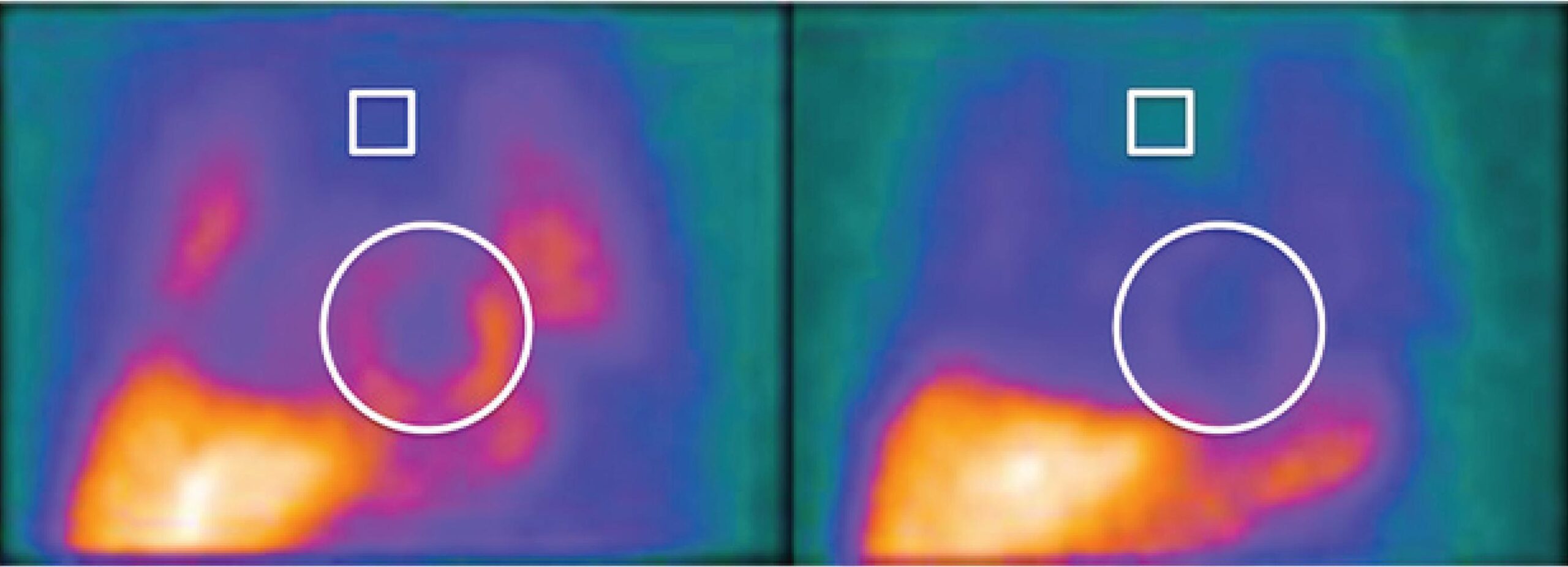
Sympathetic Dysautonomia in Heart Failure by 123I-MIBG: comparison between Chagasic, non-Chagasic and heart transplant patients

Viviane Santuari Parisotto Marino et al. Sandra Monetti Dumont Luciene das Graças Mota Daniela de Souza Braga … Stephanie Saliba de Freitas Maria da Consolação Vieira Moreira

Abstract

Background:

Heart failure (HF) is a severe public health problem because of its high morbidity and mortality and elevated costs, thus requiring better understanding of its course. In its complex and multifactorial pathogenesis, sympathetic hyperactivity plays a relevant role. Considering that sympathetic dysfunction is already present in the initial phases of chronic Chagas cardiomyopathy (CCC) and frequently associated with a worse prognosis, we assumed it could be more severe in CCC than in cardiomyopathies of other etiologies (non-CCC).

Objectives:

To assess the cardiac sympathetic dysfunction 123I-MIBG) of HF, comparing individuals with CCC to those with non-CCC, using heart transplant (HT) patients as denervated heart parameters.

Methods:

We assessed 76 patients with functional class II-VI HF, being 25 CCC (17 men), 25 non-CCC (14 men) and 26 HT (20 men), by use of cardiac 123I-metaiodobenzylguanidine 123I-MIBG) scintigraphy, estimating the early and late heart-to-mediastinum ratio (HMR) of 123I-MIBG uptake and cardiac washout (WO%). The 5% significance level was adopted in the statistical analysis.

Results:

The early and late HMR values were 1.73 ± 0.24 and 1.58 ± 0.27, respectively, in CCC, and 1.62 ± 0.21 and 1.44 ± 0.16 in non-CCC (p = NS), being, however, higher in HT patients (p < 0.001). The WO% values were 41.65 ± 21.4 (CCC), 47.37 ± 14.19% (non-CCC) and 43.29 ± 23.02 (HT), p = 0.057. The late HMR values showed a positive weak correlation with left ventricular ejection fraction (LVEF) in CCC and non-CCC (r = 0.42 and p = 0.045; and r = 0.49 and p = 0.015, respectively).

Conclusion:

Sympathetic hyperactivity 123I-MIBG) was evidenced in patients with class II-IV HF, LVEF < 45%, independently of the HF etiology, as compared to HT patients.

  • 123 I-metaiodobenzylguanidine 123I-MIBG)
  • Chagas Cardiomyopathy
  • Heart Failure
  • Myocardial/radionuclide imaging
  • Primary Dysautonomies
Read Full Article
Creative Commons Attribution (CC BY) Creative Commons license
06/08/2018 DOI: 10.5935/abc.20180124
ABC
Editorial

Cardiac Sympathetic Activity and the Neuro-Humoral Theory on Heart Failure with Reduced Ejection Fraction: Have We Learned Enough?

Thiago Quinaglia A. C. Silva et al. Otávio R. Coelho-Filho

Since the 1970s,, in observational trials, and more recently in placebo-controlled randomized trials,, antagonizing beta-1 adrenergic receptors in the myocardium has been shown to mitigate the burden of heart failure with reduced ejection fraction (HFrEF). Mortality has been reduced by 34-65% according to these studies. However, inhibiting the action of the peripheral sympathetic nervous system (SNS) by blocking alpha1 or stimulating alpha-2 central receptors has shown negative results or even an increased mortality, despite reducing norepinephrine plasma levels.– This indicates that SNS effects on myocardial receptors, more than in peripheral receptors, play a pivotal role in HFrEF pathophysiology.

Hyper-activation of the SNS and the renin-angiotensin-aldosterone axis, combined with an increase in load-dependent peptides and inflammatory cascades constitute the neuro-humoral theory on HFrEF progression. While the neuro-humoral response counteracts and compensates for an initial myocardial insult, in the long-term it contributes to the progression of the disease to the point that cardiovascular homeostasis eventually succumbs if not treated properly. Therapies targeting all these neuro-humoral responses have dramatically changed the natural history of HFrEF.

[…]

  • 123I-MIBC
  • Chagas Cardiomyopathy
  • Heart Failure
  • Myocardial/radionuclide imaging
  • Primary Dysautonomies
Read Full Article
Creative Commons Attribution (CC BY) Creative Commons license
01/08/2018 DOI: 10.5935/abc.20180148
ABC
Original Article

Applicability of the Appropriate use Criteria for Myocardial Perfusion Scintigraphy

Anderson de Oliveira et al. Maria Fernanda Rezende Renato Corrêa Rodrigo Mousinho … Jader Cunha Azevedo Sandra Marina Miranda Aline Ribeiro Oliveira Ricardo Fraga Gutterres Evandro Tinoco Mesquita Cláudio Tinoco Mesquita

Background:

Appropriateness Criteria for nuclear imaging exams were created by American College of Cardiology (ACC) e American Society of Nuclear Cardiology (ASNC) to allow the rational use of tests. Little is known whether these criteria have been followed in clinical practice.

Objective:

To evaluate whether the medical applications of myocardial perfusion scintigraphy (MPS) in a private nuclear medicine service of a tertiary cardiology hospital were suitable to the criteria of indications proposed by the American medical societies in 2005 and 2009 and compare the level of indication of both.

Methods:

We included records of 383 patients that underwent MPS, November 2008 up to February 2009. Demographic characteristics, patient’s origin, coronary risk factors, time of medical graduation and appropriateness criteria of medical applications were studied. The criteria were evaluated by two independent physicians and, in doubtful cases, defined by a medical expert in MPS.

Results:

Mean age was 65 ± 12 years. Of the 367 records reviewed, 236 (64.3%) studies were performed in men and 75 (20.4%) were internee. To ACC 2005, 255 (69.5%) were considered appropriate indication and 13 (3.5%) inappropriate. With ACC 2009, 249 (67.8%) were considered appropriate indications and 13 (5.2%) inappropriate.

Conclusions:

We observed a high rate of adequacy of medical indications for MPS. Compared to the 2005 version, 2009 did not change the results.

  • Diagnostic Imaging
  • Myocardial Perfusion Imaging
  • Myocardial/radionuclide imaging
  • Quality of Health Care
Read Full Article
Creative Commons Attribution (CC BY) Creative Commons license
23/09/2014 DOI: 10.5935/abc.20140140

How to cite this article

EndNote RIS

Electronic Document Format (Vancouver)

Reis CCW, Nascimento EA, Dias FBR, Ribeiro ML, Wanderley APB, Batista LA, Nunes THP, et al. Applicability of Myocardial Perfusion Scintigraphy in the Evaluation of Cardiac Synchronization. Arquivos Brasileiros de Cardiologia Imagem cardiovascular 2022;30(2):54-63.

Electronic Document Format (ABNT)

Reis, Christiane Cigagna Wiefels; Nascimento, Erivelton Alessandro do; Dias, Fernanda Baptista Ribeiro; Ribeiro, Mario Luiz; Wanderley, Annelise Passos Bispo; Batista, Layanara Albino; Nunes, Thais Helena Peixoto; Mesquita, Claudio Tinoco. Applicability of Myocardial Perfusion Scintigraphy in the Evaluation of Cardiac Synchronization. Arquivos Brasileiros de Cardiologia Imagem cardiovascular, v. 30, n. 2, p. 54-63, Jan. 2022.

Electronic Document Format (APA)

Reis, C. C. W., Nascimento, E. A. , Dias, F. B. R., Ribeiro, M. L., Wanderley, A. P. B., Batista, L. A., Nunes, T. H. P., & Mesquita, C. T. (2022). Applicability of Myocardial Perfusion Scintigraphy in the Evaluation of Cardiac Synchronization. Arquivos Brasileiros de Cardiologia Imagem cardiovascular, 30(2), 54-63.

Electronic Document Format (ISO)

Reis, Christiane Cigagna Wiefels and Nascimento, Erivelton Alessandro do and Dias, Fernanda Baptista Ribeiro and Ribeiro, Mario Luiz and Wanderley, Annelise Passos Bispo and Batista, Layanara Albino and Nunes, Thais Helena Peixoto and Mesquita, Claudio Tinoco. Applicability of Myocardial Perfusion Scintigraphy in the Evaluation of Cardiac Synchronization. Arquivos Brasileiros de Cardiologia Imagem cardiovascular [online]. 2022, vol. 30, n. 2, [cited 2026-10-14], pp. 54-63. Available from: <https://journals.cardiol.br/en/article/applicability-of-myocardial-perfusion-scintigraphy-in-the-evaluation-of-cardiac-synchronization/>. ISSN 2318-8219

EndNote RIS

Electronic Document Format (Vancouver)

Marino VSP, Dumont SM, Mota LG, Braga DS, Freitas SS, Moreira MCV. Sympathetic Dysautonomia in Heart Failure by 123I-MIBG: comparison between Chagasic, non-Chagasic and heart transplant patients. Arquivos Brasileiros de Cardiologia 2018;111(2):182-90.

Electronic Document Format (ABNT)

Marino, Viviane Santuari Parisotto; Dumont, Sandra Monetti; Mota, Luciene das Graças; Braga, Daniela de Souza; Freitas, Stephanie Saliba de; Moreira, Maria da Consolação Vieira. Sympathetic Dysautonomia in Heart Failure by 123I-MIBG: comparison between Chagasic, non-Chagasic and heart transplant patients. Arquivos Brasileiros de Cardiologia, v. 111, n. 2, p. 182-190, Aug. 2018.

Electronic Document Format (APA)

Marino, V. S. P., Dumont, S. M., Mota, L. G., Braga, D. S., Freitas, S. S. , & Moreira, M. C. V. (2018). Sympathetic Dysautonomia in Heart Failure by 123I-MIBG: comparison between Chagasic, non-Chagasic and heart transplant patients. Arquivos Brasileiros de Cardiologia, 111(2), 182-190.

Electronic Document Format (ISO)

Marino, Viviane Santuari Parisotto and Dumont, Sandra Monetti and Mota, Luciene das Graças and Braga, Daniela de Souza and Freitas, Stephanie Saliba de and Moreira, Maria da Consolação Vieira. Sympathetic Dysautonomia in Heart Failure by 123I-MIBG: comparison between Chagasic, non-Chagasic and heart transplant patients. Arquivos Brasileiros de Cardiologia [online]. 2018, vol. 111, n. 2, [cited 2026-10-14], pp. 182-190. Available from: <https://journals.cardiol.br/en/article/sympathetic-dysautonomia-in-heart-failure-by-123i-mibg-comparison-between-chagasic-non-chagasic-and-heart-transplant-patients/>. ISSN 0066-782X

EndNote RIS

Electronic Document Format (Vancouver)

Silva TQAC, Coelho-Filho OR. Cardiac Sympathetic Activity and the Neuro-Humoral Theory on Heart Failure with Reduced Ejection Fraction: Have We Learned Enough?. Arquivos Brasileiros de Cardiologia 2018;111(2):191-2.

Electronic Document Format (ABNT)

Silva, Thiago Quinaglia A. C.; Coelho-Filho, Otávio R.. Cardiac Sympathetic Activity and the Neuro-Humoral Theory on Heart Failure with Reduced Ejection Fraction: Have We Learned Enough?. Arquivos Brasileiros de Cardiologia, v. 111, n. 2, p. 191-192, Jul. 2018.

Electronic Document Format (APA)

Silva, T. Q. A. C., & Coelho-Filho, O. R. (2018). Cardiac Sympathetic Activity and the Neuro-Humoral Theory on Heart Failure with Reduced Ejection Fraction: Have We Learned Enough?. Arquivos Brasileiros de Cardiologia, 111(2), 191-192.

Electronic Document Format (ISO)

Silva, Thiago Quinaglia A. C. and Coelho-Filho, Otávio R.. Cardiac Sympathetic Activity and the Neuro-Humoral Theory on Heart Failure with Reduced Ejection Fraction: Have We Learned Enough?. Arquivos Brasileiros de Cardiologia [online]. 2018, vol. 111, n. 2, [cited 2026-10-14], pp. 191-192. Available from: <https://journals.cardiol.br/en/article/cardiac-sympathetic-activity-and-the-neuro-humoral-theory-on-heart-failure-with-reduced-ejection-fraction-have-we-learned-enough/>. ISSN 0066-782X

EndNote RIS

Electronic Document Format (Vancouver)

Oliveira A, Rezende MF, Corrêa R, Mousinho R, Azevedo JC, Miranda SM, Oliveira AR, et al. Applicability of the Appropriate use Criteria for Myocardial Perfusion Scintigraphy. Arquivos Brasileiros de Cardiologia 2014;103(5):375-81.

Electronic Document Format (ABNT)

Oliveira, Anderson de; Rezende, Maria Fernanda; Corrêa, Renato; Mousinho, Rodrigo; Azevedo, Jader Cunha; Miranda, Sandra Marina; Oliveira, Aline Ribeiro; Gutterres, Ricardo Fraga; Mesquita, Evandro Tinoco; Mesquita, Cláudio Tinoco. Applicability of the Appropriate use Criteria for Myocardial Perfusion Scintigraphy. Arquivos Brasileiros de Cardiologia, v. 103, n. 5, p. 375-381, Sep. 2014.

Electronic Document Format (APA)

Oliveira, A. , Rezende, M. F., Corrêa, R., Mousinho, R., Azevedo, J. C., Miranda, S. M., Oliveira, A. R., Gutterres, R. F., Mesquita, E. T., & Mesquita, C. T. (2014). Applicability of the Appropriate use Criteria for Myocardial Perfusion Scintigraphy. Arquivos Brasileiros de Cardiologia, 103(5), 375-381.

Electronic Document Format (ISO)

Oliveira, Anderson de and Rezende, Maria Fernanda and Corrêa, Renato and Mousinho, Rodrigo and Azevedo, Jader Cunha and Miranda, Sandra Marina and Oliveira, Aline Ribeiro and Gutterres, Ricardo Fraga and Mesquita, Evandro Tinoco and Mesquita, Cláudio Tinoco. Applicability of the Appropriate use Criteria for Myocardial Perfusion Scintigraphy. Arquivos Brasileiros de Cardiologia [online]. 2014, vol. 103, n. 5, [cited 2026-10-14], pp. 375-381. Available from: <https://journals.cardiol.br/en/article/applicability-of-the-appropriate-use-criteria-for-myocardial-perfusion-scintigraphy/>. ISSN 0066-782X

  • About ABC Family
  • Internal Regulation
  • Editorial Board
  • Brazilian Society of Cardiology (SBC)

Issues

SBC Guidelines

  • Videos
  • Podcasts
  • News