Gonzalo Navarrete et al. Eduardo Pozo Fernando Rivero Teresa Bastante … Luis Jesús Jiménez-Borreguero Fernando Alfonso
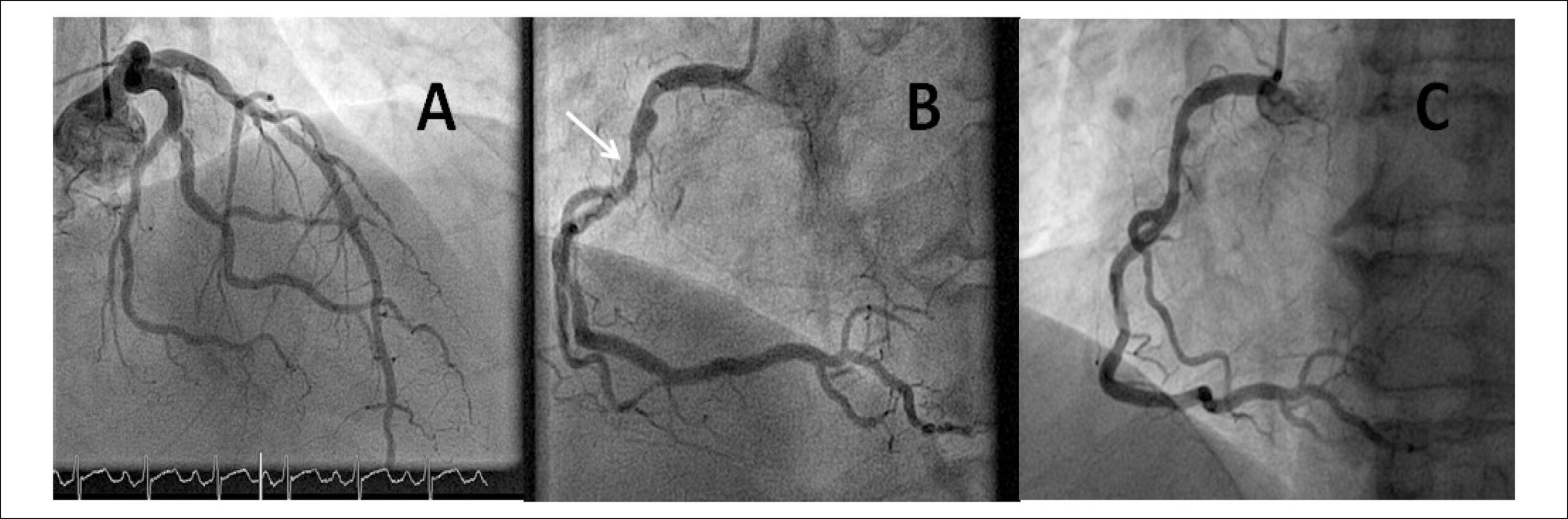
A 69-year-old male with hypertension, dyslipemia and no previous cardiovascular disease presented a transient ST-segment elevation on electrographic (ECG) monitoring during a planned ureteroscopy. The patient remained asymptomatic during the postoperative period. He only referred very sporadic episodes of effort chest pain in the last years without progression or events at rest. Given the lack of ECG registry, an exercise stress echocardiogram was indicated. The study was clinical and echocardiographically positive for inducible ischemia, with hypokinesia of the mid and apical anterior wall segments at peak exercise without ECG changes. With the documentation of ischemia in the left anterior descending coronary artery (LAD) territory, a coronary angiogram was performed. Only a mild lesion in the proximal LAD was demonstrated. However, a severe lesion in the proximal right coronary artery (RCA) ( and ), was treated with a bioabsorbable scaffold (), despite the absence of inducible ischemia demonstration in that territory. The patient was discharged on dual antiplatelet treatment, betablockers and statins and remained asymptomatic without new episodes of chest pain. Six months later, during another ureteroscopy, a new episode of transient ST-segment elevation was observed on ECG monitoring. At that time, a treadmill test was performed showing marked transient ST-segment elevation in V1-V4 leads (). Repeated coronary angiography demonstrated the good result of the previously implanted stent in RCA and persistence of a mild plaque in the proximal LAD. Due to the previously documented ECG changes in the right precordial leads, a pressure guide was performed in the proximal LAD, which ruled out the functional significance of this lesion (iFR 0.88; FFR 0.87 with 600 mcg Adenosine) (). In the light of the discordant ECG, echocardiographic and angiographic findings, a vasospasm test with intracoronary methylergonovin (20 mcg) was eventually carried out. This test was positive with angina reproduction and a significant reduction in LAD vessel diameter up to 90% diameter stenosis () with a concomitant Pd/Pa value of 0.60 (). Finally, the patient could be discharged under treatment with nitrates and calcium channel blockers, remaining asymptomatic at 1-year follow-up. An exercise stress echocardiogram was negative for inducible ischemia and repeated ureteroscopy procedures were uneventful.
[…]