Percutaneous Patent Foramen Ovale Occlusion in Patients Over 60 Years of Age with History of Stroke
Abstract
Background:
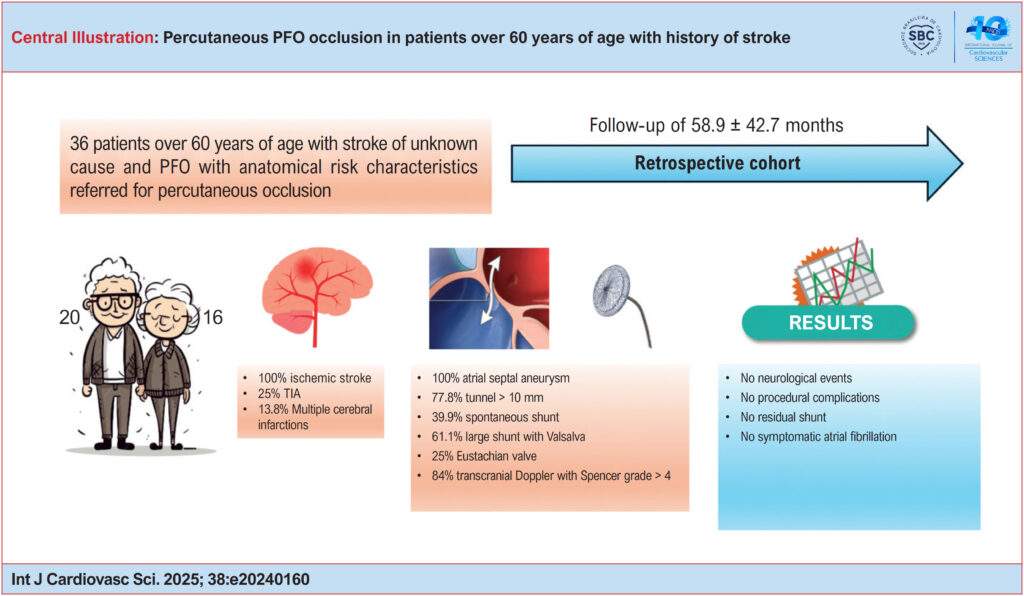
The prevalence of patent foramen ovale (PFO) is 27%. PFO is related to paradoxical embolism, which can cause ischemic stroke. Ischemic stroke without an identifiable cause is common, accounting for up to 40% of cases, and PFO is frequently found in these patients. The prevalence of PFO is almost 3 times higher in elderly patients with ischemic stroke without identified etiology, suggesting that these patients may also benefit from PFO closure.
Objectives:
The primary objective was to assess the recurrence of ischemic stroke or transient ischemic attack during clinical follow-up. The secondary objective was to assess the occurrence of procedural complications, onset of atrial fibrillation, and reduced anticoagulant use.
Methods:
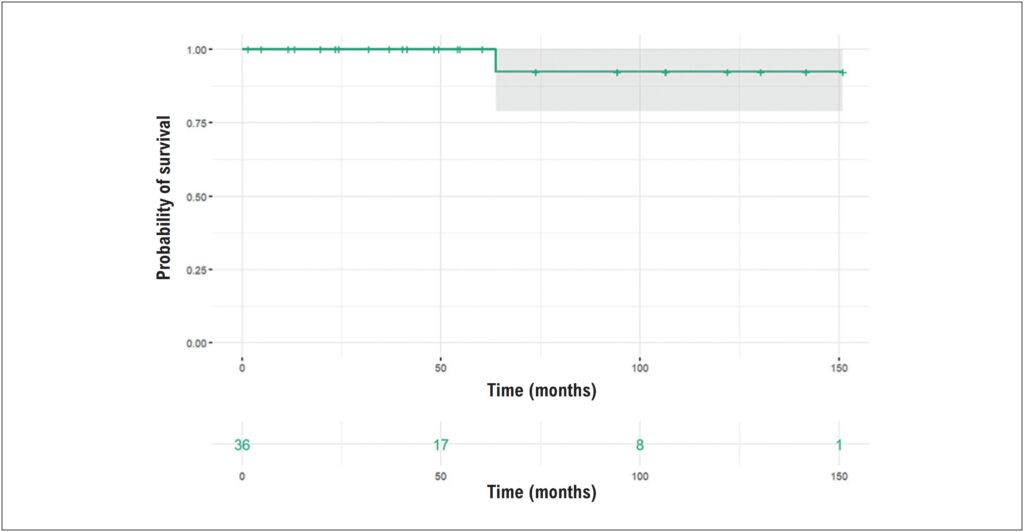
This retrospective cohort study included 36 patients over 60 years of age with prior ischemic stroke who underwent PFO closure. Survival analysis was performed using the Kaplan-Meier model. Independence tests between categorical variables were performed using the chi-square test and Fisher’s exact test, adopting a significance level of 0.05.
Results:
The patients’ mean age was 69.6 ± 6.5 years, and 55.5% were men. No complications occurred during the procedures. Echocardiography was performed 30 days after the intervention, showing no residual shunts. During the follow-up of 58.9 ± 42.7 months, there were no cases of ischemic stroke, transient ischemic attack, or atrial fibrillation related to the procedure. The use of anticoagulants decreased from 41.7% to 5.6% (p = 0.03).
Conclusions:
Percutaneous PFO occlusion for the prevention of cerebrovascular events in individuals over 60 years of age with prior ischemic stroke is effective and safe, with a low risk of complications, and it can reduce the risk of bleeding by reducing the use of anticoagulants.
Images
Image gallery fullscreen viewer
Comments are moderated by the editorial team before publication. Discussions should be evidence-based and use scientific language. Conflicts of interest should be declared.