Physical-Functional Profile of Obese Individuals With or Without Metabolic Syndrome Classified by Cardiovascular Risk
Abstract
Background:
Obesity is strongly associated with increased cardiovascular risk (CVR) and the development of metabolic syndrome (MS), conditions that negatively affect body composition, metabolic profile, and functional capacity. CVR stratification may contribute to a better understanding of these alterations and to the development of early intervention strategies.
Objectives:
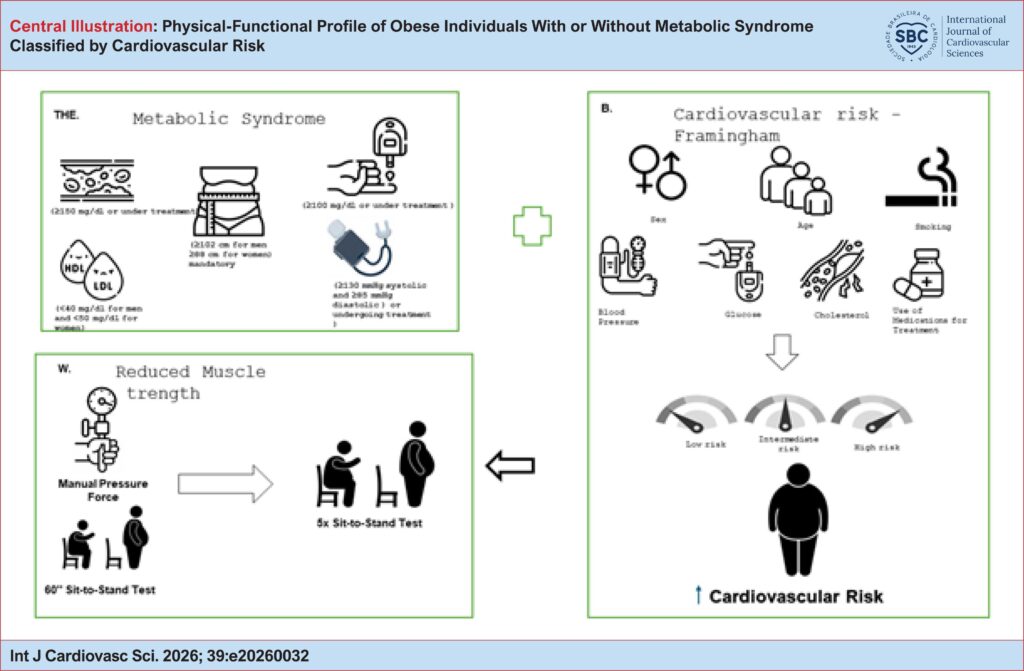
To evaluate the physical–functional profile of obese individuals with and without MS, classified according to CVR, and to compare biochemical, body composition, and functional parameters among these groups.
Methods:
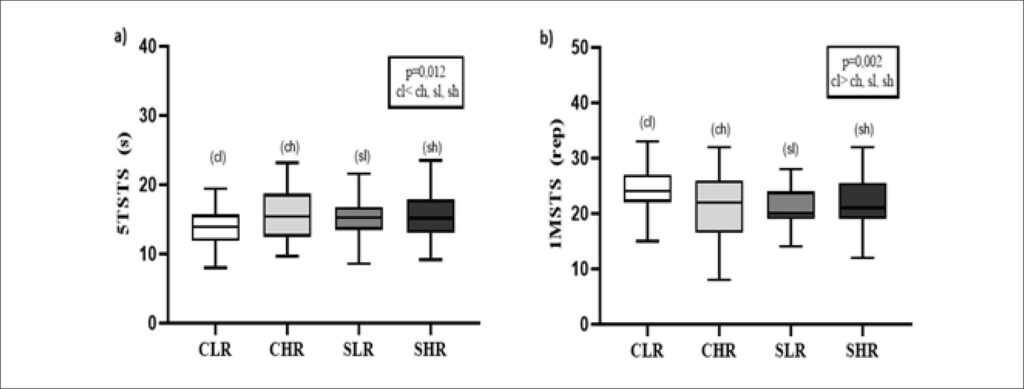
This cross-sectional study included 212 obese individuals allocated into four groups: control with low CVR (CLR, n = 63), control with intermediate/high CVR (CHR, n = 33), MS with low CVR (SLR, n = 55), and MS with intermediate/high CVR (SHR, n = 61). Body composition, blood metabolic parameters, and functional performance were assessed using sit-to-stand tests. Group comparisons were performed using one-way ANOVA or Kruskal–Wallis tests, followed by Tukey’s or Dunn’s post hoc tests, with significance set at p < 0.05.
Results:
MS was present in 54.7% of the sample, and approximately 44% exhibited intermediate/high CVR. The CLR group showed lower visceral adiposity and waist circumference (WC) values (p 0.05).
Conclusions:
Individuals with lower CVR showed better sit-to-stand performance, while poorer performance was observed in participants with MS, particularly when associated with higher CVR. Sit-to-stand tests may provide useful complementary information for assessing physical performance in this population.
Images
Image gallery fullscreen viewer
Comments are moderated by the editorial team before publication. Discussions should be evidence-based and use scientific language. Conflicts of interest should be declared.