Role of Menopause on Cardiometabolic Profile and Lipoprotein Subfractions: Results from the SHIP-Brazil Study
Abstract
Background
Menopause is characterized by reduced estrogen production and has been associated with increased cardiovascular disease (CVD) risk.
Objectives
To evaluate the influence of menopause on the lipid profile and subfractions of atherogenic lipoproteins associated with cardiovascular risk.
Methods
Socioeconomic, anthropometric, clinical, and laboratory data were collected. Glucose was measured using a commercial kit; total cholesterol (TC), triglycerides (TG), and HDL-c were analyzed semi-automatically, and LDL-c was calculated using a standard equation. LDL and HDL subfractions were assessed using the Lipoprint Electrophoresis System. Cardiovascular risk was estimated using the PREVENT calculator. Statistical analyses were performed adopting a significance level of p < 0.05.
Results
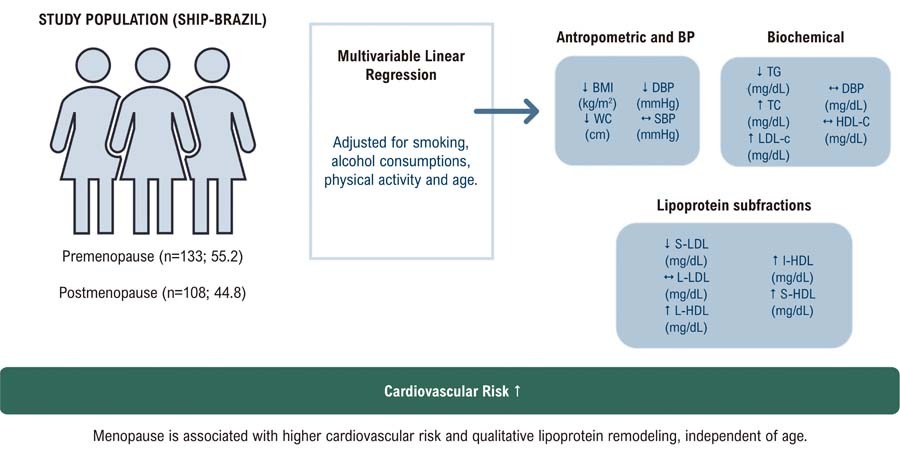
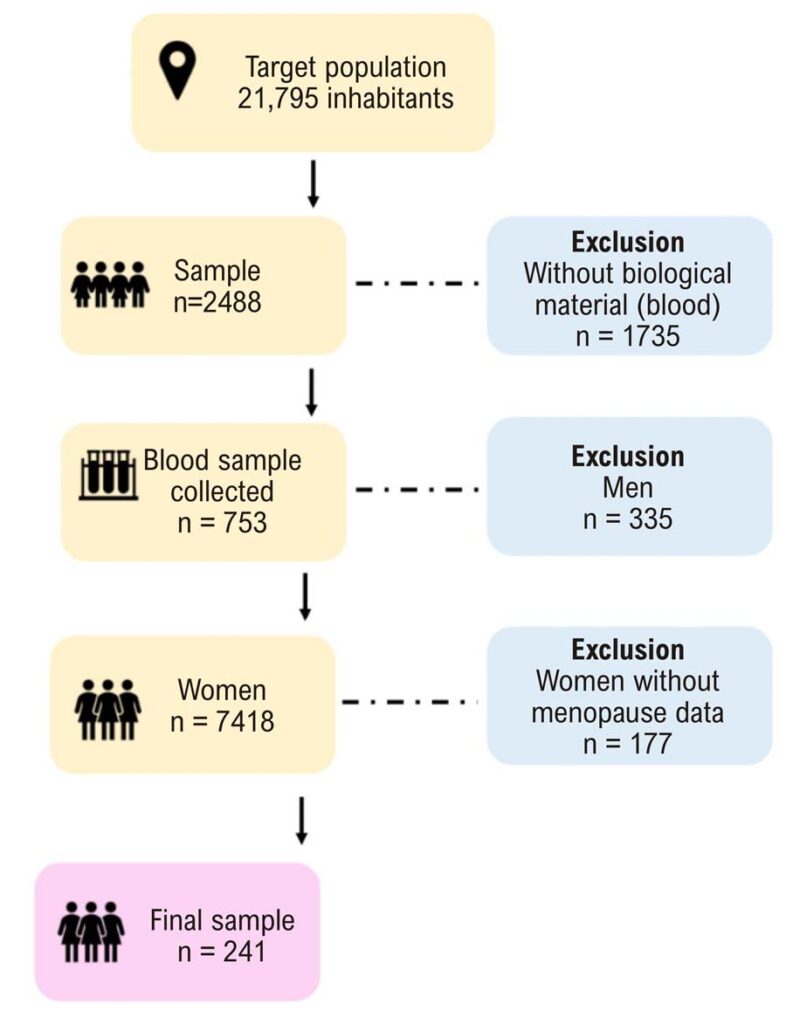
Among 241 women, 133 (55.2%) were postmenopausal. In the fully adjusted model, menopausal status was associated with cardiovascular risk score (β = 0.813; p < 0.001), TC (β = 0.013; p < 0.001), and LDL-c (β = 0.031; p < 0.001) concentrations; and was inversely associated with BMI (β = −0.019; p < 0.001), waist circumference (β = −0.005; p = 0.029), DBP (β = −0.005; p = 0.026), and TG (β = −0.079; p < 0.001). Regarding lipoprotein subfractions, menopausal status was associated with large HDL (β = 0.076; p < 0.001), intermediate HDL (β = 0.020; p = 0.005), small HDL particles (β = 0.035; p < 0.001), small LDL particles (β = −0.140; p < 0.001), and the large-to-small LDL ratio (β = 0.130; p < 0.001).
Conclusions
Menopausal status remained associated with higher global cardiovascular risk and significant qualitative remodeling of lipoprotein subfractions.
Images
Image gallery fullscreen viewer
Comments are moderated by the editorial team before publication. Discussions should be evidence-based and use scientific language. Conflicts of interest should be declared.