Current Diagnostic and Prognostic Applications of Cardiopulmonary Exercise Testing in Heart Failure with Preserved Ejection Fraction – A Narrative Review
Abstract
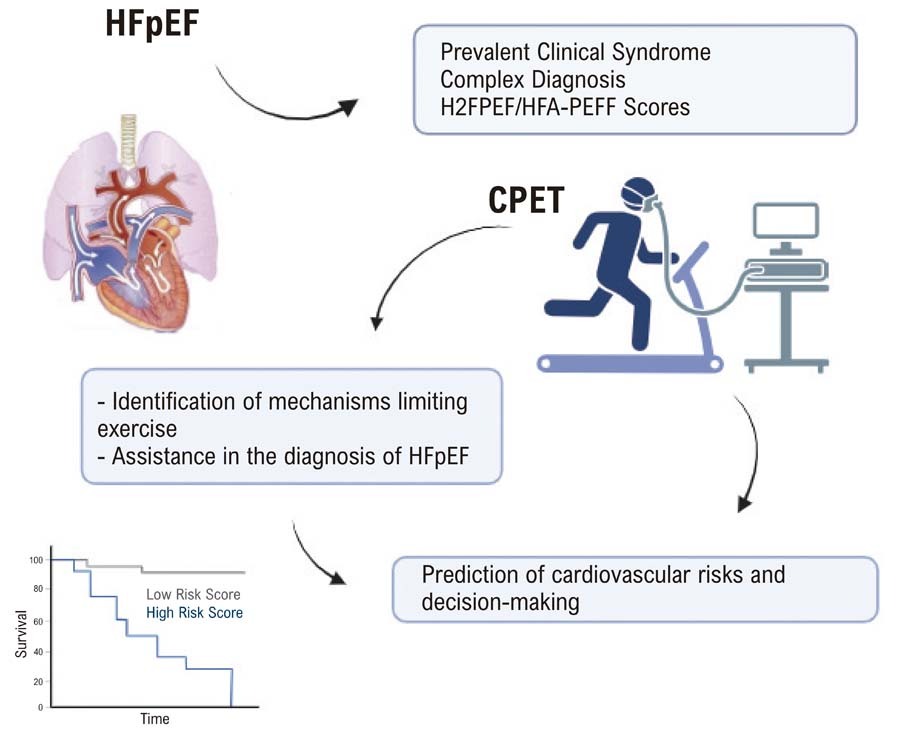
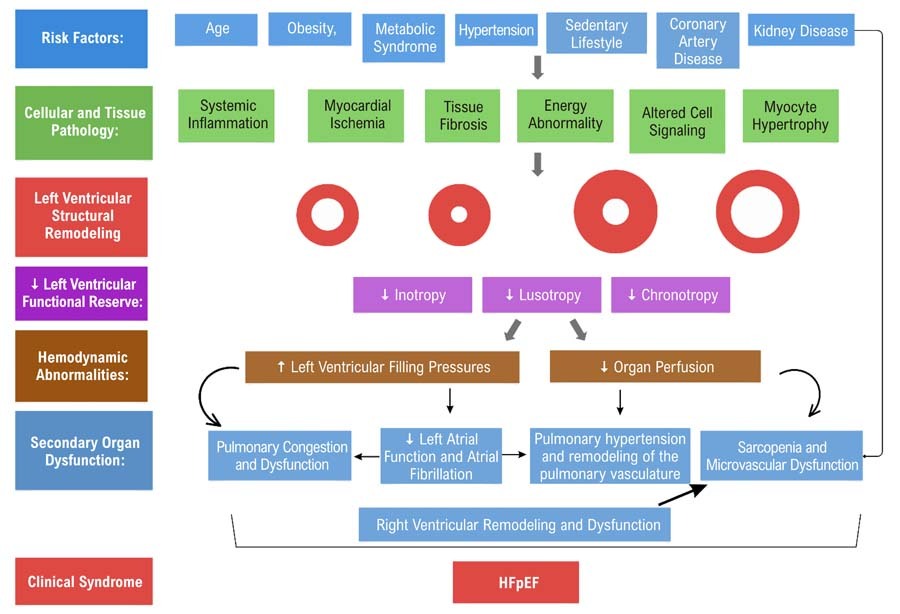
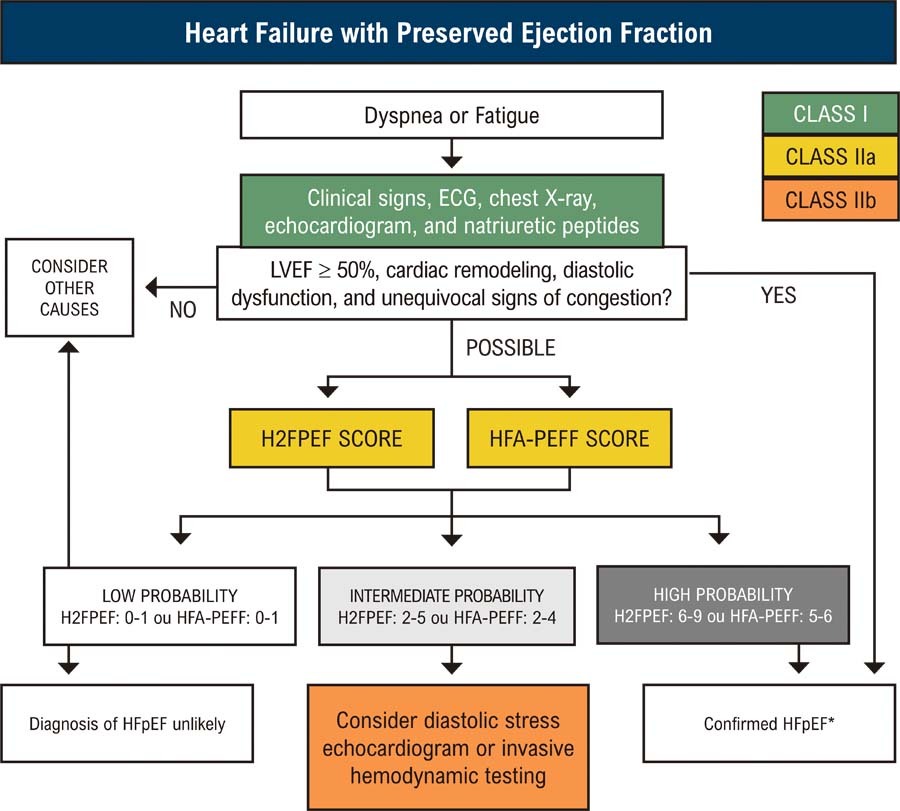
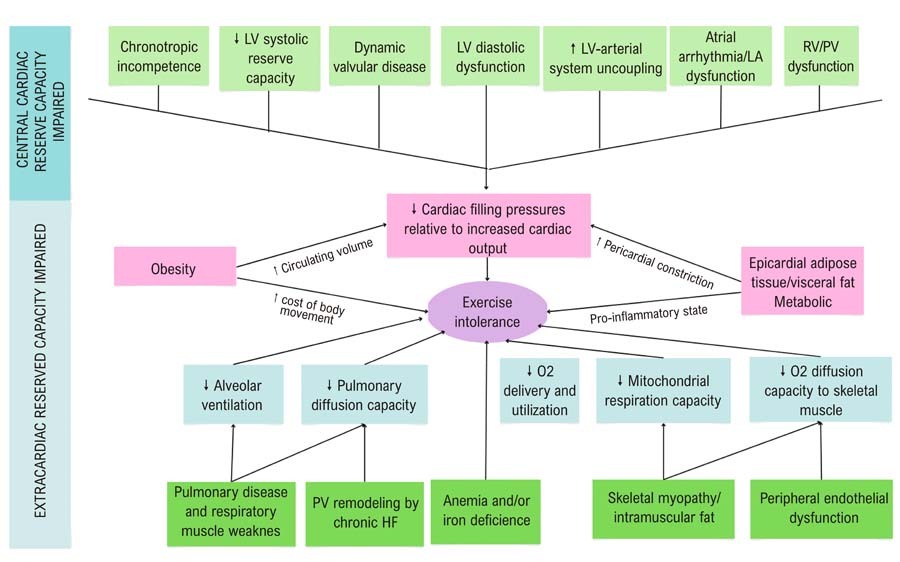
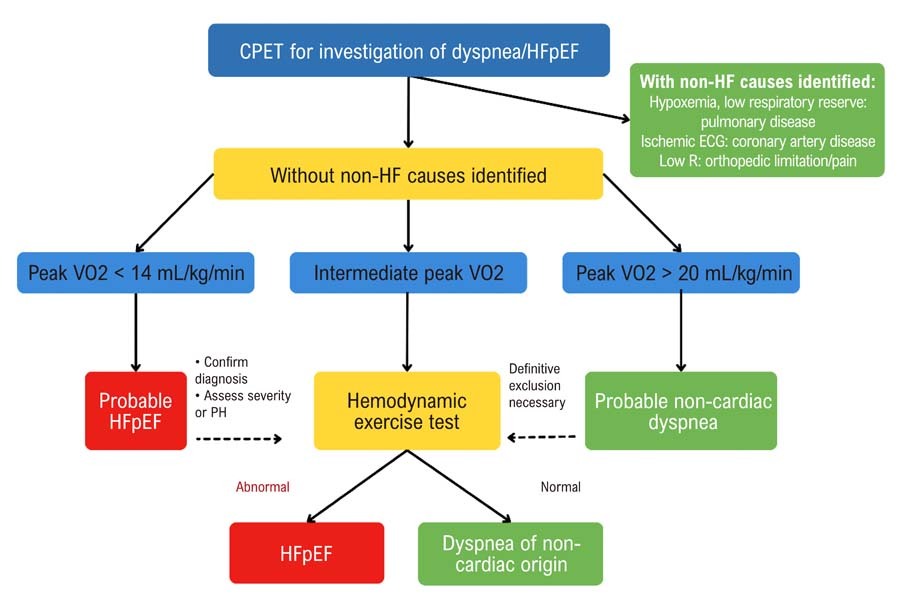
Heart failure with preserved ejection fraction (HFpEF) is a prevalent clinical syndrome with a complex diagnosis, associated with various comorbidities and high rates of cardiovascular events. Cardiopulmonary exercise testing (CPET) plays an essential role in understanding the mechanisms of exercise limitation and in complementing the diagnosis of HFpEF, but it presents several gaps to be explored in risk prediction. This article reviews the literature on current pathophysiological, diagnostic, and prognostic aspects of HFpEF. Subsequently, the role of CPET in diagnosis and prognostic prediction in HFpEF is explored. A critical analysis of the main observational and cohort studies that used CPET in this setting is performed, selected after a qualified search on the PubMed platform. For diagnostic purposes, peak VO2 is not very specific, with a high diagnostic probability for values 20 ml/kg/min. However, when peak VO2 is evaluated together with other ventilatory parameters, there is an increase in the diagnostic value of CPET in HFpEF. For prognostic purposes, variables such as peak VO2, VE/VCO2 slope, and the presence of periodic ventilation correlate with a higher risk prediction. However, there are notable sample differences between studies in HFpEF, hindering the generalization of the use of CPET in clinical practice. This review concludes that conducting prospective studies with more rigorous patient selection and using some variables adjusted for body composition differences, such as lean VO2, may allow for better incorporation of CPET in risk stratification in HFpEF.
Images
Image gallery fullscreen viewer
Comments are moderated by the editorial team before publication. Discussions should be evidence-based and use scientific language. Conflicts of interest should be declared.