Heart Failure with Preserved Ejection Fraction Beyond the Myocardium: Systemic Inflammation as the Central Axis of Pathophysiology
Abstract
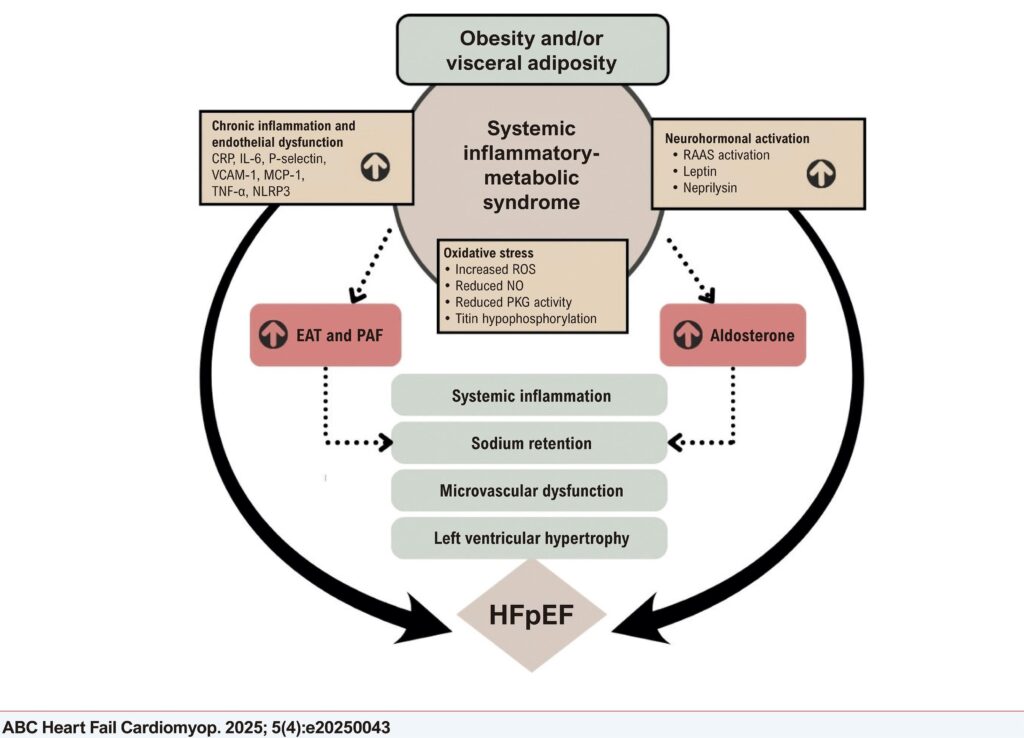
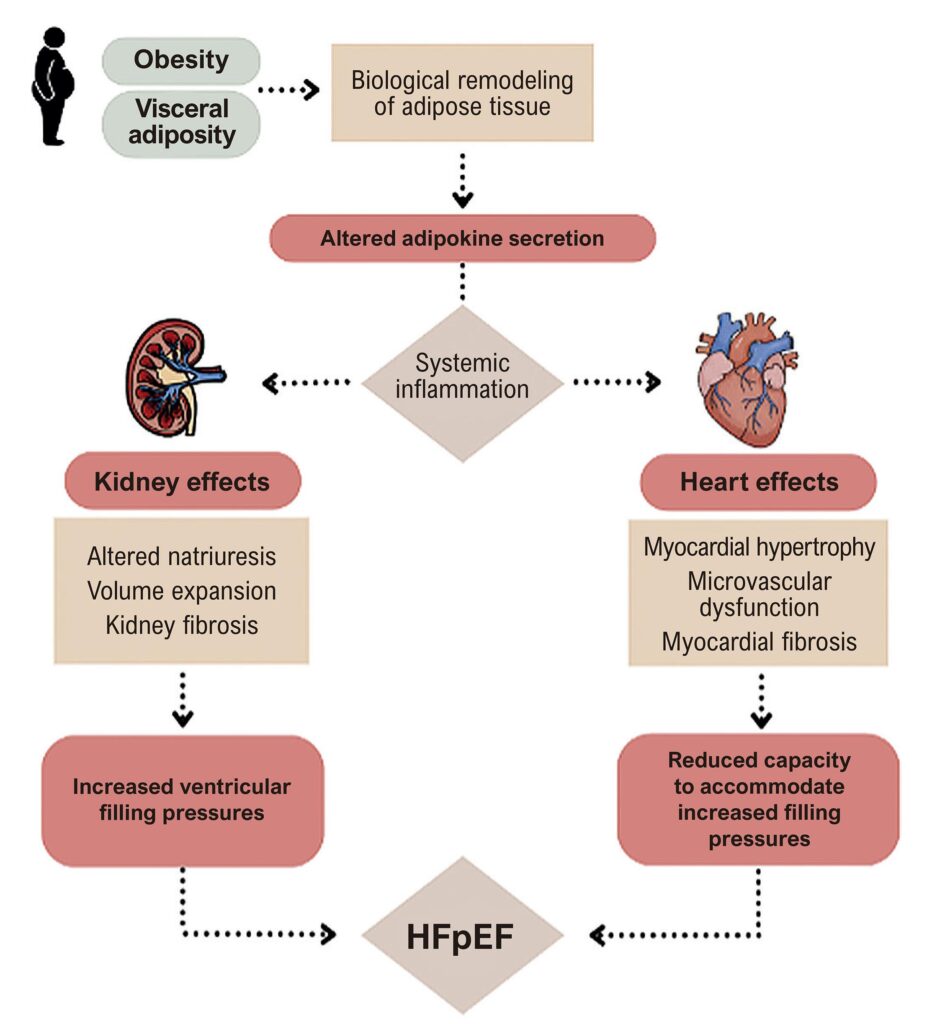
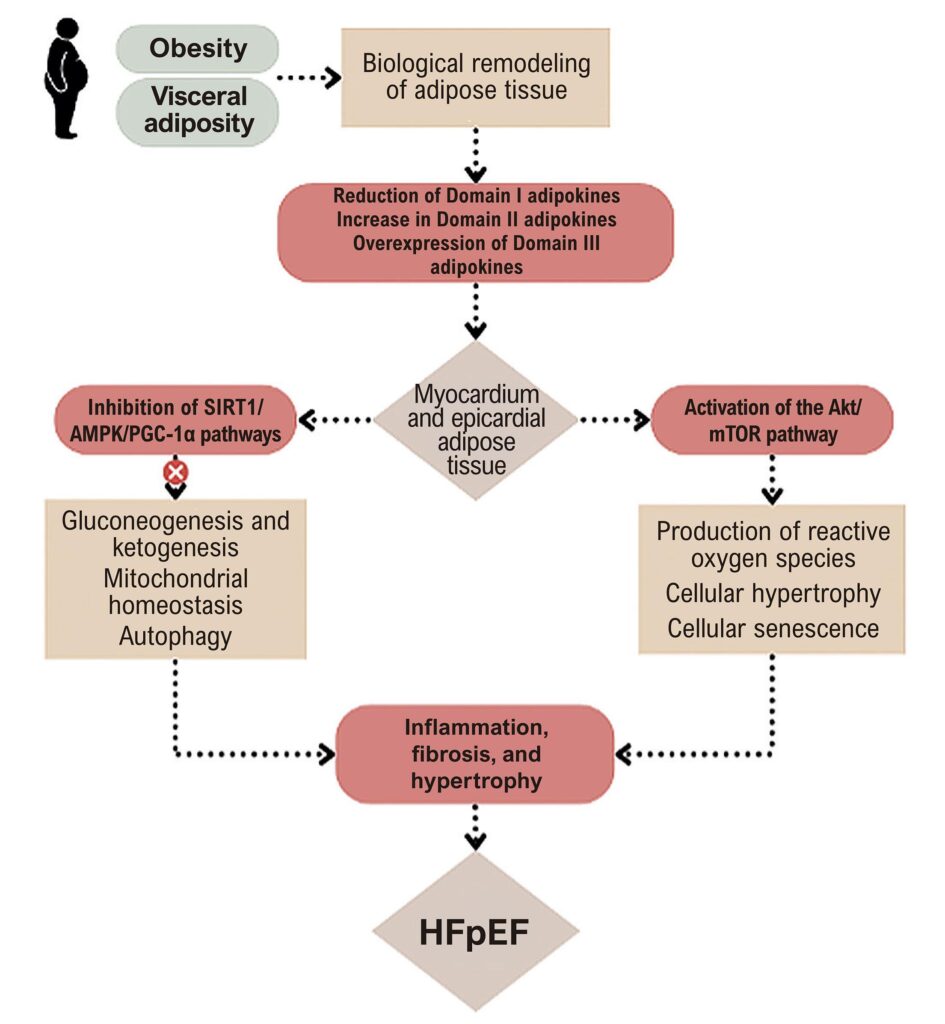
Heart failure (HF) with preserved ejection fraction (HFpEF) is currently the most prevalent subtype of HF, particularly among older women with multiple metabolic comorbidities. Despite recent therapeutic advances, its pathophysiology remains incompletely understood and markedly heterogeneous. In 2025, Milton Packer proposed a new conceptual framework: the adipokine hypothesis. According to this hypothesis, HFpEF is a condition primarily driven by the expansion and dysfunction of visceral adipose tissue. This remodeling of adipose tissue results in altered secretion of adipokines, which are biologically active molecules with endocrine and paracrine effects on the heart, kidneys, and vascular system. The imbalance between cardioprotective and proinflammatory adipokines promotes systemic inflammation, sodium retention, volume overload, myocardial hypertrophy, and fibrosis, ultimately leading to diastolic dysfunction and exercise intolerance, which are hallmarks of HFpEF. This article reviews the main pathophysiological foundations of this hypothesis as well as the experimental and clinical evidence and therapeutic implications, which propose a unifying paradigm for understanding and managing HFpEF.
Images
Image gallery fullscreen viewer
Comments are moderated by the editorial team before publication. Discussions should be evidence-based and use scientific language. Conflicts of interest should be declared.