The Impact of Revascularization on the Prognosis of Patients with Ischemic Heart Failure in the Contemporary Era: Viewpoint
Introduction
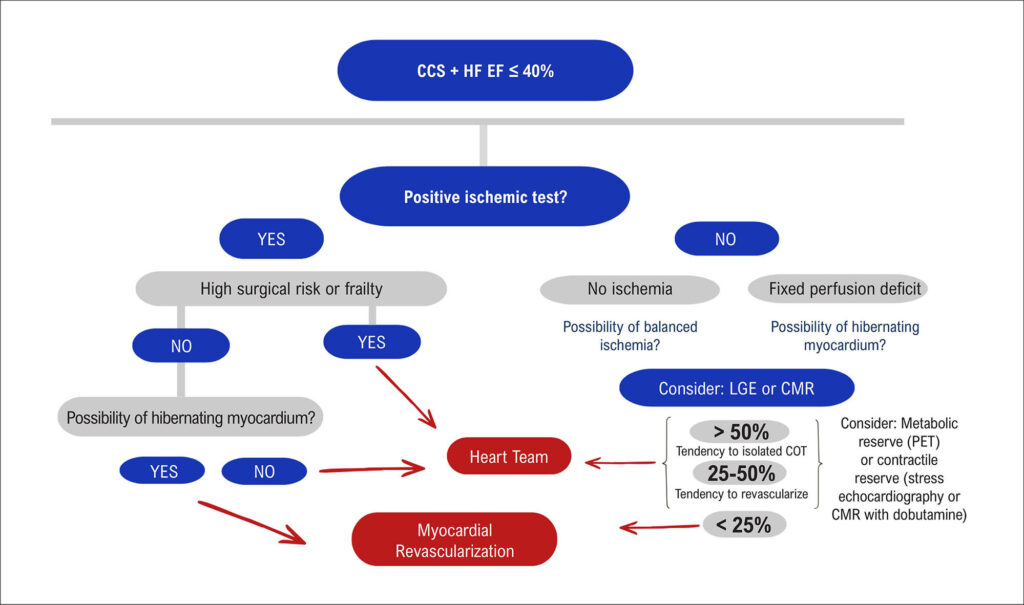
The impact of myocardial revascularization on the prognosis of patients with heart failure (HF) and reduced left ventricular(LV) ejection fraction (EF) of ischemic etiology, especially those with EF ≤ 40%, remains one of the most debated topics in contemporary cardiology. Historically, this subgroup of patients with chronic coronary syndrome (CCS) was indicated for revascularization to reduce hard cardiovascular outcomes, according to guidelines, primarily through coronary artery bypass grafting (CABG). However, recent results and the evolution of optimized clinical treatment (OCT), which now includes medications and devices, have questioned the prognostic benefit of revascularization in this context.–
The core of the controversy lies in the applicability and impact of the concept of myocardial viability. For a long time, the demonstration of viable hibernating myocardium was considered a prerequisite for indicating revascularization, based on the reasoning that functional recovery of the LV would lead to better long-term outcomes. More recent evidence, however, refutes this concept as a dichotomous criterion.,
[…]
Images
Image gallery fullscreen viewer
Comments are moderated by the editorial team before publication. Discussions should be evidence-based and use scientific language. Conflicts of interest should be declared.