Home-Based Vs. Usual and Center-Based Cardiac Rehabilitation: Effects on Aerobic Fitness and Quality of Life
Abstract
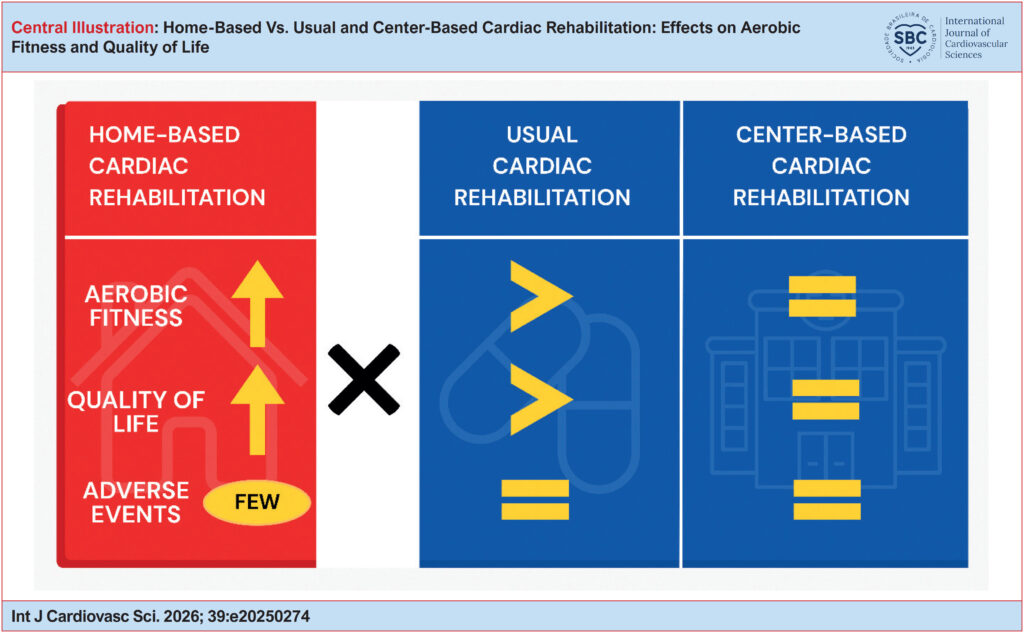
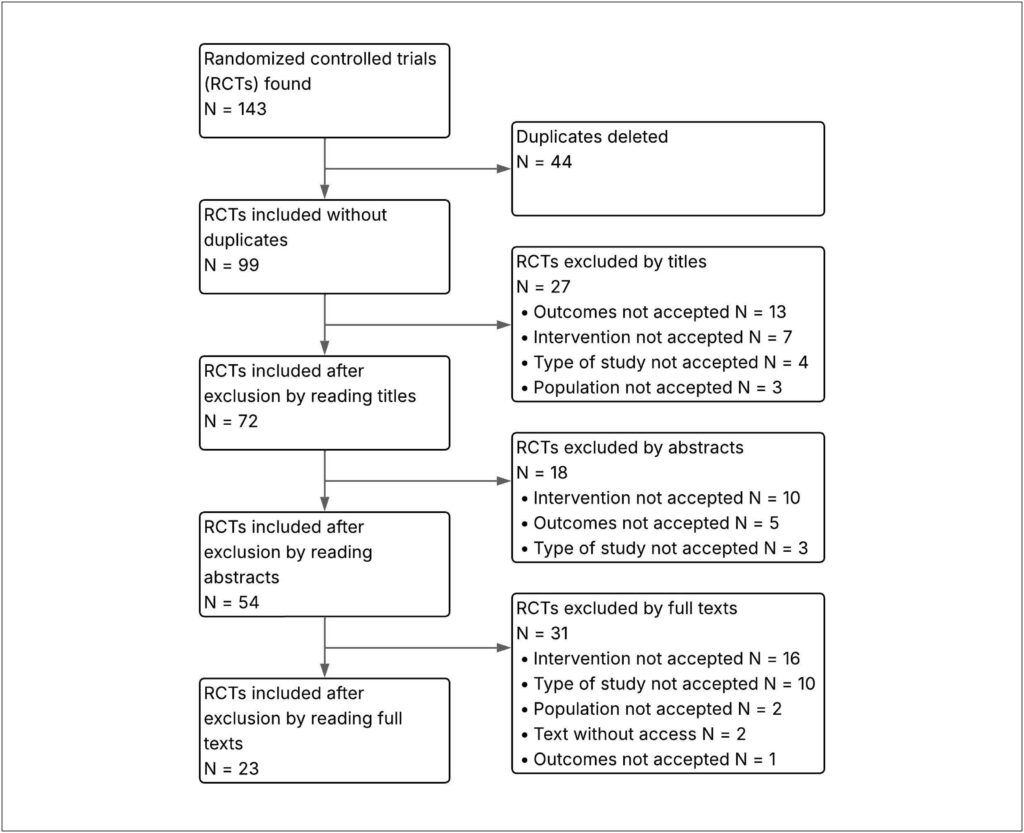
Home-based cardiac rehabilitation has been proposed as an alternative to expand access to treatment for patients with cardiovascular diseases. This systematic review evaluated the effects of home-based cardiac rehabilitation, with emphasis on physical exercise, on aerobic fitness, quality of life, and adverse events compared with usual cardiac rehabilitation and center-based cardiac rehabilitation. A literature search was conducted in the PubMed database, including only randomized controlled clinical trials involving adults and older adults with coronary artery disease or heart failure. Twenty-three studies conducted in different countries were identified; however, none was performed in Brazil. The total sample comprised 2,298 participants, of whom 24% were women. All studies implemented aerobic training, either alone or combined with resistance training, and the vast majority maintained remote contact with participants every one to two weeks. Comparisons between pre- and post-intervention outcomes showed that home-based cardiac rehabilitation improved aerobic fitness and/or quality of life in 22 studies, with greater improvements than those observed with usual cardiac rehabilitation and outcomes comparable to those achieved with center-based cardiac rehabilitation. Furthermore, the incidence of adverse events was low and similar across the three rehabilitation models. Overall, home-based cardiac rehabilitation improves aerobic fitness and quality of life more effectively than usual cardiac rehabilitation and provides benefits comparable to those of center-based cardiac rehabilitation without increasing the risk of adverse events, supporting its use in the treatment of cardiovascular diseases. Nevertheless, the absence of studies conducted in Brazil highlights the need for further research on this rehabilitation model in the Brazilian context.
Images
Image gallery fullscreen viewer
Comments are moderated by the editorial team before publication. Discussions should be evidence-based and use scientific language. Conflicts of interest should be declared.