Association between Cardiovascular Responses to Muscle Metaboreflex and Markers of Physical Fitness in Patients with Coronary Artery Disease
Abstract
Background:
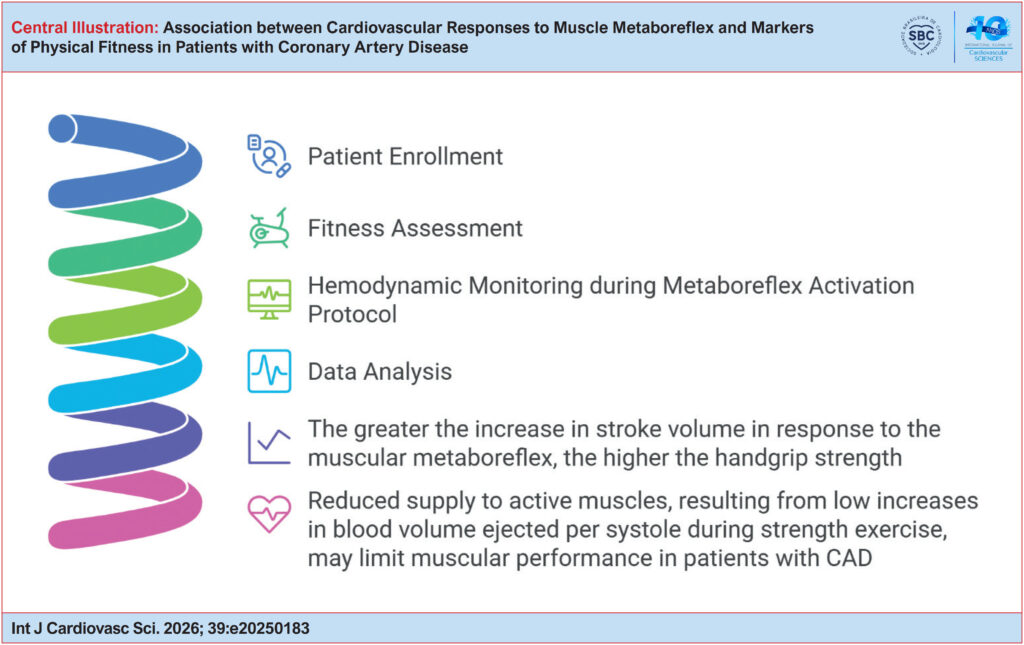
The muscle metaboreflex regulates cardiovascular responses during exercise. In patients with coronary artery disease (CAD), this reflex primarily increases blood pressure via sympathetic-mediated vasoconstriction, thereby increasing peripheral vascular resistance (PVR) rather than enhancing stroke volume (SV). This response may result in early fatigue during physical exertion. However, the specific mediators of this response are unclear.
Objective:
To investigate the association between cardiorespiratory and muscle fitness with cardiovascular responses to muscle metaboreflex activation in patients with CAD.
Methods:
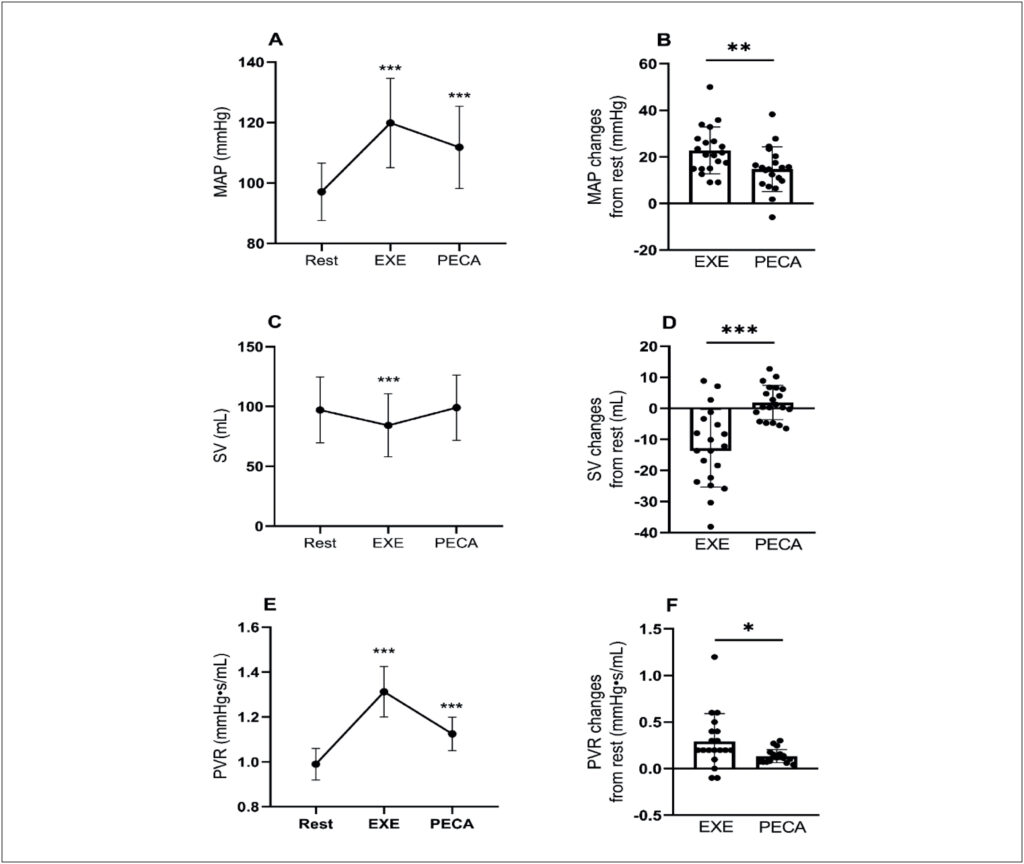
Twenty patients underwent an exercise test and a maximal voluntary contraction (MVC) test using handgrip strength. Hemodynamic variables were assessed using photoplethysmography during muscle metaboreflex activation via a post-exercise circulatory arrest (PECA) protocol. Changes (Δ) in mean arterial pressure (MAP), SV, and PVR at rest were used to assess the metaboreflex response.
Results:
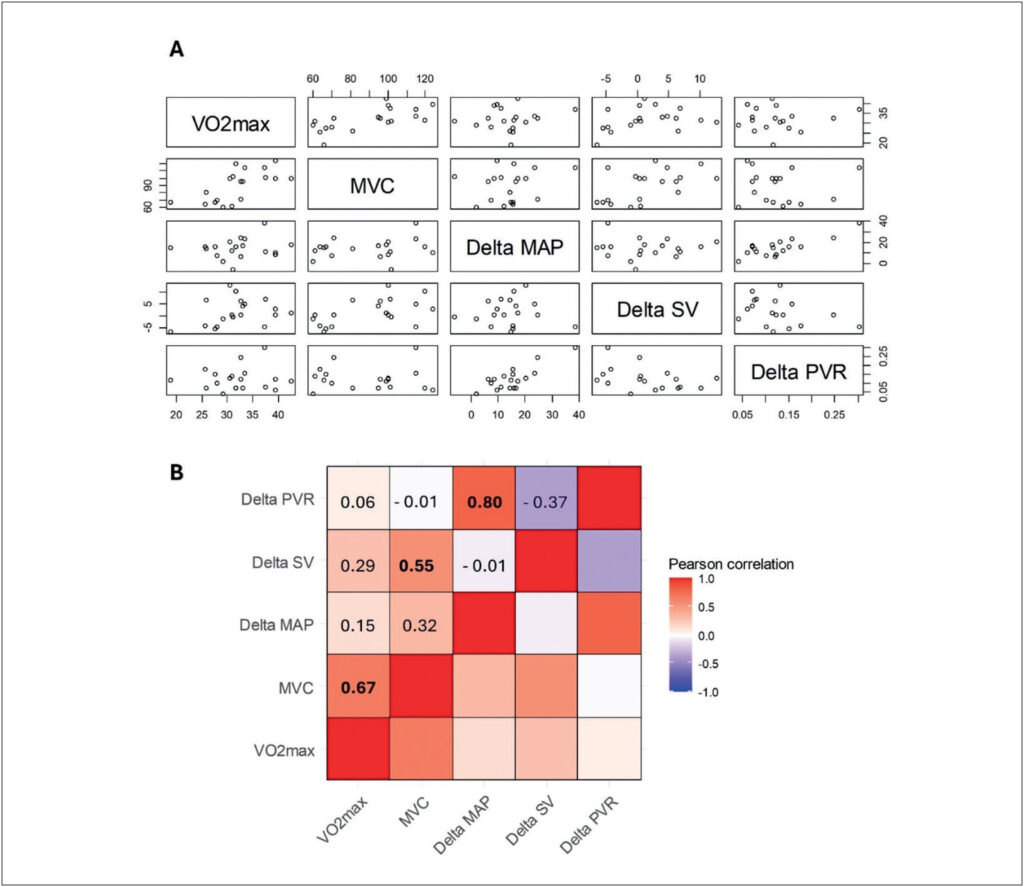
Participants (61.7±8.0 years; 28.4±3.9 kg/m²) had a mean VO2max of 31.96±5.70 mL/kg/min, and a MVC of 90.5±21.1 lbs. Metaboreflex activation significantly increased MAP (+14.74±9.56 mmHg, p<0.0001) and PVR (+0.13±0.07 mmHg.s/mL, p<0.0001), but not SV (+1.91±5.54 mL, p=0.13). MVC was directly associated with ΔSV (R=0.54 and p=0.01), but not with ΔMAP (R=0.23 and p=0.31) or ΔPVR (R=-0.10 and p=0.65). In multiple linear regression models adjusted for age and sex, ΔSV emerged as a predictor of MVC (β=+1.37 and p=0.03). Conversely, no significant associations were found between VO2max and ΔSV (R=0.29 and p=0.22), ΔMAP (R=0.14 and p=0.54), or ΔPVR (R=0.05 and p=0.83).
Conclusions:
These findings underscore the association between SV and muscle fitness during metaboreflex activation in patients with CAD.
Images
Image gallery fullscreen viewer
Comments are moderated by the editorial team before publication. Discussions should be evidence-based and use scientific language. Conflicts of interest should be declared.