Transcatheter Aortic Valve Implantation in Nonagenarians: In-Hospital Complications and One-Year Follow-Up Mortality
Abstract
Background:
Aortic Stenosis (AS) is prevalent among elderly individuals and is associated with high mortality when untreated. Transcatheter Aortic Valve Implantation (TAVI) has emerged as a viable therapeutic alternative, particularly for patients with surgical contraindications. However, its application in nonagenarians remains controversial due to limited data in this very elderly population.
Objective:
To evaluate clinical outcomes in nonagenarian patients undergoing TAVI at a private quaternary hospital, with emphasis on mortality and in-hospital as well as one-year complications.
Methods:
A retrospective cohort study with prospective follow-up was conducted between 2009 and 2023. A total of 265 patients with symptomatic severe AS who underwent TAVI were included, of whom 40 were nonagenarians (≥ 89 years). Data were obtained from an institutional database and from the Brazilian Registry of Aortic Bioprosthesis Implantation by Catheter – New Technologies (RIBAC-NT). Comparisons between nonagenarians and younger patients were performed using the Student’s t-test for continuous variables and the chi-square (χ2) test for categorical variables. A p-value < 0.05 was considered statistically significant.
Results:
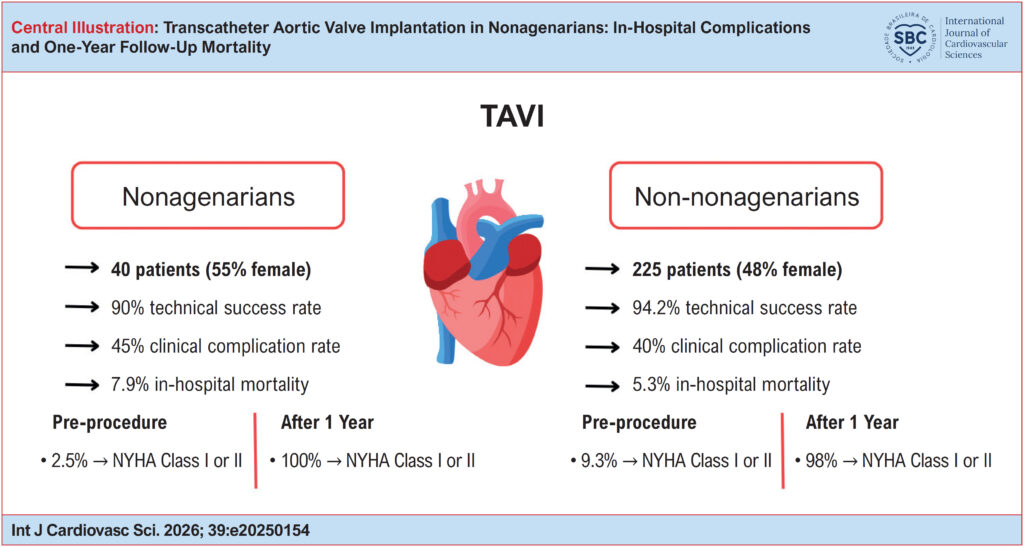
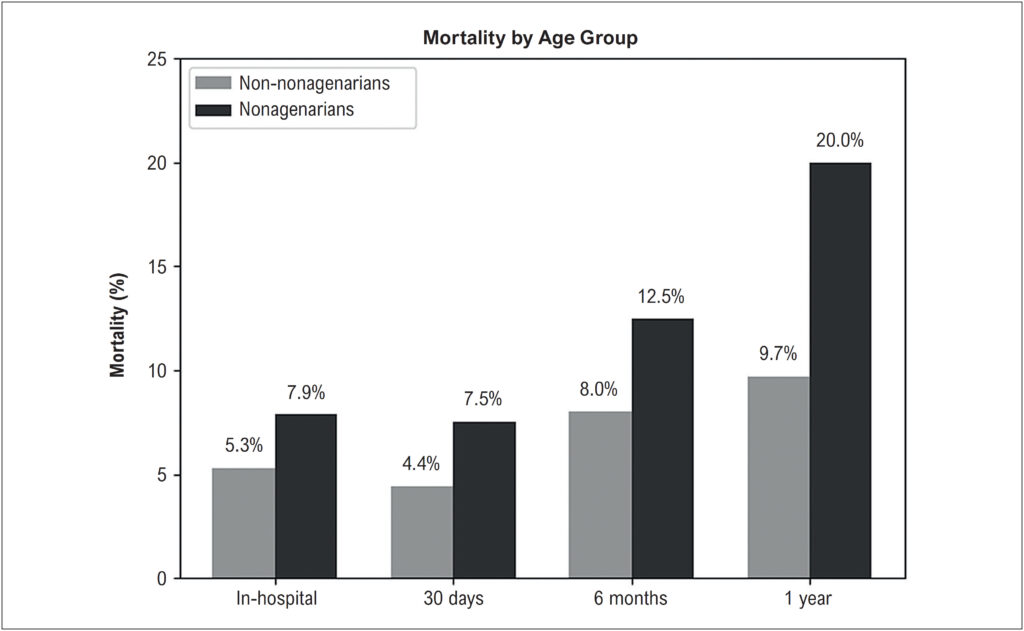
Among nonagenarians, 55% were female, 72.5% had hypertension, and 95% had chronic kidney disease. The technical success rate was 55%. Major complications included permanent pacemaker implantation (35%) and adverse events (45%). In-hospital mortality was 7.9%, with no statistically significant differences at 30 days (p = 0.40), 6 months (p = 0.35), and one year (p = 0.06) compared to younger patients.
Conclusion:
TAVI proved to be a safe and effective therapeutic option in nonagenarians, showing clinical outcomes comparable to those of younger individuals.
Images
Image gallery fullscreen viewer
Comments are moderated by the editorial team before publication. Discussions should be evidence-based and use scientific language. Conflicts of interest should be declared.