Arterial Stiffness, Clinical-Functional Outcomes, and Quality of Life in Post-COVID-19 Patients: A Cross-Sectional Study
Abstract
Background
Arterial remodeling leading to increased arterial stiffness involves mechanisms such as oxidative stress, reactive oxygen species production, neuroendocrine alterations, and genetic predisposition. These processes are also involved in the pathophysiology of COVID-19. However, the relationship between arterial stiffness, hemodynamic parameters, and clinical-functional outcomes in post-COVID-19 patients has not yet been adequately investigated.
Objectives
To investigate arterial stiffness, central and peripheral hemodynamic parameters, functional performance, quality of life, fatigue, dyspnea, and sleep quality in post-COVID-19 patients.
Methods
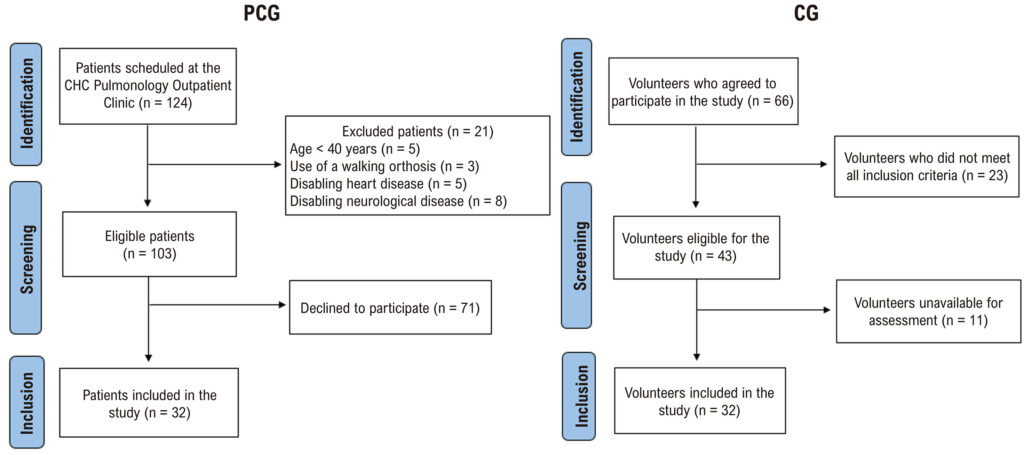
This cross-sectional study was conducted with individuals in the post-COVID-19 group (PCG) and matched individuals in the control group (n = 32). Arterial stiffness was assessed using pulse wave velocity (PWV) and the augmentation index corrected to a heart rate of 75 bpm (AIx@75). Functional performance was evaluated using the five-times sit-to-stand test, handgrip strength, quality of life (assessed with the 12-Item Short Form Survey), fatigue (assessed with the Brazilian version of the Fatigue Severity Scale), dyspnea (assessed with the modified Medical Research Council scale), and sleep quality.
Results
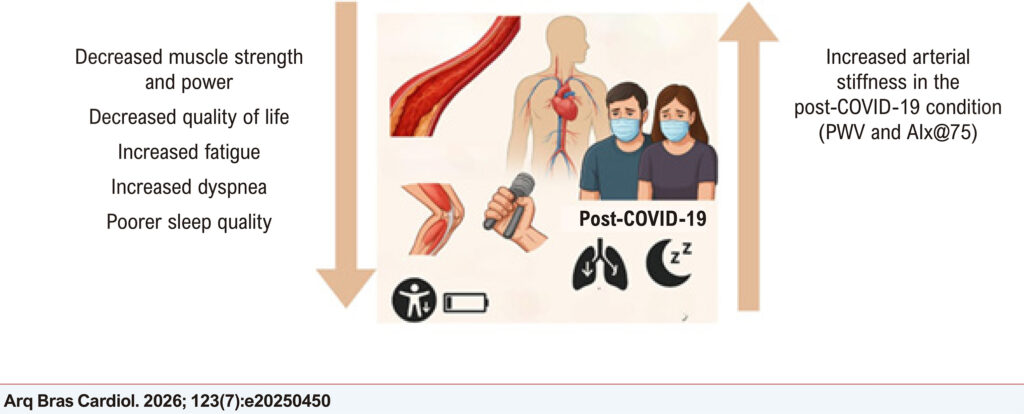
The PCG showed higher PWV values (Δ = 0.80 m/s; 95%CI, 0.08 to 1.52; p = 0.03) and AIx@75 (Δ = 8.34; 95%CI, 2.02 to 14.66; p = 0.01) as well as higher levels of central and peripheral blood pressure. Worse functional performance was observed (Δ = 4.39 s; 95%CI, 2.70 to 6.08; p < 0.01), along with poorer quality of life in the physical component (Δ = −9.35; 95%CI, −12.45 to −6.25; p < 0.01). Fatigue, dyspnea, and sleep quality outcomes were also significantly worse in the PCG. In the adjusted analysis, PWV was independently associated with age and systolic blood pressure, but not with post-COVID-19 status.
Conclusion
Post-COVID-19 patients exhibit greater arterial stiffness, hemodynamic alterations, and poorer clinical-functional performance. However, arterial stiffness appears to be predominantly determined by hemodynamic factors and aging rather than by post-COVID-19 status independently, suggesting that the observed functional impairment results from multifactorial mechanisms.
Images
Image gallery fullscreen viewer
Comments are moderated by the editorial team before publication. Discussions should be evidence-based and use scientific language. Conflicts of interest should be declared.