Epidemiology and Mortality of Valvular Heart Disease in Brazilian Adults: Findings from the ELSA-Brasil Cohort
Abstract
Background
Most of the current evidence on valvular heart disease (VHD) comes from high-income countries. Access to treatment and the impact of VHD on quality of life may vary substantially across nations, largely due to socioeconomic differences.
Objective
This study aimed to estimate the burden of VHD and its association with mortality in a middle-income country.
Methods
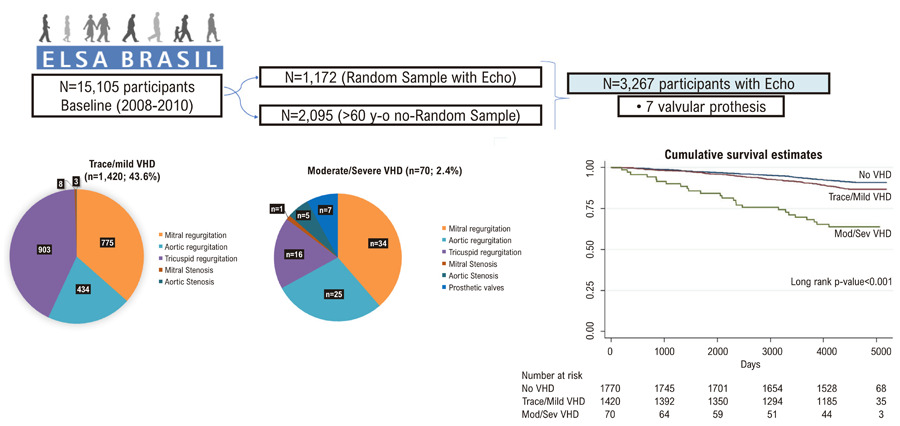
We included participants from the ELSA-Brasil cohort who underwent transthoracic echocardiography at baseline (3,267 participants; 1,539 males; mean age 60.6 ± 8.8 years) across six Brazilian states. Participants were categorized into three groups—no VHD, trace/mild VHD, and moderate/severe VHD—and their characteristics and associated factors were analyzed. P-values < 0.05 were considered statistically significant.
Results
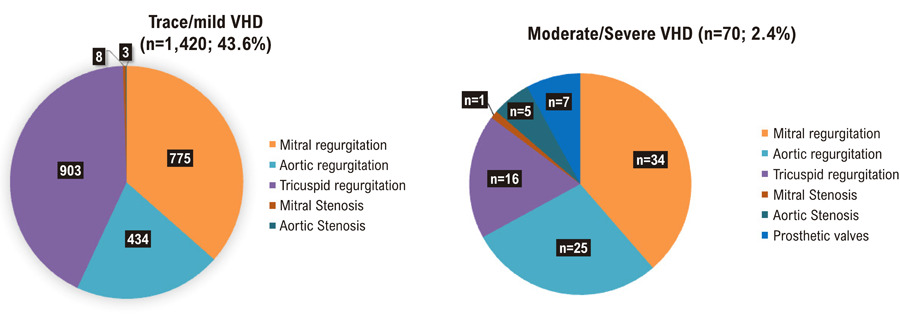
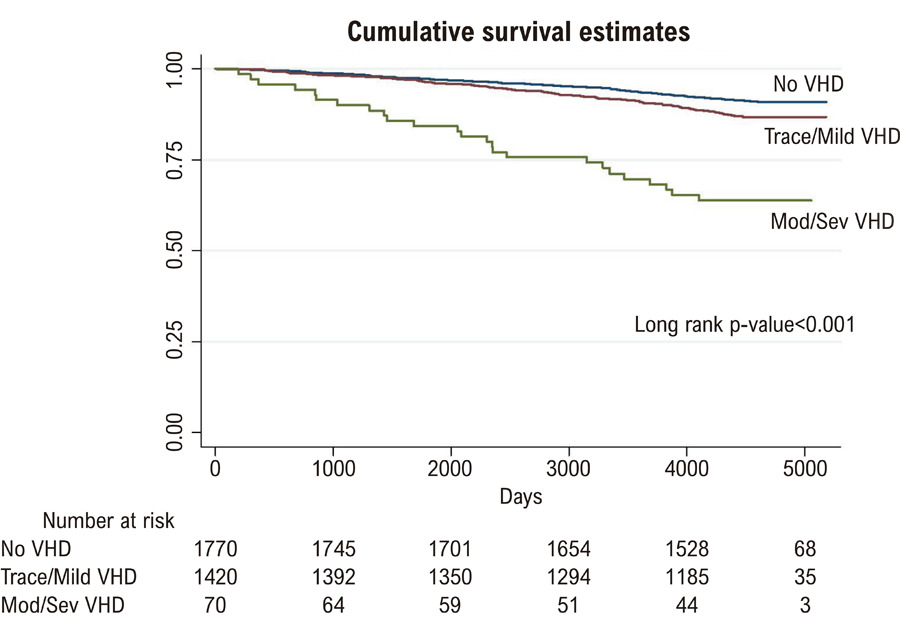
Among all participants, 2.4% had moderate/severe VHD (including 7 participants with prosthetic valves), and 43.6% had trace/mild VHD. The most prevalent moderate/severe VHD was mitral regurgitation, followed by aortic and tricuspid regurgitation, with 56 participants (86%) presenting isolated valvular regurgitation. Moderate/severe VHD was more common in older individuals and was associated with a higher prevalence of most cardiovascular comorbidities, but with lower obesity rates. It was also associated with greater cardiac remodeling and reduced systolic function, with phenotypic variations depending on the affected valve. Moderate/severe VHD was linked to increased 10-year mortality (HR: 3.7; 95% CI [2.17–6.31]), independent of age, sex, and hypertension.
Conclusion
VHD is common among community-dwelling adults in this middle-income country and increases with age. Participants with moderate/severe VHD exhibited a greater burden of comorbidities, more pronounced cardiac remodeling, worse systolic function, and substantially reduced long-term survival.
Images
Image gallery fullscreen viewer
Comments are moderated by the editorial team before publication. Discussions should be evidence-based and use scientific language. Conflicts of interest should be declared.