Filamin C and Cardiomyopathies: Linking Genetic Variants to Their Phenotypic Impact
Abstract
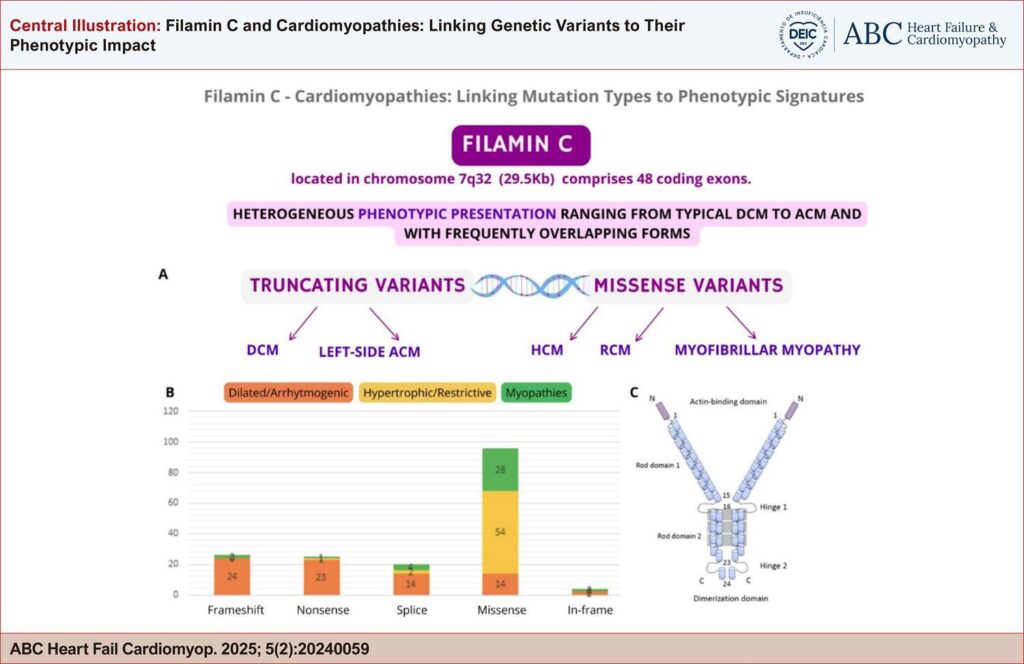
Filamin C (FLNC) plays a critical role in maintaining the structural integrity of muscle cells, particularly within the cardiac sarcomere. Pathogenic variants in the FLNC gene are increasingly recognized as significant contributors to a diverse range of cardiomyopathies, including dilated (DCM), hypertrophic (HCM), arrhythmogenic (ACM), and restrictive cardiomyopathy (RCM). This review explores the genotype-phenotype correlations in FLNC-related cardiomyopathies, emphasizing how the type and location of genetic variants influence the clinical presentation. Truncating variants are primarily associated with DCM and ACM, characterized by a high risk of arrhythmic events and severe outcomes, while missense variants often lead to HCM and RCM, with unique phenotypic features. The review also discusses the inheritance patterns, molecular mechanisms, and clinical phenotypes of FLNC-associated myopathies, highlighting the need for genetic testing in risk stratification and management. Future perspectives emphasize the importance of expanding research into the underlying mechanisms of FLNC variants and their interactions with other genetic and environmental factors. This integrated understanding is critical for improving the clinical management of patients with FLNC-related cardiomyopathies.
Images
Image gallery fullscreen viewer
Comments are moderated by the editorial team before publication. Discussions should be evidence-based and use scientific language. Conflicts of interest should be declared.