Systematic Review: Mineralocorticoid Receptor Antagonists in Heart Failure with Preserved and Mildly Reduced Ejection Fraction
Abstract
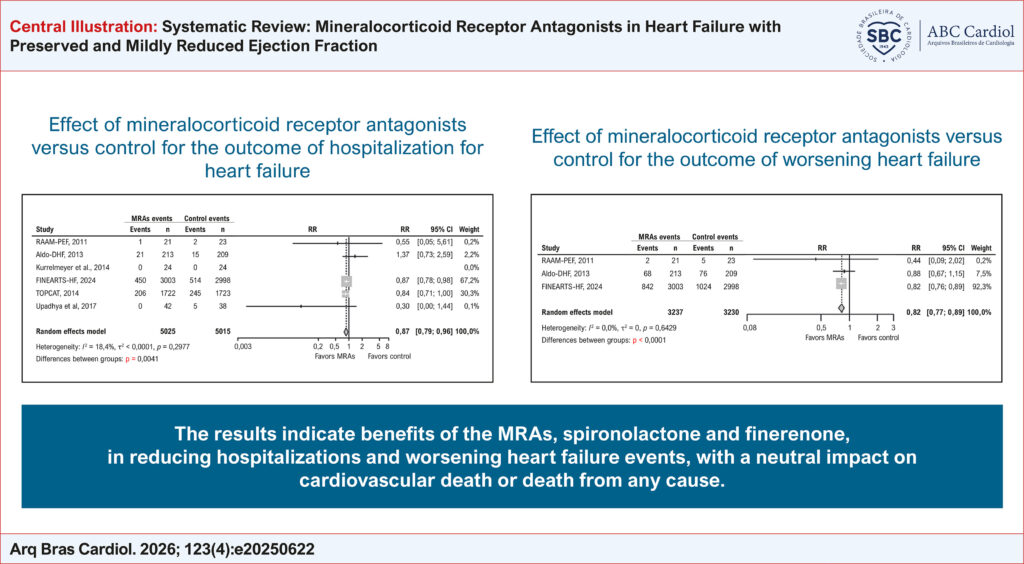
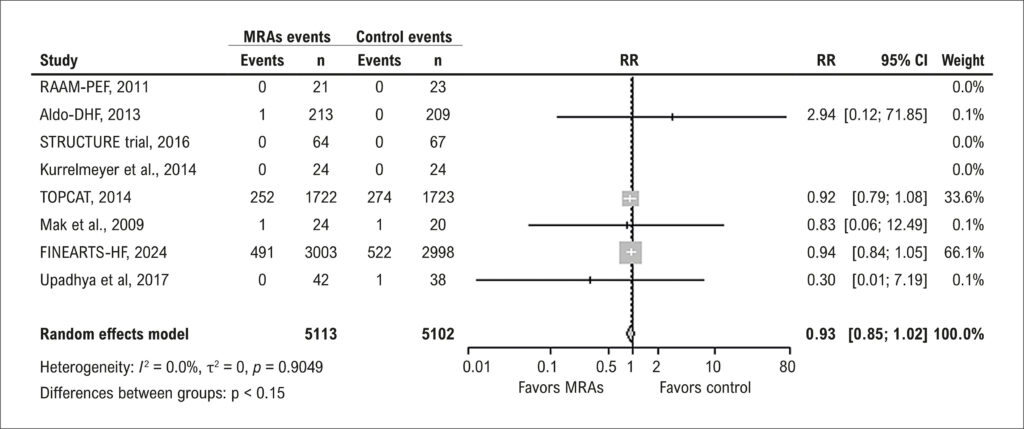
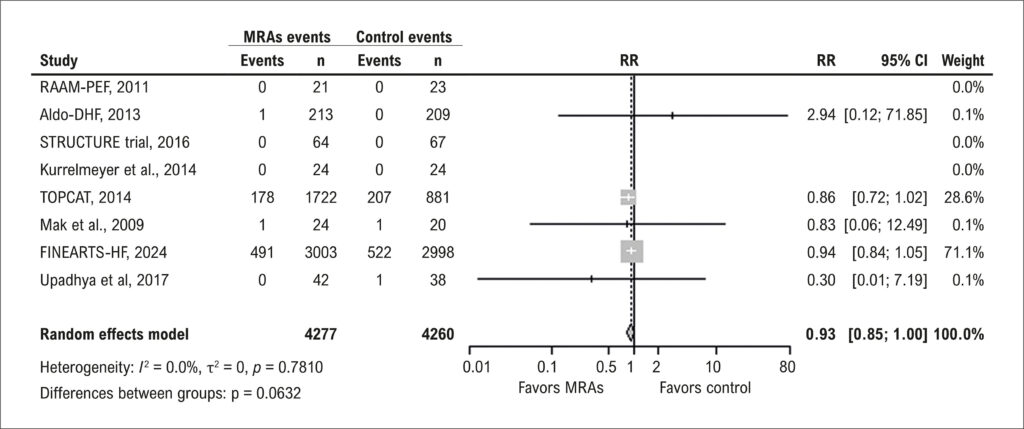
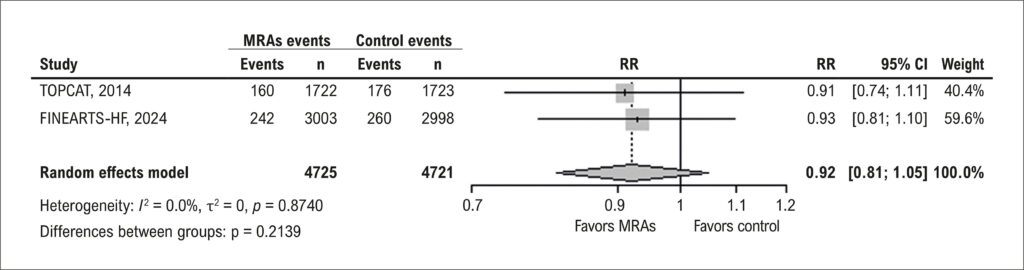
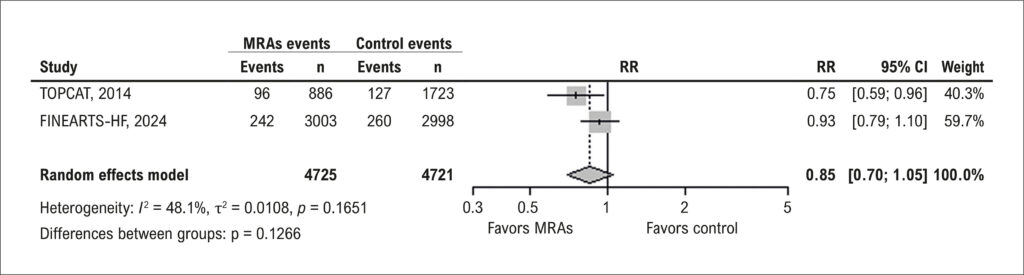
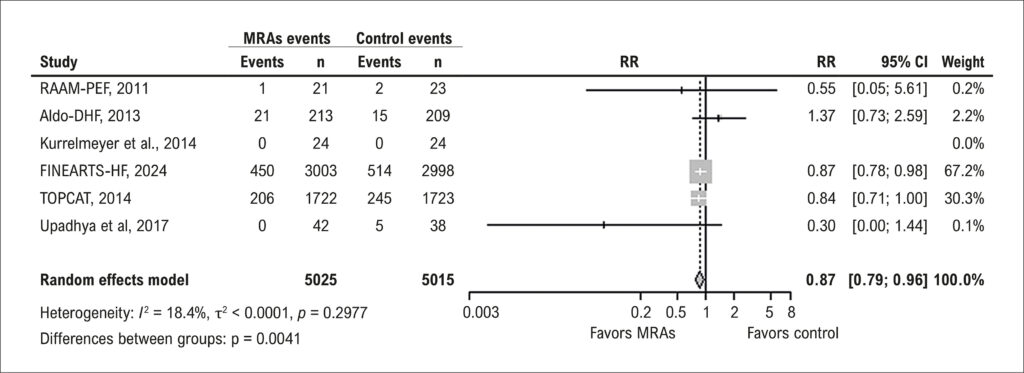
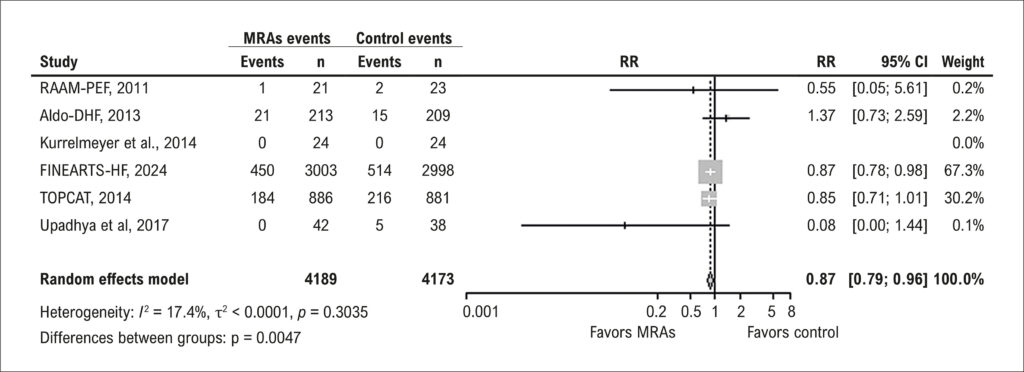
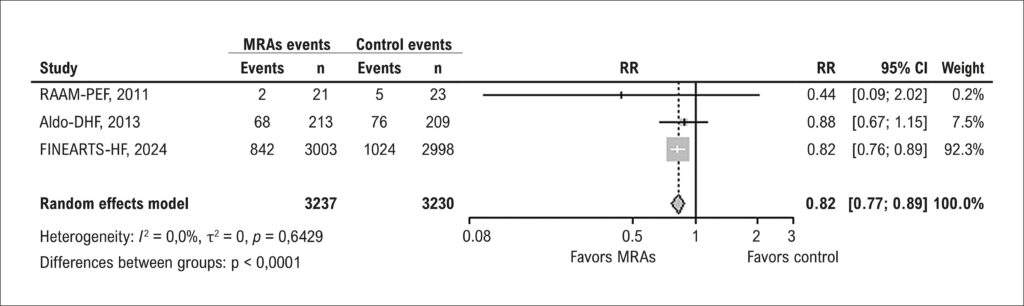
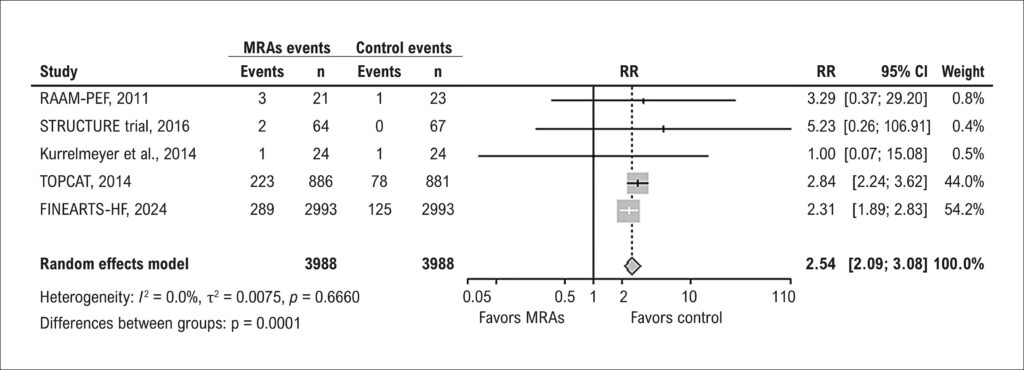
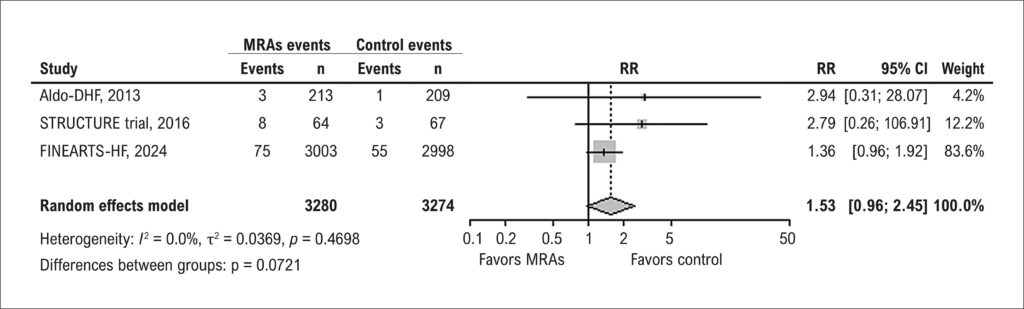
Heart failure with preserved ejection fraction (HFpEF) or mildly reduced ejection fraction (HFmrEF) is a prevalent condition associated with significant morbidity and mortality, and the benefits of mineralocorticoid receptor antagonists (MRAs) remain unclear. To develop a systematic review on the use of MRAs in patients with HFpEF or HFmrEF, a systematic review and meta-analysis were conducted using a broad search strategy in the following databases: MEDLINE, Embase, and Cochrane Central Register of Controlled Trials (CENTRAL). Randomized controlled trials that evaluated the use of MRAs in patients with HFpEF compared to control groups were included. The quality of evidence and the strength of the recommendation were assessed according to the Grading of Recommendations Assessment, Development, and Evaluation (GRADE) methodology. Eight studies were included. No statistically significant differences were observed for the outcomes of overall mortality and cardiovascular mortality compared to the control group for any of the MRAs. A benefit was observed with a reduced risk of hospitalization for heart failure (relative risk: 0.87; 95% confidence interval: 0.79 to 0.96; moderate certainty of evidence) and of worsening heart failure events (relative risk: 0.83; 95% confidence interval: 0.77 to 0.89; high certainty of evidence). The results of the meta-analysis indicate a significant benefit from MRAs, spironolactone or finerenone, to reduce hospitalizations and worsening heart failure events in patients with HFpEF or HFmrEF. Mineralocorticoid Receptor Antagonists; Diastolic Heart Failure; Systolic Heart Failure; Systematic Review; Meta-Analysis.
Images
Image gallery fullscreen viewer
Comments are moderated by the editorial team before publication. Discussions should be evidence-based and use scientific language. Conflicts of interest should be declared.