Impact of Obesity on Patients with Resistant and Refractory Arterial Hypertension: A Cross-Sectional Study
Abstract
Background
Obesity is a serious public health problem and is associated with activation of the sympathetic nervous system and the development of resistant or refractory hypertension.
Objectives
To estimate the prevalence of obesity in the population of outpatients with refractory or resistant hypertension and its relationship between body mass index and hypertension severity.
Methods
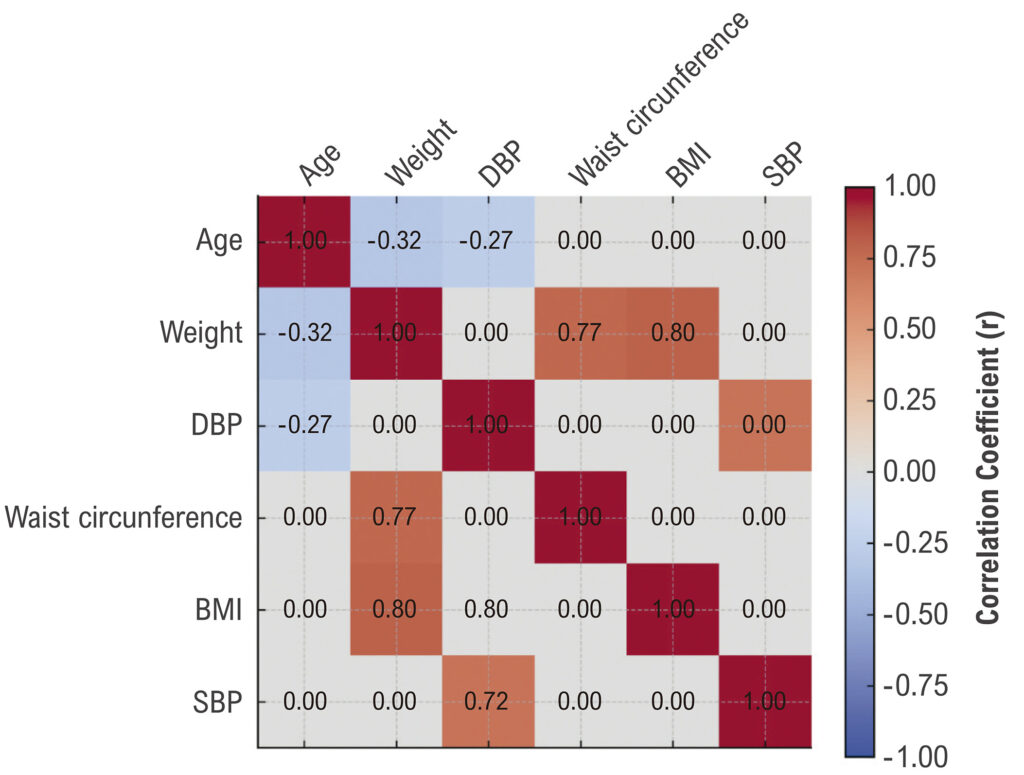
A cross-sectional study was carried out in a referral outpatient clinic for severe arterial hypertension. Patients with resistant and refractory hypertension were included. Information related to demographic characteristics, anthropometric measurements, systolic and diastolic blood pressure, comorbidities, alcoholism, smoking, and sedentary lifestyle was collected. Continuous variables were compared using the Student’s t-test or Mann Whitney, and categorical variables were compared using the chi-square test. Pearson’s correlation test was used for anthropometric measurements and blood pressure. A significance level of p < 0.05 was adopted.
Results
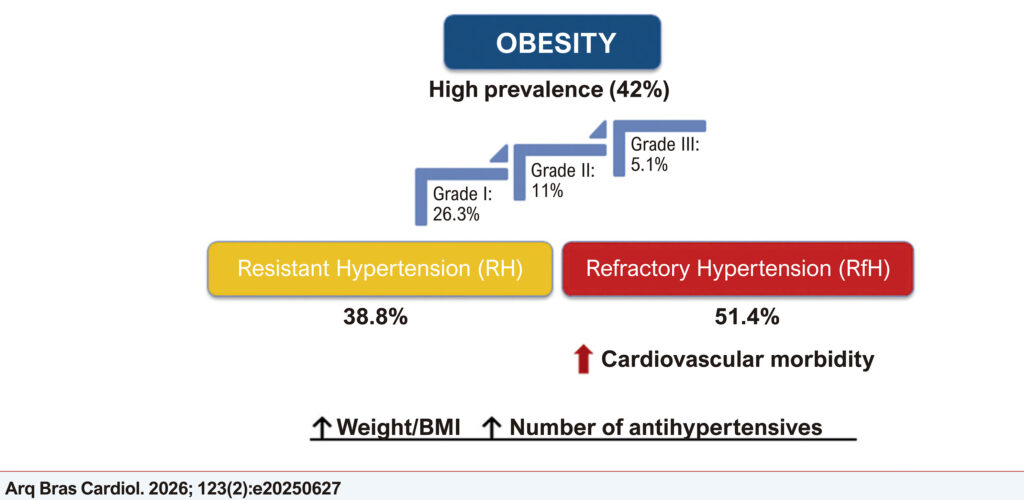
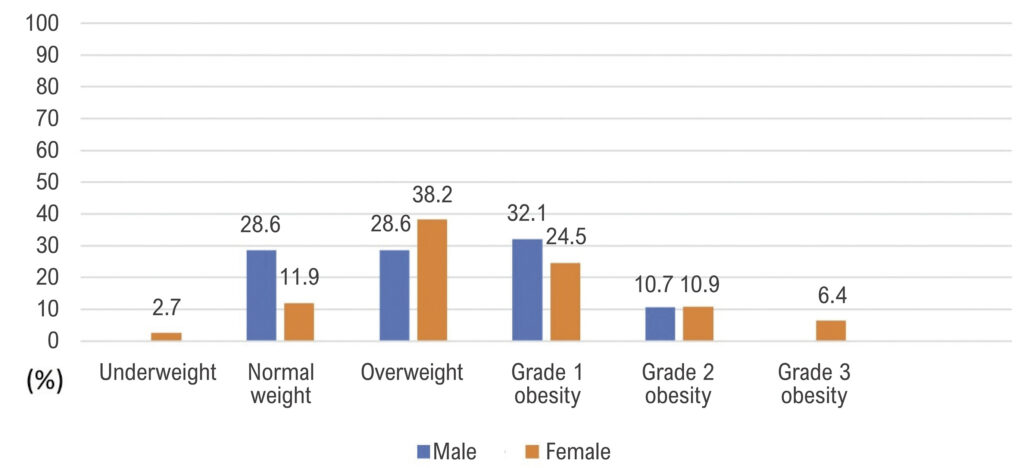
A total of 138 patients were collected, of whom 74.7% had resistant hypertension and 25.3% had refractory hypertension. There was a predominance of females and black ethnicities, representing 79.7% (p=0.307) and 91.3% (p=0.315), respectively. The mean age was 64.7± 10.8 (p=0.566). Obesity (BMI ≥ 30 kg/m2) was present in 42% (p=0.379), being higher in refractory hypertension (51.4% vs. 38.8%). Higher body mass index values were directly associated with an increased number of antihypertensive medications required for blood pressure control (r = 0.45; p < 0.01). Additionally, 74.6% of the patients had dyslipidemia (p=0.400).
Conclusion
In our population of patients with severe hypertension, obesity was prevalent and significantly influenced both the presentation and the control of blood pressure levels.
Images
Image gallery fullscreen viewer
Comments are moderated by the editorial team before publication. Discussions should be evidence-based and use scientific language. Conflicts of interest should be declared.