Sodium-Glucose Cotransporter 2 Inhibitors in Patients with Heart Failure and Transthyretin or Light Chain Amyloidosis: A Real-World Analysis
Abstract
Background:
Evidence regarding the efficacy of sodium-glucose cotransporter 2 inhibitors (SGLT2i) in amyloidosis-related heart failure (HF) remains limited.
Objective:
To evaluate the impact of SGLT2i in patients with amyloid transthyretin (ATTR) or amyloid light-chain (AL) amyloidosis and HF.
Methods:
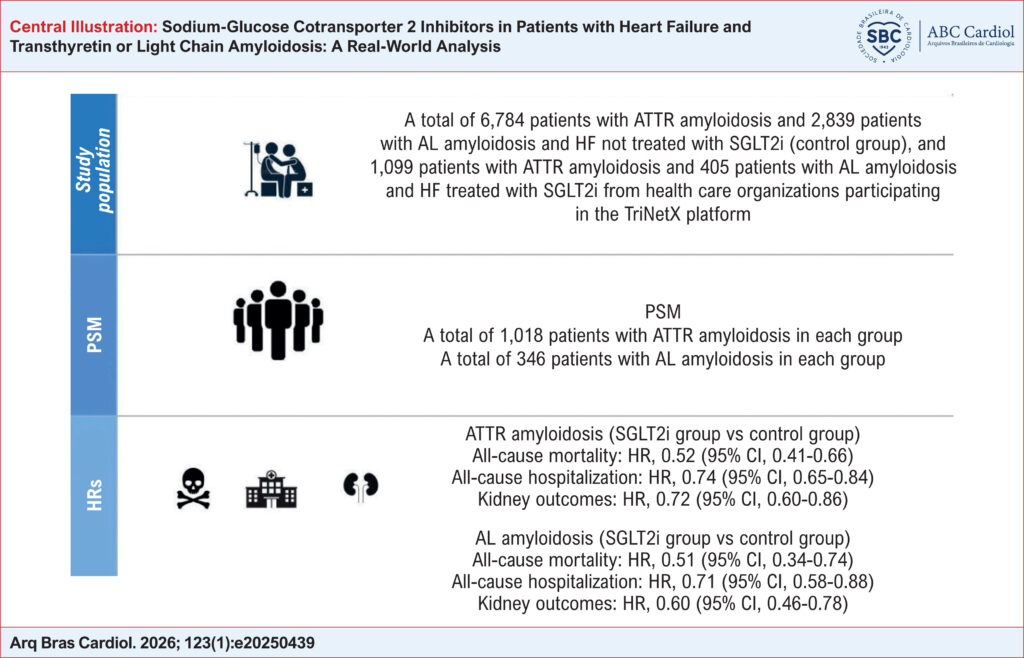
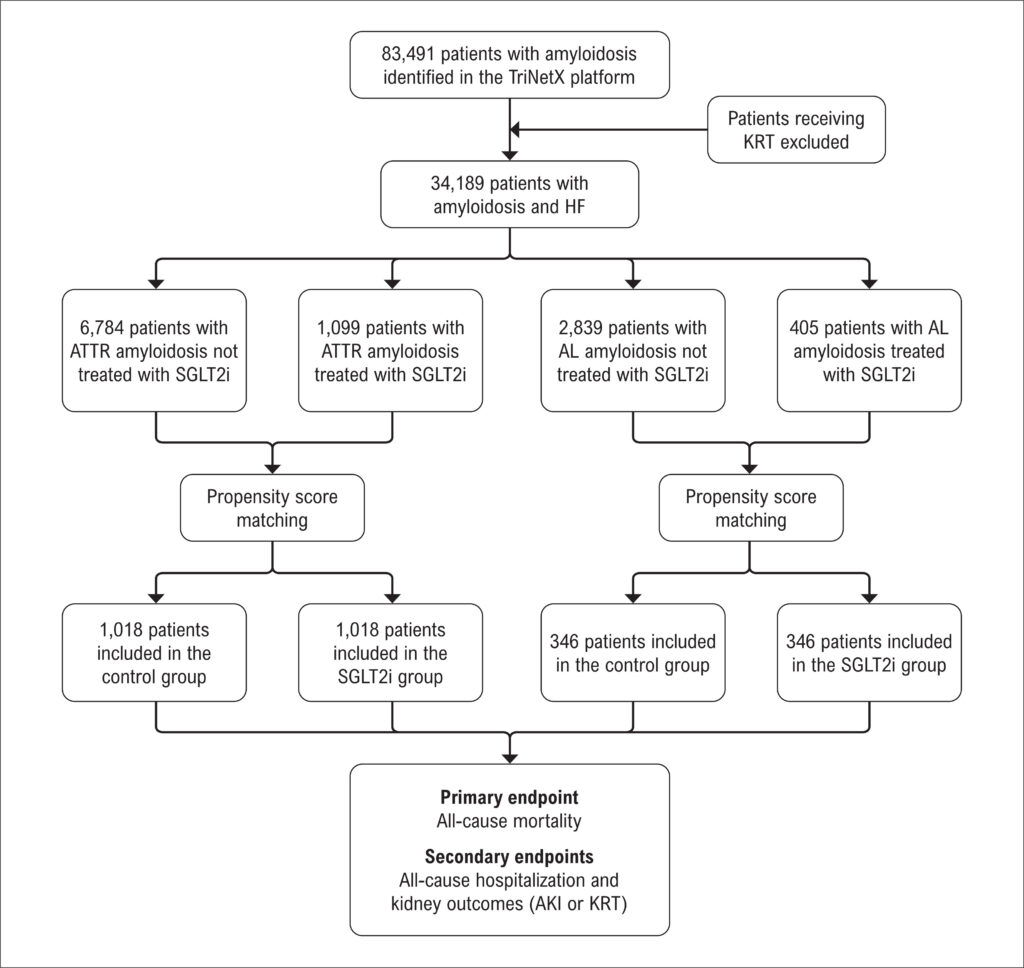
By using global electronic medical record data, we identified patients aged ≥ 18 years with ATTR or AL amyloidosis and HF. After matching, outcomes were compared between patients treated with SGLT2i and matched controls, including 2,036 patients with ATTR amyloidosis and 692 patients with AL amyloidosis. Endpoints included 12-month all-cause mortality, hospitalization, and kidney outcomes. Statistical significance was defined as a two-sided p < 0.05.
Results:
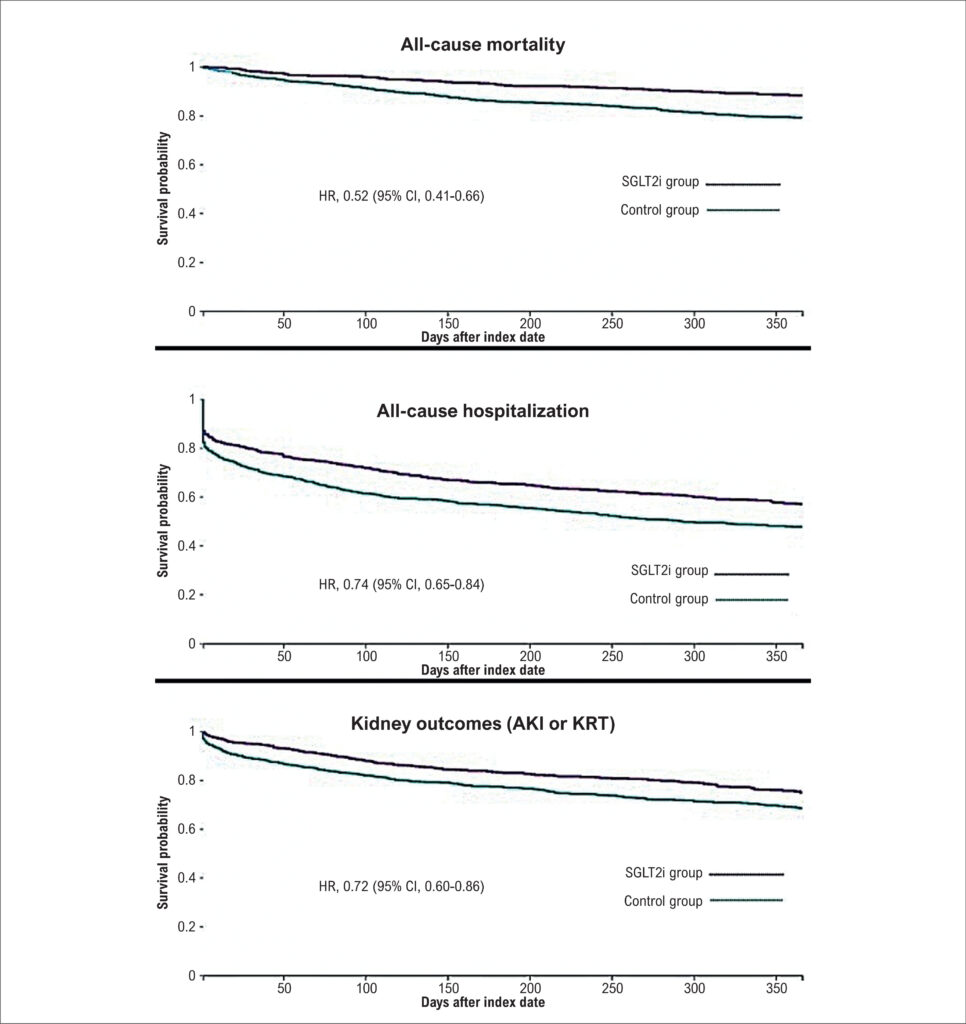
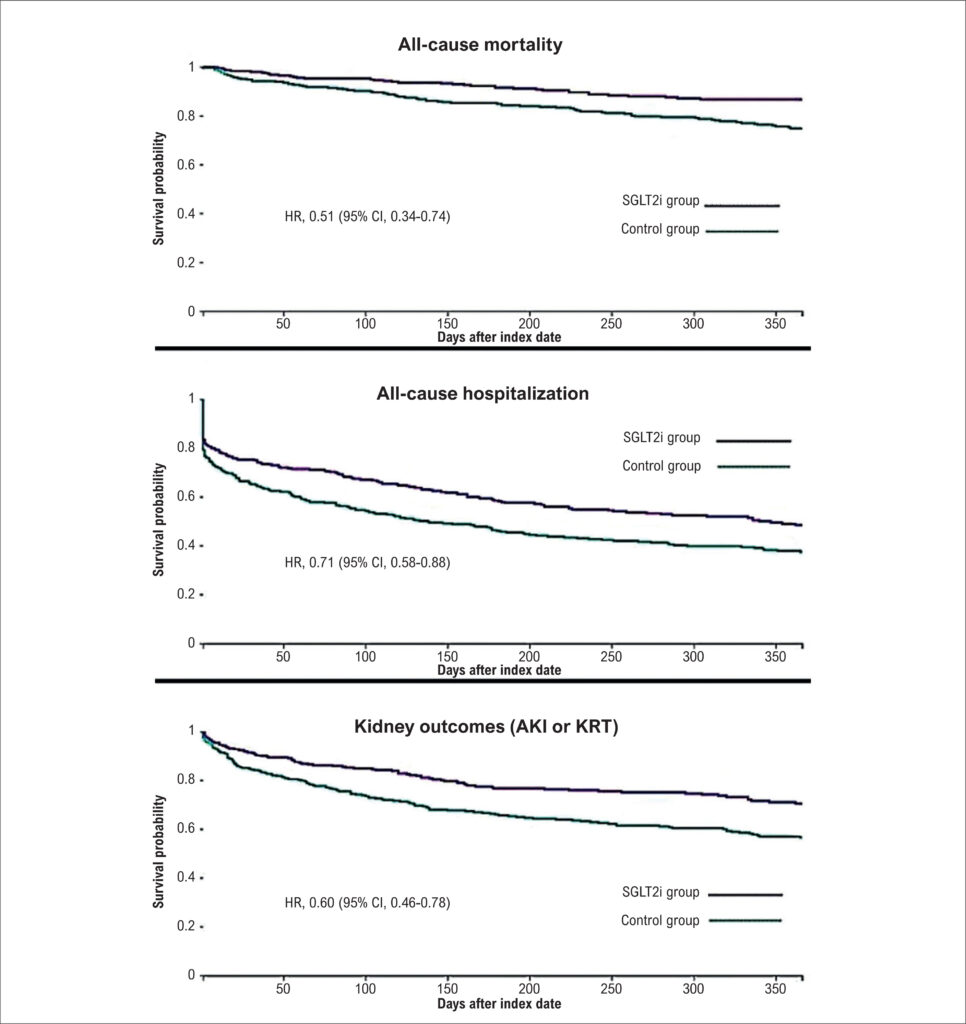
A total of 96 (9.43%) deaths occurred among patients with ATTR amyloidosis in the SGLT2i group, compared to 196 (19.2%) in the control group (hazard ratio [HR], 0.52; 95% CI, 0.41-0.66). Hospitalization occurred in 387 (38.0%) patients receiving SGLT2i and in 505 (49.6%) controls (HR, 0.74; 95% CI, 0.65-0.84). Kidney outcomes were observed in 204 (20.0%) patients in the SGLT2i group and 298 (28.5%) in the control group (HR, 0.72; 95% CI, 0.60-0.86). Among patients with AL amyloidosis, 39 (11.2%) deaths occurred in the SGLT2i group and 80 (23.1%) in the control group (HR, 0.51; 95% CI, 0.34-0.74). Hospitalization occurred in 161 (46.5%) patients treated with SGLT2i and in 204 (58.96%) controls (HR, 0.71; 95% CI, 0.58-0.88). Kidney outcomes occurred in 86 (24.8%) patients in the SGLT2i group and 137 (39.6%) in the control group (HR, 0.60; 95% CI, 0.46-0.78).
Conclusion:
In patients with HF due to ATTR or AL amyloidosis, the use of SGLT2i was associated with lower all-cause mortality, hospitalization, and kidney outcomes.
Images
Image gallery fullscreen viewer
Comments are moderated by the editorial team before publication. Discussions should be evidence-based and use scientific language. Conflicts of interest should be declared.