Additional Cardiac Remodeling Induced by Intense Military Training in Competitive Athletes
Abstract
Background:
Cardiac remodeling depends on the intensity, duration, and training method.
Objective:
To evaluate if the training performed in a Portuguese military special operations troop increases cardiac remodeling in a sample of young individuals who previously practiced competitive sports.
Methods:
A prospective study involving 76 military candidates for military special operations, 45 of whom previously practiced at competitive level (> 10 hours per week). Of these military athletes, only 17 successfully completed the course. The evaluation was performed at 6 months intervals and included a complete clinical history, physical examination, vital signs, anthropometric data and echocardiographic evaluation. Statistical significance was considered when p < 0.05, with a 95% confidence interval.
Results:
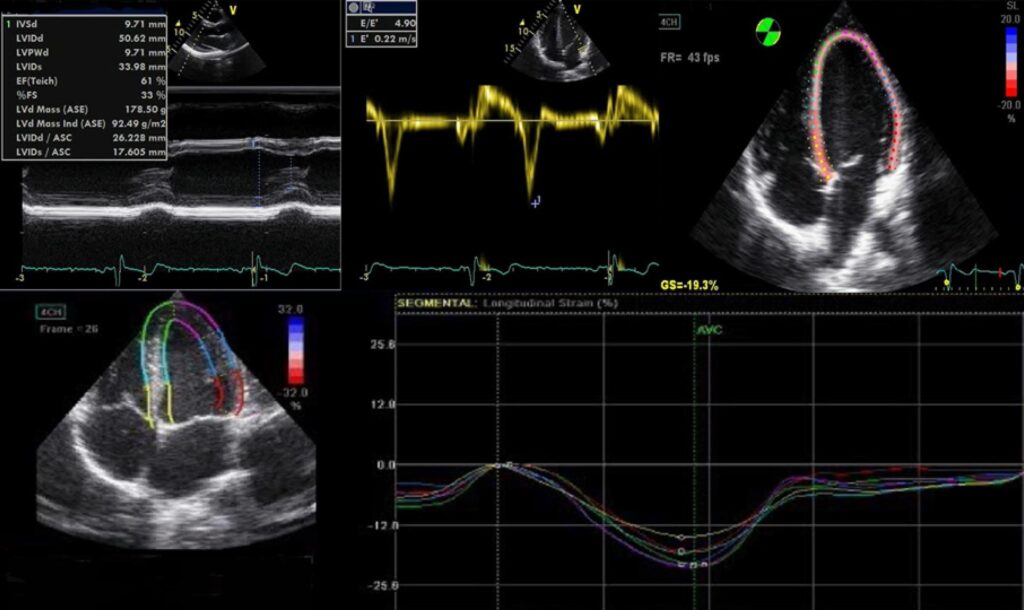
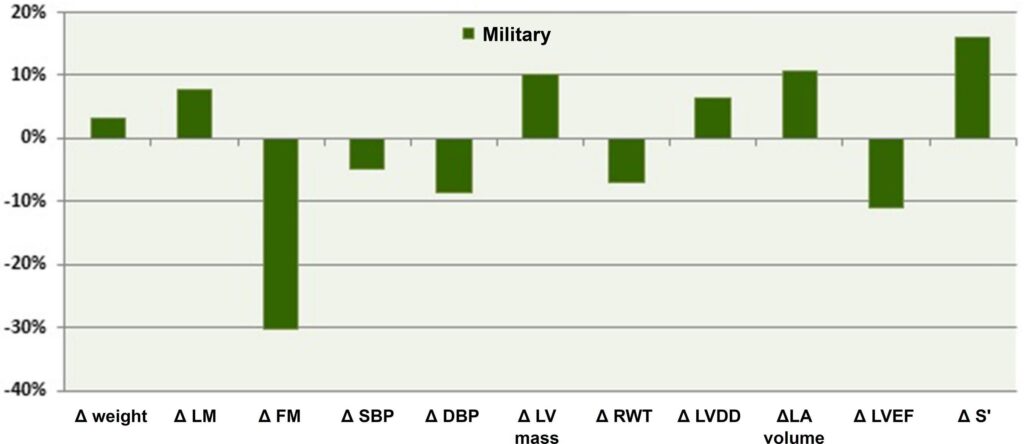
At the end of the course, there was a decrease in the percentage of fat mass (19.1 ± 3.3% vs. 13.1 ± 3.5%; p < 0.01), an increase in the percentage of lean mass (41.3 ± 2.1% vs. 44.4 ± 1.8%; p < 0.01), and decreased systolic and diastolic blood pressure and heart rate. Regarding cardiac remodeling, there was an increase in left ventricular diastolic diameter (49.7 ± 3.2 mm vs. 52.8 ± 3.4 mm; p < 0.01), an increase trend in left atrial volume (27.3 ± 4.5 mL/m2 vs. 28.2 ± 4.1 mL/m2; p = 0.07) and increased left ventricular mass (93.1 ± 7.7 g/m2 vs. 100.2 ± 11.4 g/m2; p < 0.01). Functional variables also changed, with an increase in S' (15 (13-16) cm/s vs. 17 (16-18) cm/s; p < 0,01) and a decrease in left ventricular ejection fraction (60 ± 6% vs. 54 ± 6%; p < 0.01).
Conclusion:
Intense military physical training resulted in additional cardiac remodeling in athletes of competitive level, both structural and functional.
Images
Image gallery fullscreen viewer
Comments are moderated by the editorial team before publication. Discussions should be evidence-based and use scientific language. Conflicts of interest should be declared.