Cardiopulmonary Resilience in Highly Active Individuals: Pre–Post COVID-19 Cardiopulmonary Exercise Testing Analysis
Abstract
Background:
The COVID-19 pandemic has affected millions globally, with persistent impacts extending beyond the acute phase. One such effect is post-COVID (long COVID), characterized by symptoms such as fatigue and exercise intolerance lasting more than 60 days. Although regular exercise is associated with reduced risk of severe outcomes, reports of decreased athletic performance after COVID-19 — even among highly active individuals (HAIs) — have raised concerns regarding the long-term effects on physical health. Cardiopulmonary exercise testing (CPET) is a valuable tool to assess exercise intolerance and to investigate the metabolic and ventilatory consequences of COVID-19.
Objectives:
To evaluate the impact of COVID-19 on cardiopulmonary function in HAIs by analyzing metabolic and ventilatory responses using CPET before and after infection.
Methods:
CPET data were retrospectively analyzed from HAIs of both sexes. Primary outcomes included changes in peak oxygen uptake (O2peak) and ventilatory efficiency (E/CO2 slope). Statistical significance was set at 5% (p < 0.05).
Results:
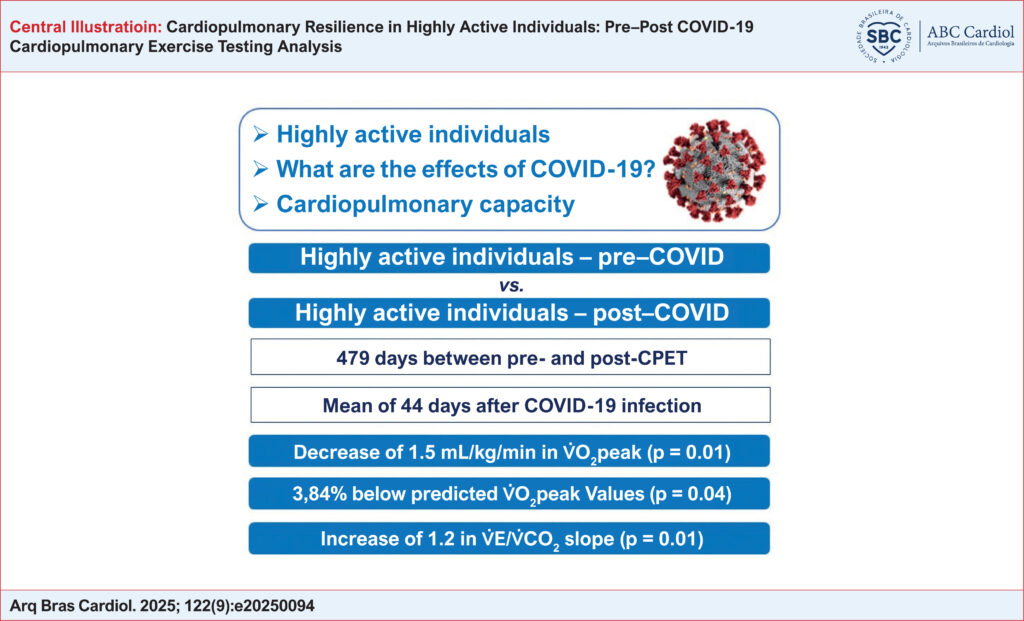
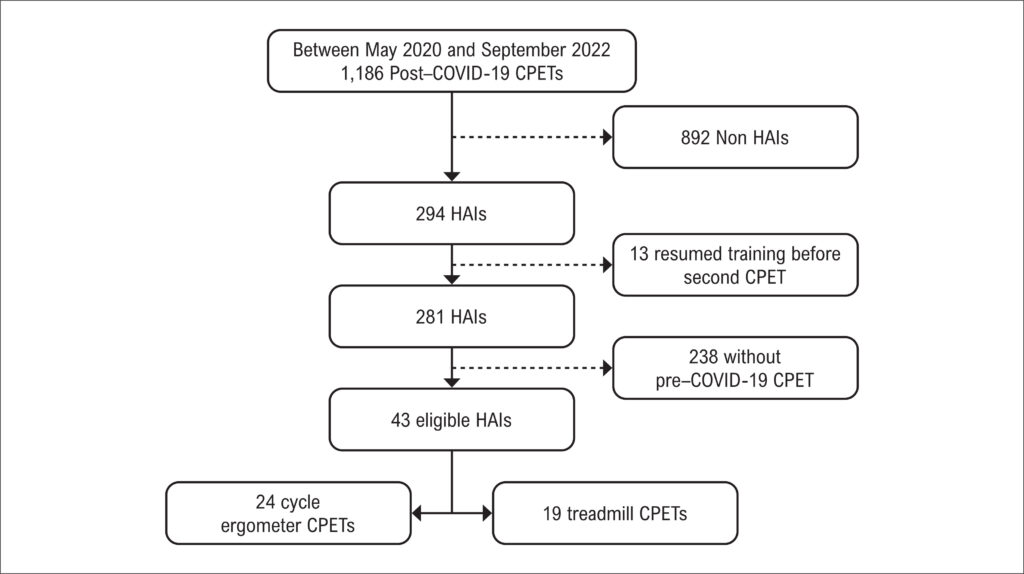
A total of 43 HAIs (72.1% male; 44 ± 10 years) were included. The median interval between CPETs was 479 days, with testing performed a mean of 44 ± 27 days after COVID-19. O2peak decreased by a mean of 1.5 mL/kg/min (p = 0.017), representing a 3.84% reduction in predicted O2peak values (p = 0.045). E/CO2 slope increased by 1.2 (p = 0.017).
Conclusion:
Although HAIs are not immune to the effects of COVID-19, their high baseline physical activity levels appear to confer substantial cardiopulmonary resilience. Only minimal post-infection alterations were observed, which suggests that maintaining fitness may provide protective benefits against long-term sequelae of COVID-19.
Images
Image gallery fullscreen viewer
Comments are moderated by the editorial team before publication. Discussions should be evidence-based and use scientific language. Conflicts of interest should be declared.