Survival Analysis and Factors Associated with Mortality in Heart Failure Patients in the ELSA-Brasil Cohort
Abstract
Background
Heart failure (HF) is one of the leading causes of morbidity and mortality worldwide. Few studies have evaluated the survival and prognostic factors of patients with this condition in light of the therapeutic advances of recent decades.
Objectives
To describe the survival, possible factors associated with mortality, and clinical characteristics of participants with HF in the Brazilian Longitudinal Study of Adult Health (ELSA-Brasil).
Methods
The cohort followed 15105 participants from 2008 to 2023. Sociodemographic variables, laboratory tests, electrocardiogram, two-dimensional echocardiogram, lifestyle habits, comorbidities, and medication use were evaluated. Survival probability was estimated using Kaplan-Meier curves and log-rank tests. Cox regression modeling was used to calculate the crude and adjusted Hazard Ratios (HR) with their respective 95% confidence intervals. The significance criterion was p<0.05.
Results
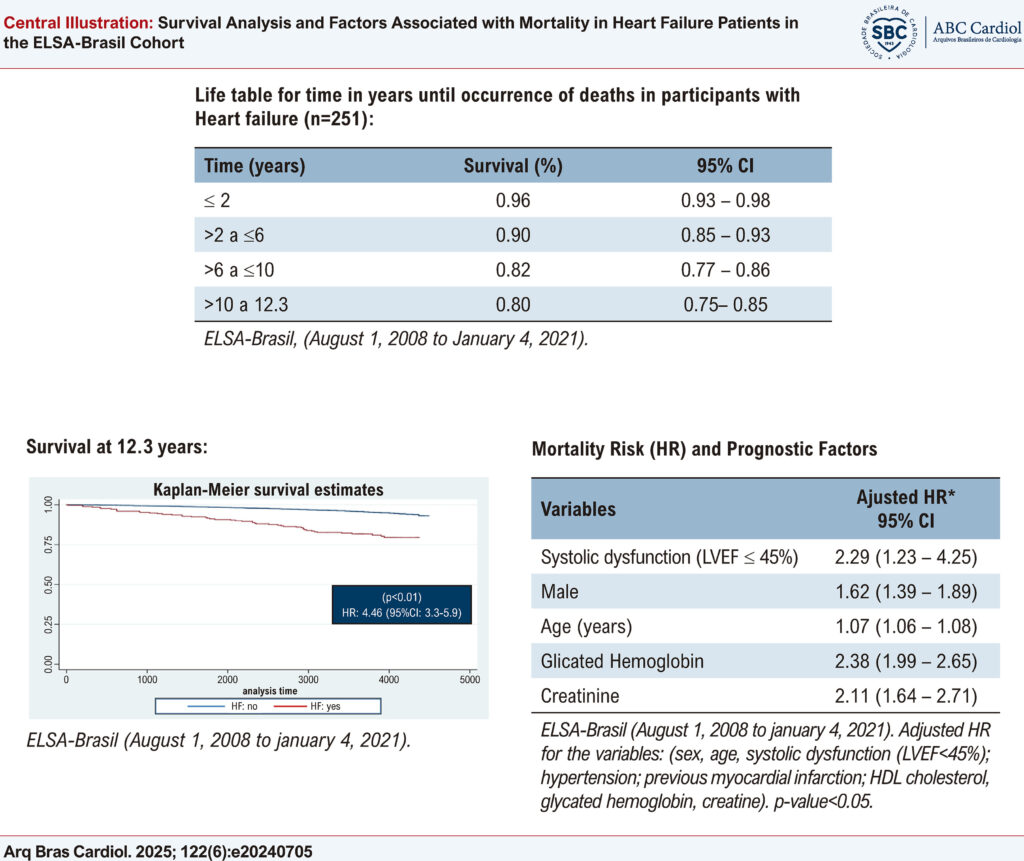
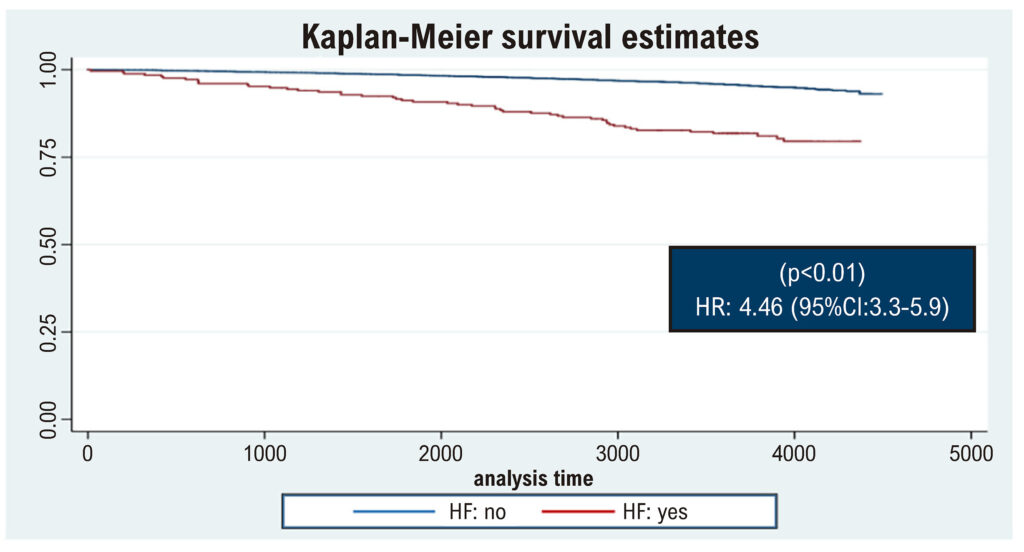
During the inclusion phase, 251 participants with an HF diagnosis were selected (2008-2010). Over approximately 12.3 years of follow-up, 48 (19%) died. The overall survival of participants with HF at 2, 6, 10, and 12.3 years of follow-up was 96%, 89%, 82%, and 80%, respectively. The mortality risk was 4.5 times higher (HR: 4.46; 95% CI: 3.3–5.9) compared to the unaffected group (p<0.01), and even after applying an adjusted model, the mortality risk remained twice as high (HR: 1.77; 95% CI: 1.3–2.4). Variables associated with a worse prognosis included male sex, advanced age, systolic dysfunction (LVEF<45%), hypertension, diabetes mellitus, and chronic kidney disease.
Conclusion
We found high mortality among participants with HF in the ELSA-Brasil cohort.
Images
Image gallery fullscreen viewer
Comments are moderated by the editorial team before publication. Discussions should be evidence-based and use scientific language. Conflicts of interest should be declared.