Prognostic Value of Nonsustained Ventricular Tachycardia in Hypertrophic Cardiomyopathy in a Brazilian Cohort: Comparison with World Literature
Abstract
Background
In hypertrophic cardiomyopathy (HCM), there is a well-known association between nonsustained ventricular tachycardia (NSVT) and the risk of sudden death.
Objectives
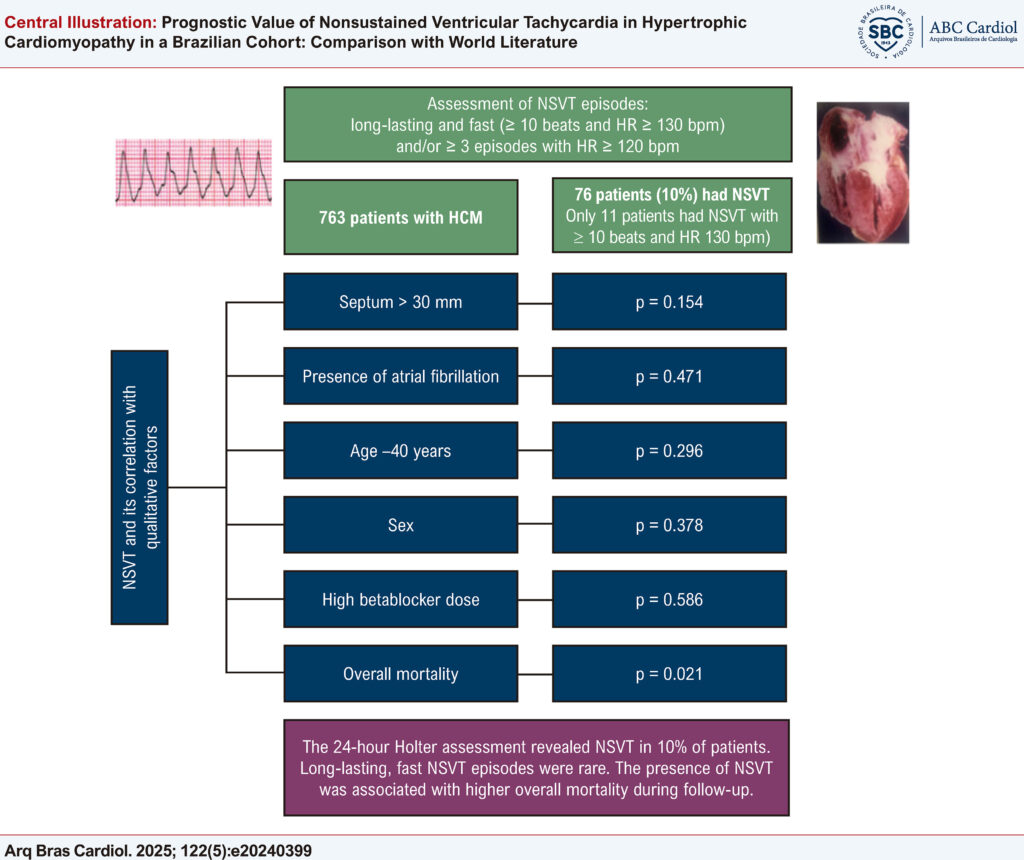
To assess the incidence of NSVT using 24-hour Holter monitoring in patients with HCM in a Brazilian cohort and correlate it with its characteristics and progression.
Methods
This retrospective study of patients with HCM used 24-hour Holter monitoring to assess the presence of long-lasting, fast NSVT (≥ 10 beats and heart rate ≥ 130 bpm) or the presence of at least 3 episodes of NSVT with ≥ 3 beats and heart rate ≥ 120 bpm. Continuous variables were shown as arithmetic means and standard deviations, and categorical variables were shown as absolute and relative frequencies. P < 0.05 was considered significant.
Results
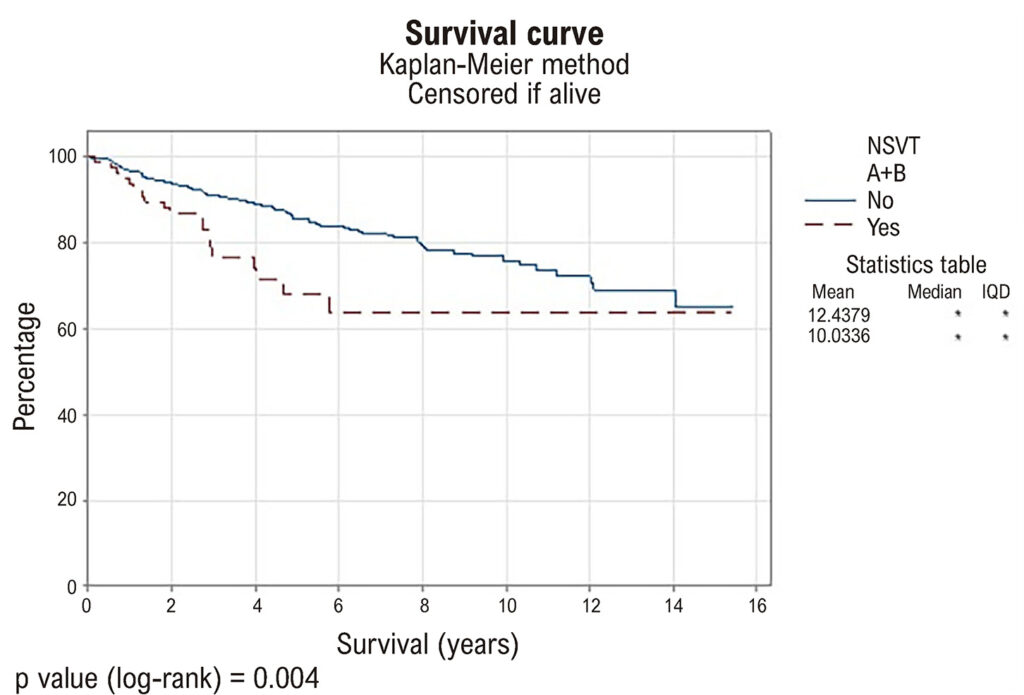
We included 763 patients, 53.5% of whom were male. Their mean age was 52.6 years ± 16.7. NSVT was found in 10% (76 patients). Only 11 (1.4%) of them had NSVT with ≥ 10 beats and heart rate ≥ 130 bpm. There was no difference in the relationship between NSVT and sex, septum > 30 mm, age ≥ 40 years, betablocker dose, and presence of atrial fibrillation. In the group with NSVT, 15-year all-cause mortality was observed in 26.3%, compared to 15.9% in the group without NSVT (p = 0.021).
Conclusions
The presence of NSVT on 24-hour Holter monitoring occurred in 10% of patients. Long-lasting, fast NSVT was rare. The presence of NSVT was associated with higher overall mortality during follow-up.
Images
Image gallery fullscreen viewer
Comments are moderated by the editorial team before publication. Discussions should be evidence-based and use scientific language. Conflicts of interest should be declared.