Patisiran Treatment in the Brazilian Subpopulation of the Phase 3 APOLLO-B Study in Transthyretin Amyloidosis with Cardiomyopathy: Post Hoc Analysis
Abstract
Background
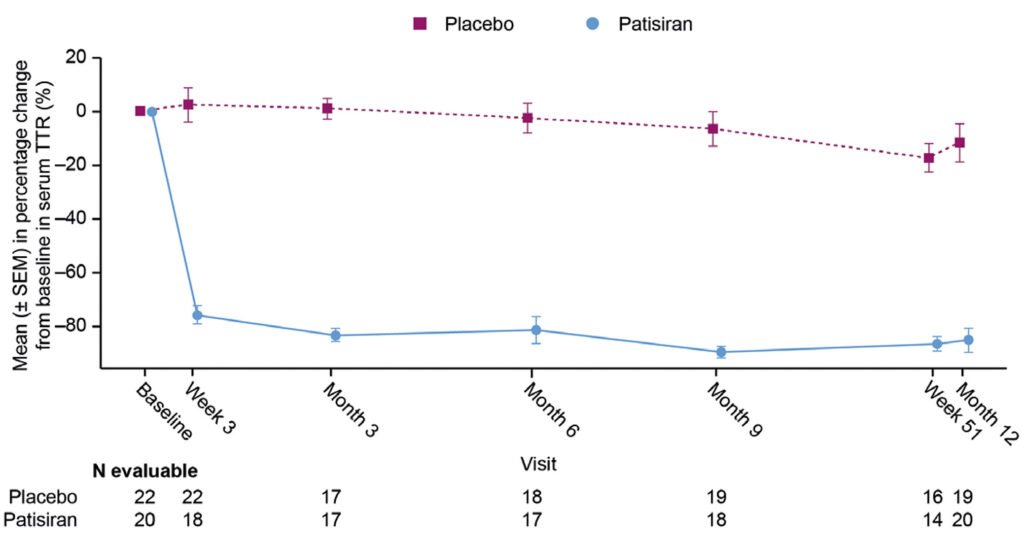
Patisiran rapidly knocked down transthyretin and preserved functional capacity in patients with transthyretin amyloidosis with cardiomyopathy (ATTR-CM) in the global Phase 3 APOLLO-B study (NCT03997383).
Objectives
To evaluate patisiran efficacy and safety in post hoc analysis of the Brazilian subpopulation of APOLLO-B.
Methods
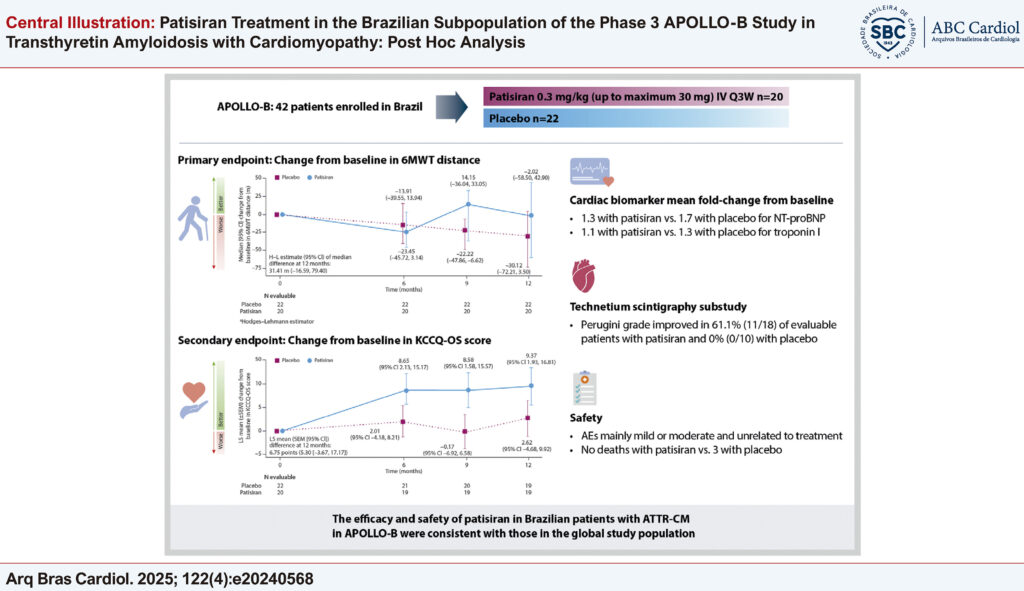
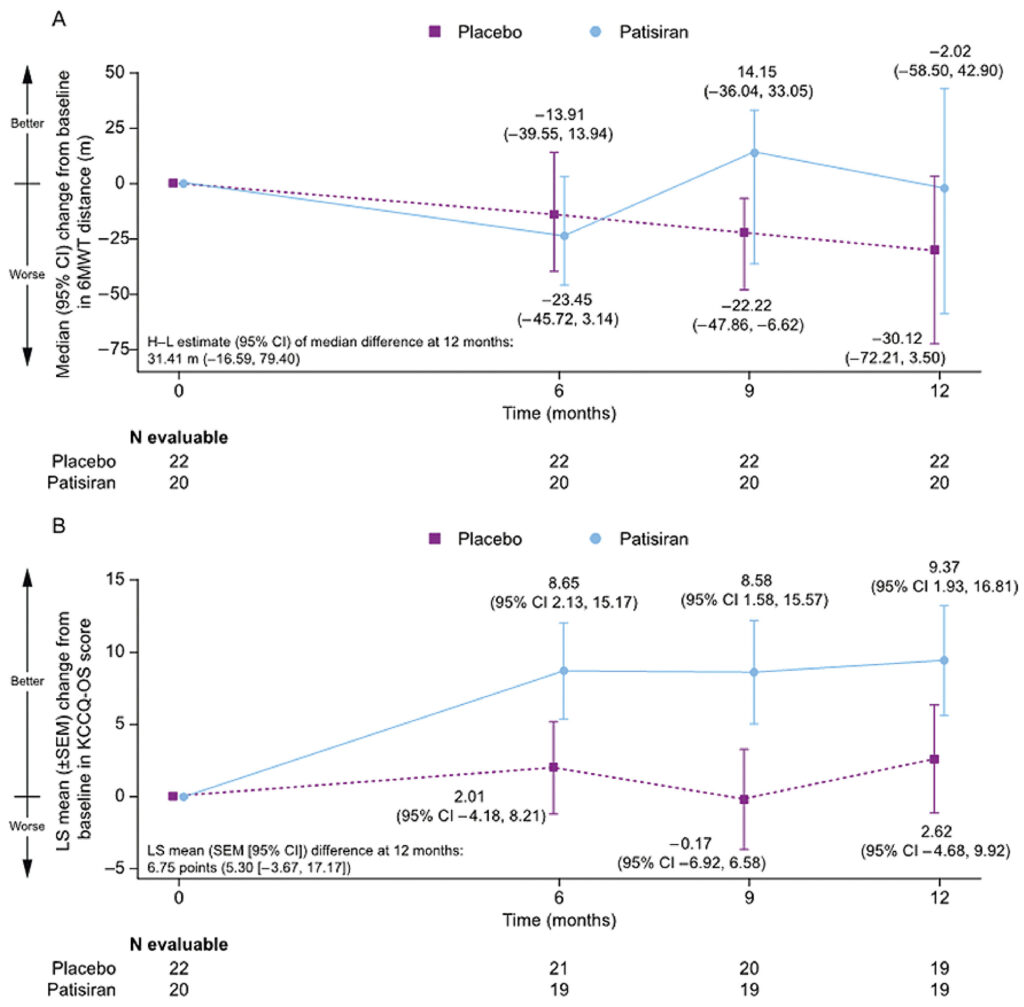
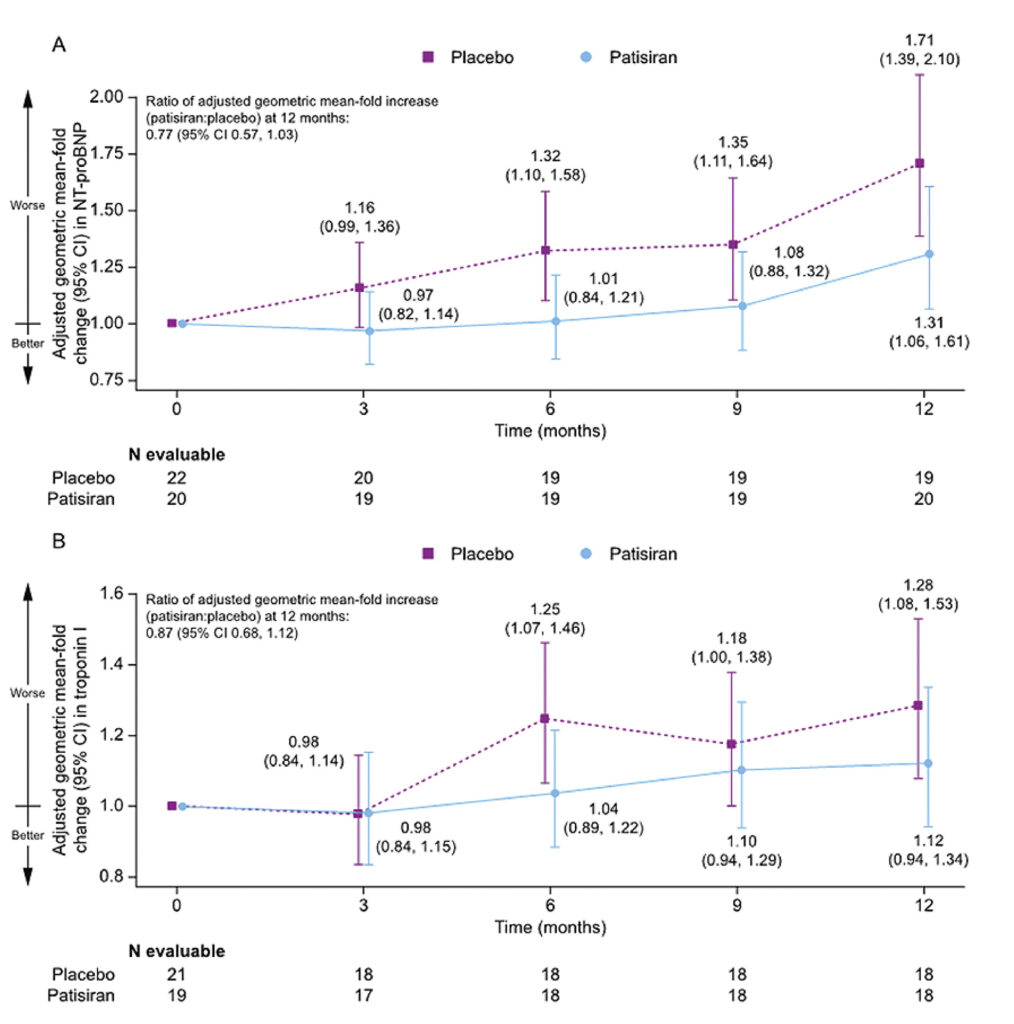
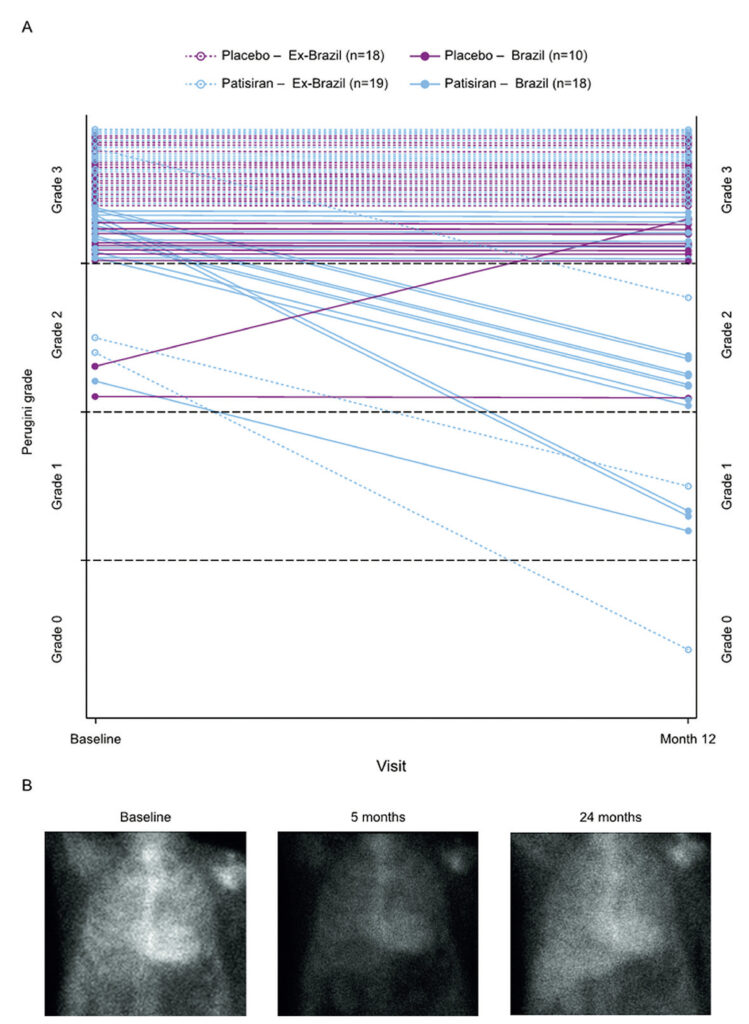
Patients were randomized 1:1 to patisiran 0.3 mg/kg or placebo every 3 weeks for 12 months. The primary endpoint was the change from baseline (CFB) in functional capacity (6-minute walk test [6MWT]) at Month 12. Secondary endpoints included CFB to Month 12 in the Kansas City Cardiomyopathy Questionnaire-Overall Summary (KCCQ-OS) score. Exploratory endpoints included CFB in cardiac biomarkers and Perugini grade of cardiac uptake during technetium-99m scintigraphy.
Results
Forty-two patients enrolled in Brazil (patisiran, n=20; placebo, n=22). Patisiran showed benefit in 6MWT and KCCQ-OS scores vs. placebo; CFB (95% confidence interval [CI]) in 6MWT (median) and KCCQ-OS scores (least squares mean) was –2.0 m (–58.5, 42.9) and 9.37 (1.93, 16.81) points with patisiran vs. –30.1 m (–72.2, 3.5) and 2.62 (–4.68, 9.92) points for placebo. For cardiac biomarkers, the mean fold-change from baseline (95% CI) for N-terminal prohormone B-type natriuretic peptide and troponin I was 1.31 (1.06, 1.61) and 1.12 (0.94, 1.34) for patisiran, and 1.71 (1.39, 2.10) and 1.28 (1.08, 1.53) for placebo, respectively. Perugini grade improved in 11/18 (61.1%) and 0/10 evaluable patients with patisiran and placebo, respectively. There were no deaths in the patisiran group vs. 3 in the placebo group.
Conclusion
The efficacy and safety of patisiran in Brazilian patients with ATTR-CM in APOLLO-B were consistent with those in the global study population. Findings are descriptive due to the small number of patients.
Images
Image gallery fullscreen viewer
Comments are moderated by the editorial team before publication. Discussions should be evidence-based and use scientific language. Conflicts of interest should be declared.