Esophageal Protection Strategies for Ablation of Atrial Fibrillation: Comparative Results of Consecutive Endoscopic Evaluation
Abstract
Background
Atrial-esophageal fistula following AF ablation remains a concern. There is no standardized approach to minimize its risk and morbidity.
Objective
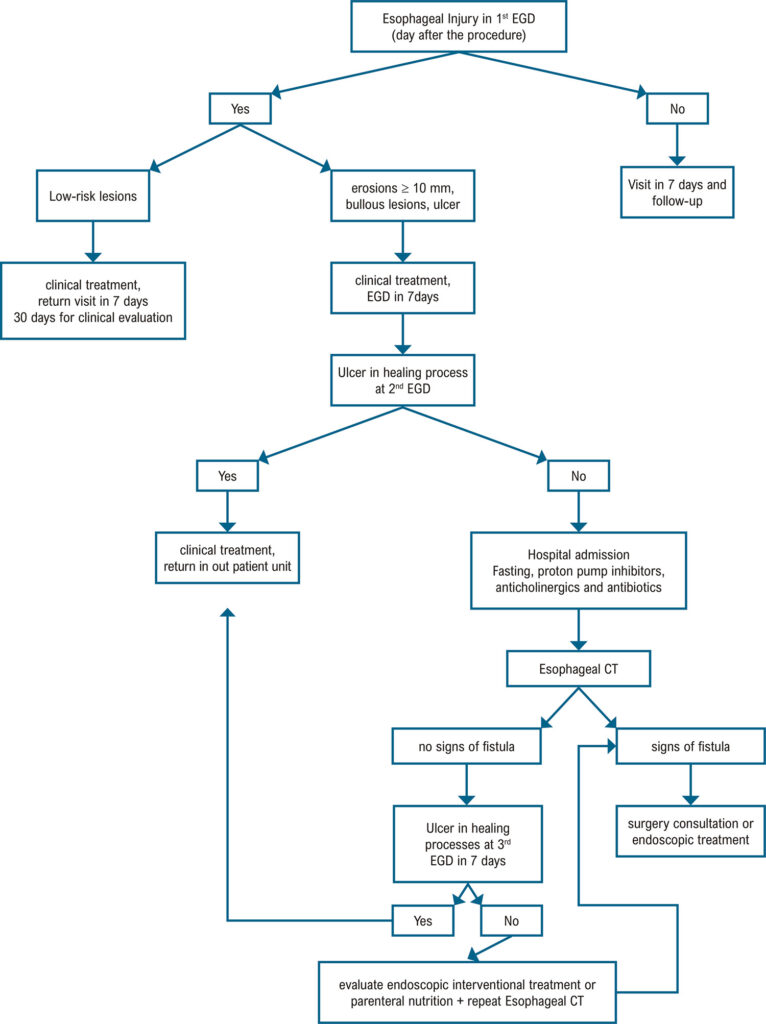
To present the seven-year experience of a systematic endoscopic surveillance of esophageal injury after AF catheter ablation.
Methods
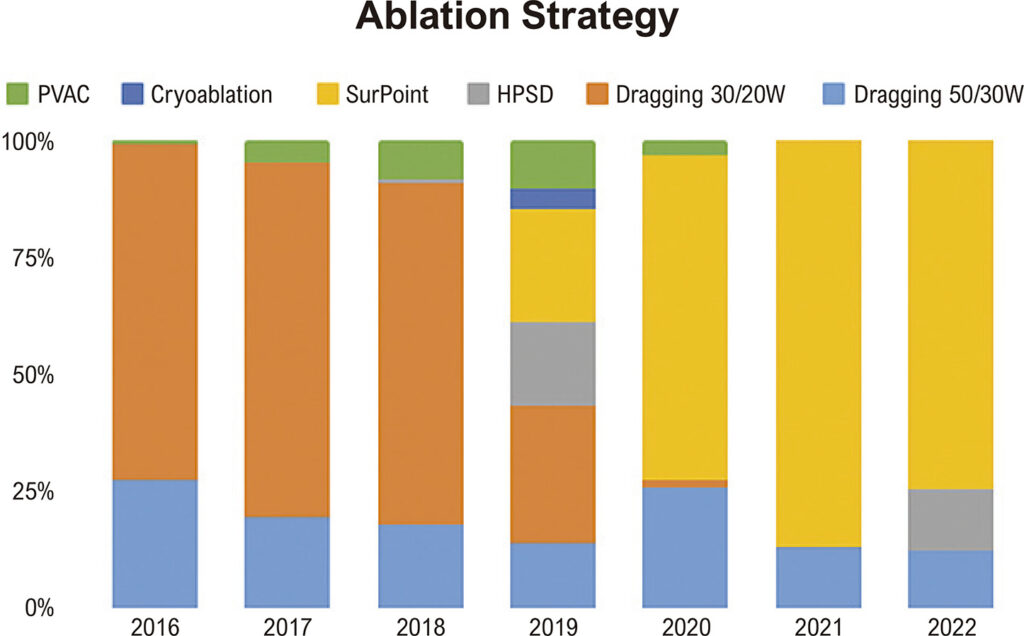
This is a retrospective single center registry of systematic endoscopic evaluation after AF ablation in consecutive procedures performed from 2016 to 2022. A p-value of <0.05 was considered statistically significant.
Results
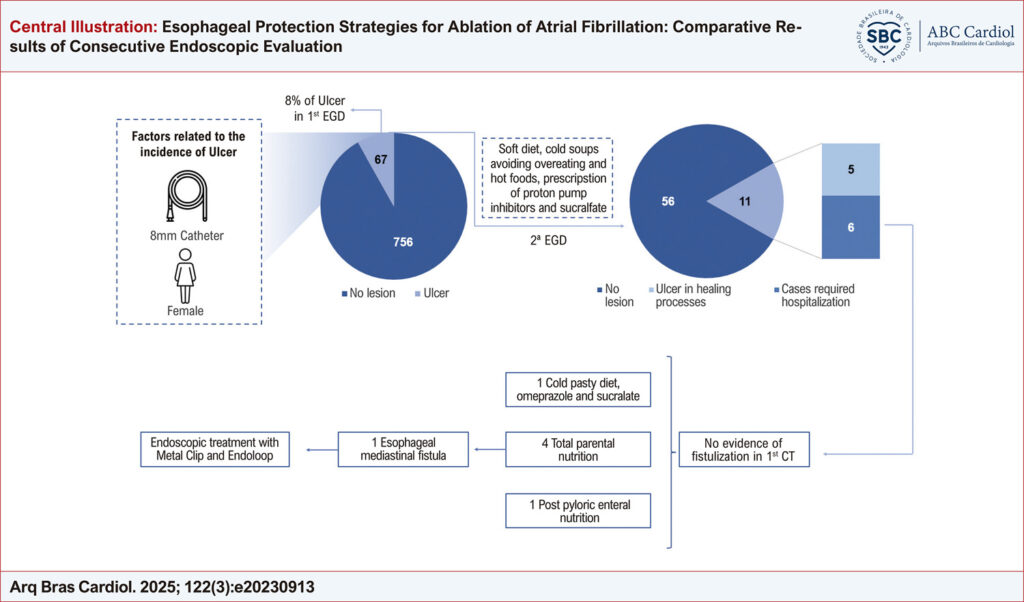
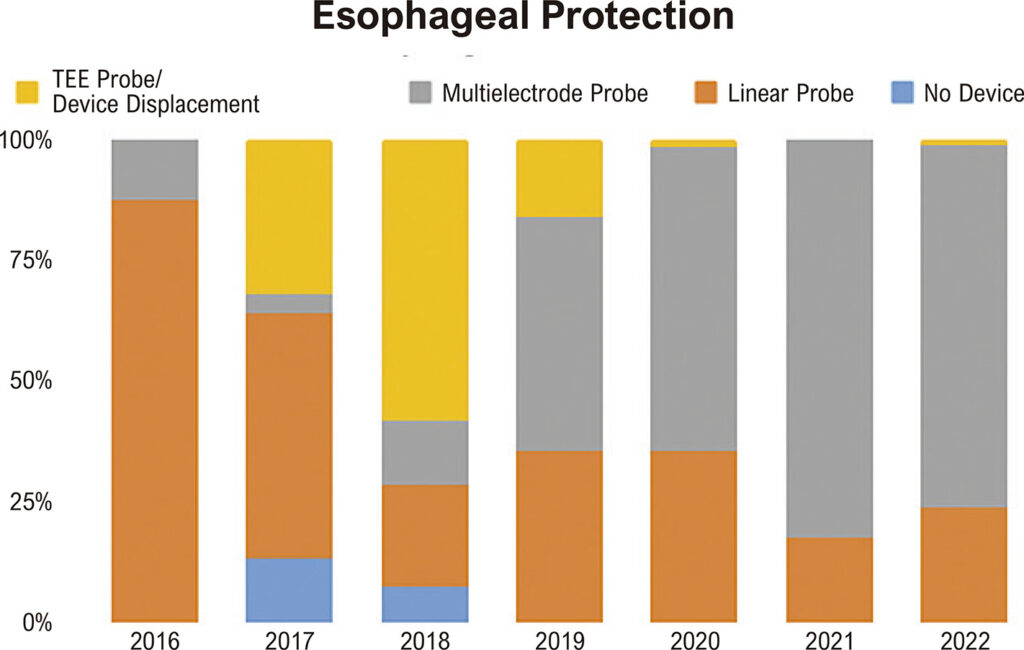
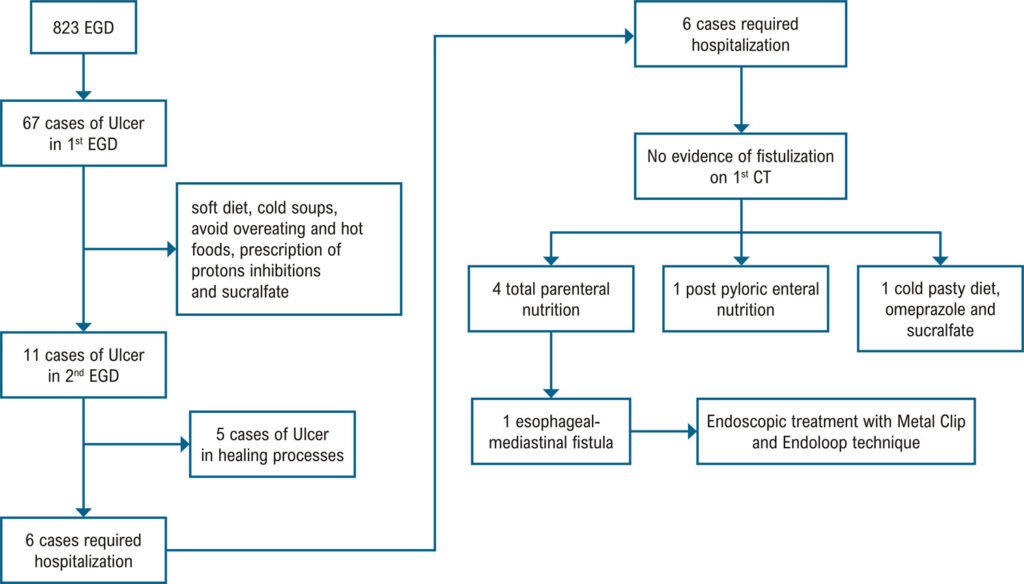
823 AF ablation with controlled esophagogastroduodenoscopy (EGD) were analyzed. Most patients (n=588, 71.4%) were male, 575 (69.9%) had paroxysmal AF. Esophageal temperature monitoring was performed using a single sensor in 310 patients (40.3%) and a multi–sensor probe in 306 (39.8%). Lesions were presented in 217 EGD (26.5%): hematoma-ecchymosis in 27 (3.3%), erythema in 14 (1.7%), erosion in 78 (9.5%) and ulcer in 67 (8.2%) patients. No esophageal protective strategy was associated with more ulcers, except the use of 8mm tip-catheter (14.7% of ulcers with 8mm tip catheter vs 6.7% with other catheters, p = 0.001). Thermal lesions were early detected and treated. Most lesions were considered healed at endoscopy, but one patient who underwent pulmonary vein isolation with an 8m tip catheter had esophageal fistula, treated successfully with endoscopic metal clip and endoloop technique.
Conclusion
The incidence of esophageal lesions at routine EGD following AF ablation is high, although in most of the cases they heal spontaneously. Patients who underwent ablation with the 8mm tip catheter had more severe thermal lesions. Early esophagus endoscopy may help the diagnosis of early-stage lesions and the prevention of fistula formation after AF ablation.
Images
Image gallery fullscreen viewer
Comments are moderated by the editorial team before publication. Discussions should be evidence-based and use scientific language. Conflicts of interest should be declared.