Outcomes of Guideline-Recommended Percutaneous Coronary Intervention in Women with Obstructive Coronary Artery Disease: A Longitudinal Cohort Study
Abstract
Background
Previous studies have shown that women with coronary artery disease (CAD) are less likely to undergo angiography and have less favorable outcomes after percutaneous coronary intervention (PCI).
Objectives
Assess the outcomes of women with acute coronary syndrome (ACS) and stable CAD (lesion>50%) treated with contemporary PCI using DES.
Methods
Observational, longitudinal cohort study with prospective follow-up included all female patients ≥ 18 years admitted at a tertiary public cardiovascular center in Brazil from January 2019 to December 2020. The level of significance adopted in the statistical analysis was 5%.
Results
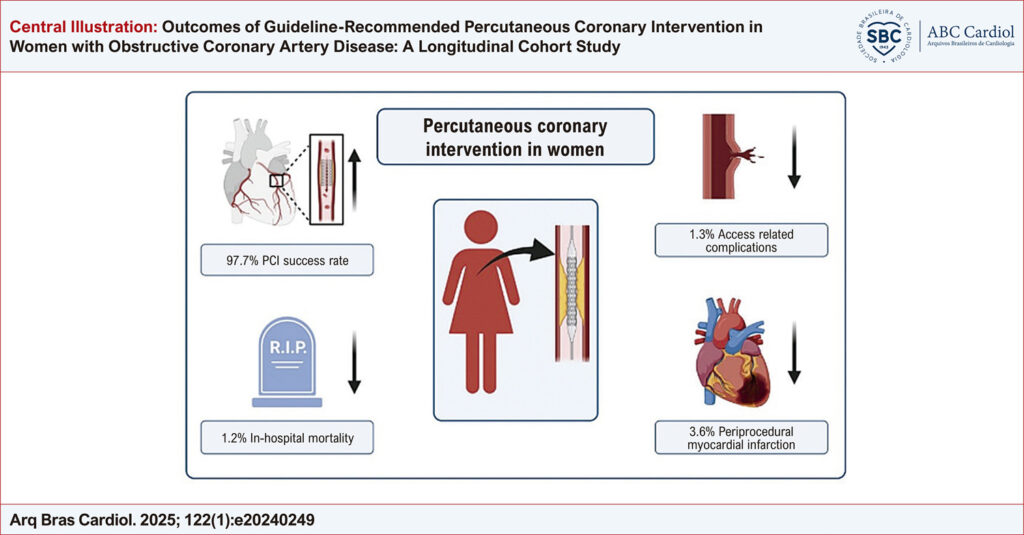
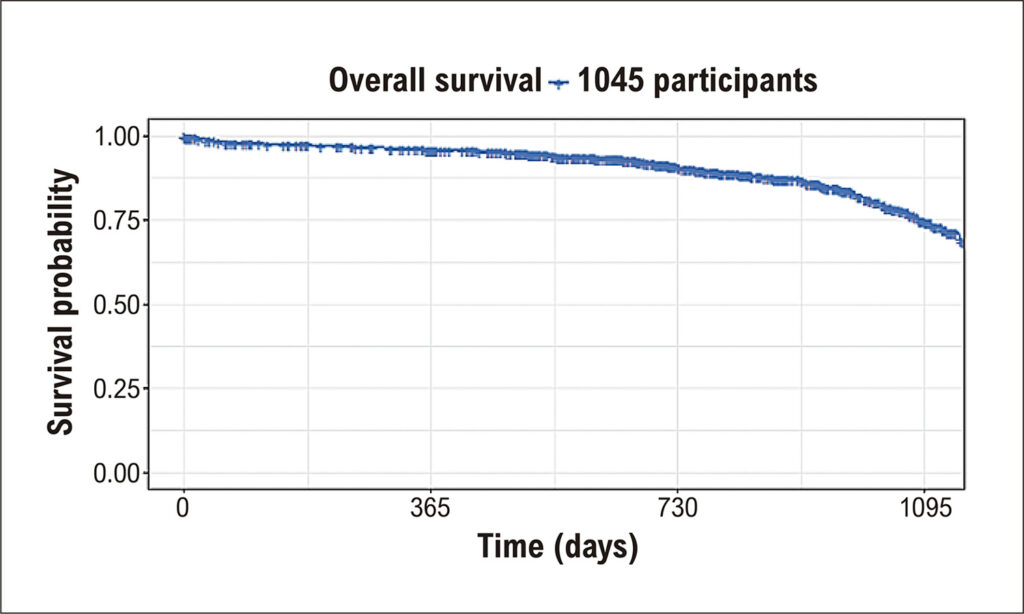
1146 women (average age 65 years) underwent guideline-recommended PCI. Risk factors were frequent (hypertension: 88%, dyslipidemia: 85%, diabetes: 47.5%), and 69% were admitted due to ACS. Radial access was used in 59% of patients; 1516 vessels were treated with 1725 stents implanted (1.5 stents/patient). PCI was successful in 97.7%, in-hospital death occurred in 1.2%, peri-procedural MI in 3.6%, and TIA in 0.4%. Predictors of in-hospital major adverse cardiac and cerebrovascular events (MACCE): previous stroke (OR: 2.97; CI: 1.06-7.15; p= 0.023), CKD (OR: 3.11; CI: 1.49-6.20; p= 0.002), and at least one procedural failure during PCI (OR: 10.2; CI: 1.17-5.9; p<0.001). The average follow-up was 576.2 days in 1047 patients. All-cause mortality occurred in 5.3%, cardiac death in 3.5%, recurrent ACS in 8%, and additional revascularization procedures in 5.5%. The predictors for MACCE during FU were hospital admission for ACS for the index PCI (OR: 1.58; HR: 1.06-2.35; p=0.023) and the presence of MACCE during hospitalization (OR: 6.66; HR: 2.42- 18.3; p< 0.001).
Conclusion
In this pioneering study involving 1146 patients treated by contemporary PCI and followed for almost 2 years, we obtained very encouraging in-hospital and mid-term results.
Images
Image gallery fullscreen viewer
Comments are moderated by the editorial team before publication. Discussions should be evidence-based and use scientific language. Conflicts of interest should be declared.