Prognostic Nutritional Index is Associated with the Degree of Coronary Collateral Circulation in Stable Angina Patients with Chronic Total Occlusion
Abstract
Background:
Coronary collateral circulation (CCC) can effectively improve myocardial blood supply to the area of CTO (chronic total coronary occlusion) and can, thus, improve the prognosis of patients with stable coronary syndrome (SCS). The degree of inflammation and some inflammation markers were associated with the development of collaterals.
Objective:
To investigate whether prognostic nutritional index (PNI) has an association with the development of CCC in patients with SCS.
Methods:
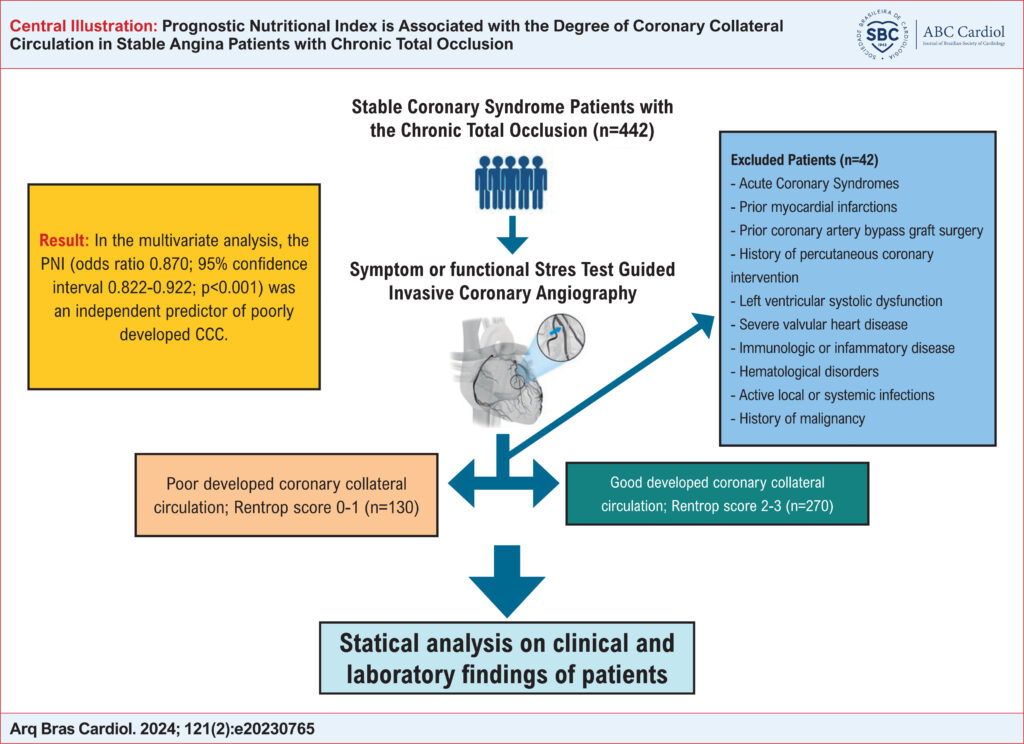
A total of 400 SCS patients with the presence of CTO in at least one major epicardial coronary artery were included in this study. The patients were divided into two groups according to the Rentrop score. Scores of 0 to 1 were considered poor developed CCC, and scores of 2 to 3 were accepted as good developed CCC. Statistical significance was set as a p-value < 0.05 for all analyses.
Results:
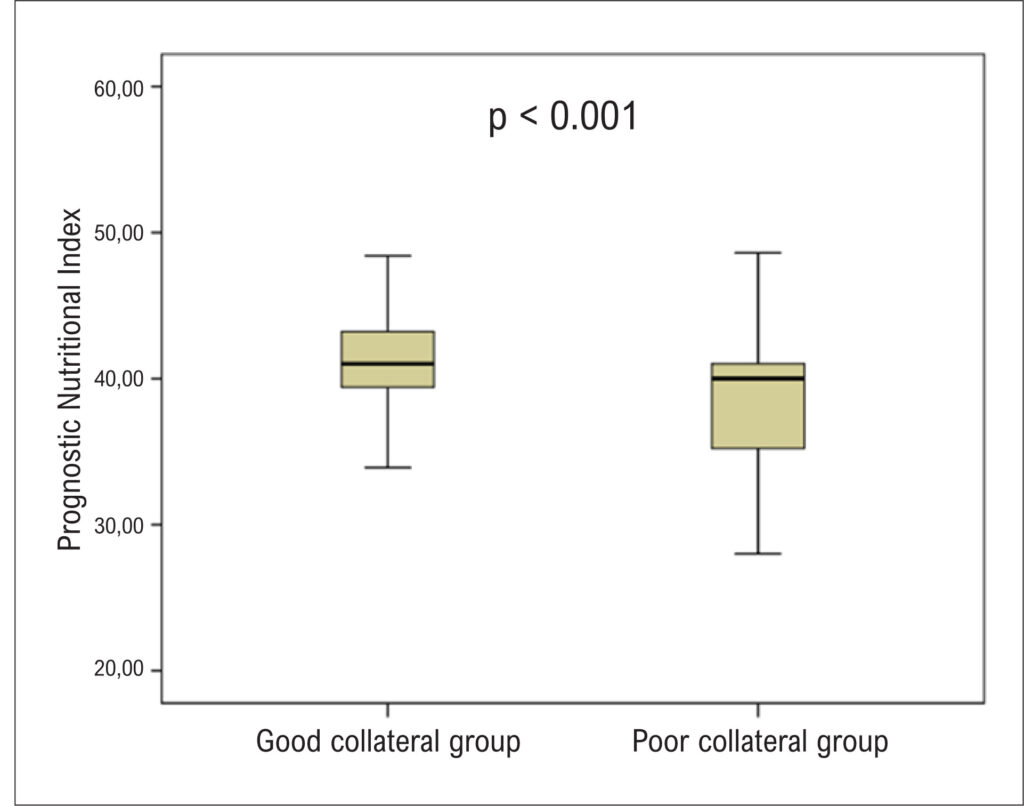
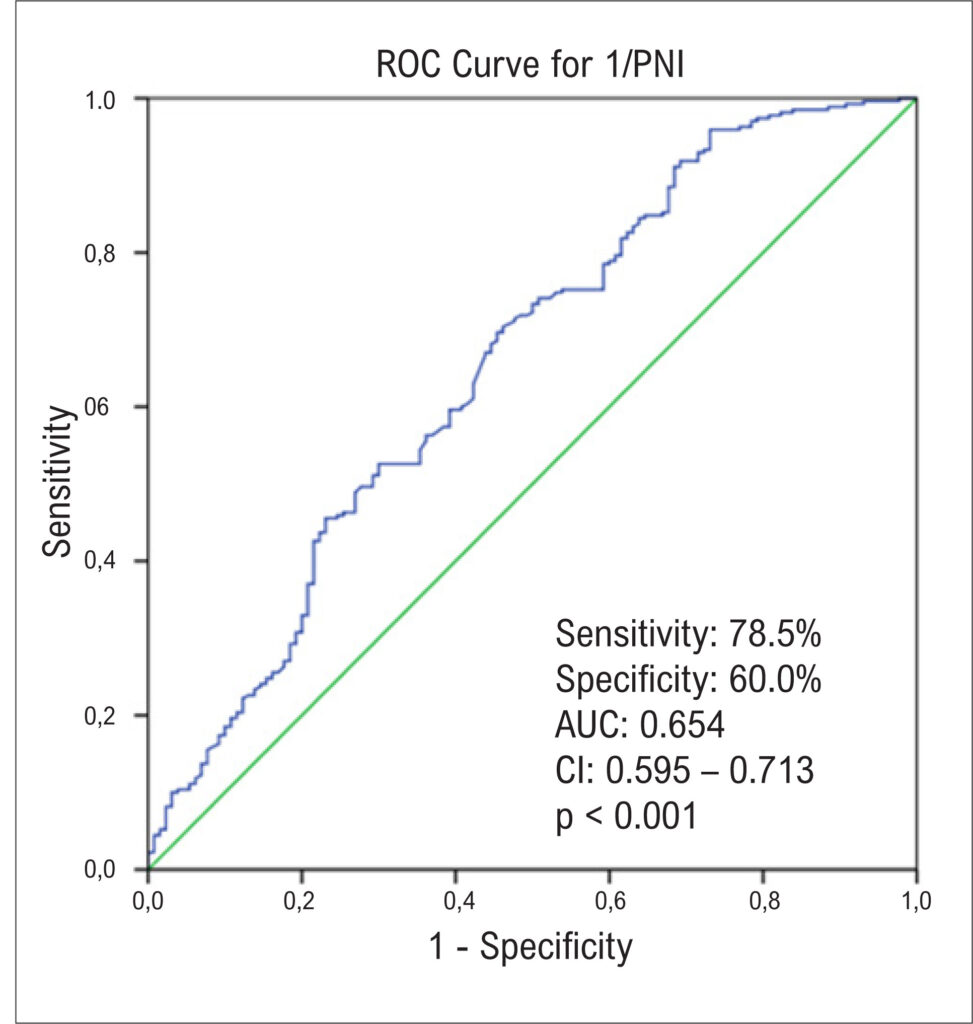
The mean age of the study cohort was 63±10 years; 273 (68.3%) were males. The poor-developed CCC group had a significantly lower PNI level compared with the good-developed CCC group (38.29±5.58 vs 41.23±3.85, p< 0.001). In the multivariate analysis, the PNI (odds ratio 0.870; 95% confidence interval 0.822-0.922; p< 0.001) was an independent predictor of poorly developed CCC.
Conclusion:
The PNI can be used as one of the independent predictors of CCC formation. It was positively associated with the development of coronary collaterals in SCS patients with CTO.
Images
Image gallery fullscreen viewer
Comments are moderated by the editorial team before publication. Discussions should be evidence-based and use scientific language. Conflicts of interest should be declared.