Chronic and regular use of statin prevents atrial fibrillation in period after cardiac surgery
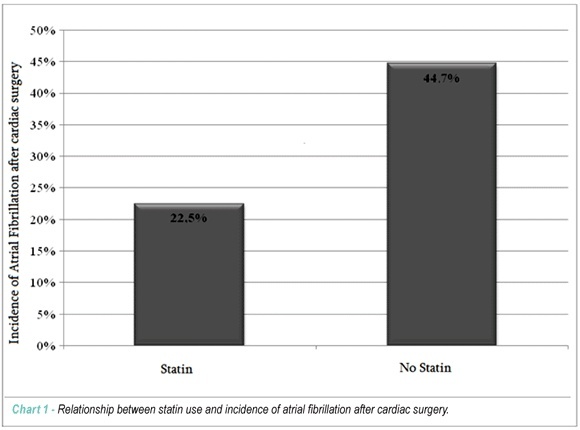
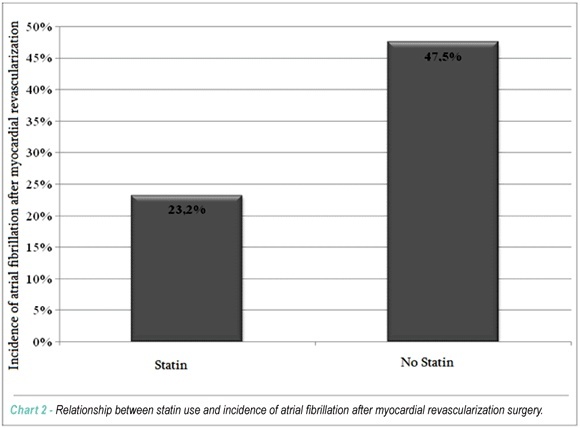
BACKGROND: Atrial fibrillation is a common complication after cardiac surgery. The previous use of statins may reduce the incidence of this arrhythmia. OBJECTIVE: To evaluate whether the chronic and regular use of statins, for a period of six months, prevents atrial fibrillation after elective cardiac surgery. METHODS: A study carried out with 107 patients that underwent cardiac surgery, including 66% of males and their mean age was 60.4 years (25 to 84). We evaluated the presence of atrial fibrillation among patients that used statins or not on a regular basis in the preoperative period. We excluded patients with urgent heart surgery, kidney failure, inflammatory diseases, previous atrial fibrillation, patients with thyroid disease and those using a permanent pacemaker. RESULTS: In the postoperative period, atrial fibrillation was present in 42 patients (39%) of the sample, including 11 (26%) people that had used statins on a regular basis in the preoperative period and 31 (74%) who had not. It was possible to observe that, in 22% of the patients that were using statin, there was no development of atrial fibrillation, while 45% of those who did not take statin had arrhythmia (ρ = 0.02). In the isolated myocardial revascularization, 47% of the patients that did not take statin and 23% of those that took statin developed atrial fibrillation ( ρ = 0.02). There was no statistically significant difference in the analysis of groups with or without statin for the presence of risk factors for the development of atrial fibrillation (ρ = 0.34). CONCLUSION: The regular use of statin, for six months or more in the preoperative period, reduced the incidence of atrial fibrillation after elective cardiac surgery.
Images
Image gallery fullscreen viewer
Comments are moderated by the editorial team before publication. Discussions should be evidence-based and use scientific language. Conflicts of interest should be declared.