Patient Management with Metallic Valve Prosthesis during Pregnancy and Postpartum Period
Abstract
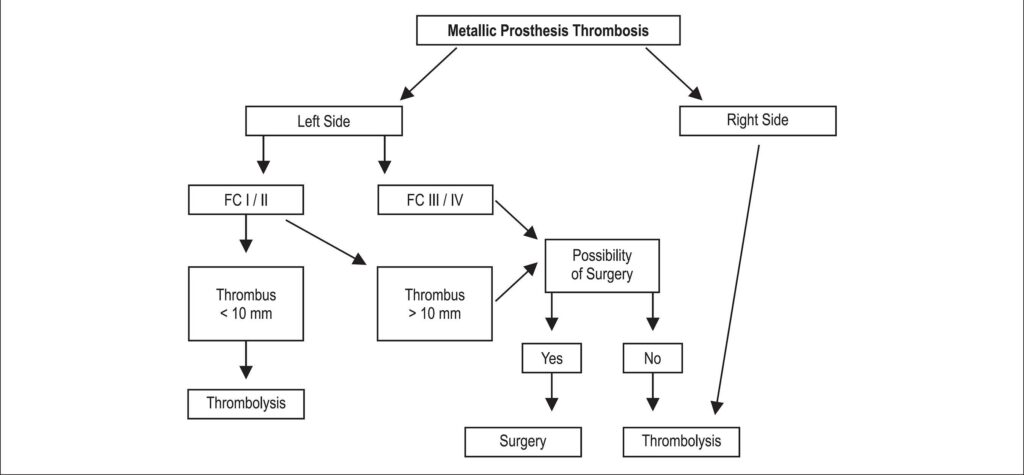
Prosthetic thrombosis is a rare complication, but it has high mortality and morbidity. Young women of childbearing age that have prosthetic heart valves are at increased risk of thrombosis during pregnancy due to changes in coagulation factors. Anticoagulation with adequate control and frequent follow-up if pregnancy occurs must be performed in order to prevent complications related to anticoagulant use. Surgery remains the treatment of choice for prosthetic heart valve thrombosis in most clinical conditions.
Patients with metallic prosthetic valves have an estimated 5% risk of thrombosis during pregnancy and maternal mortality of 1.5% related to the event. Anticoagulation with vitamin K antagonists during pregnancy is related to varying degrees of complications at each stage of the pregnancy and postpartum periods. Warfarin sodium crosses the placental barrier and when used in the first trimester of pregnancy is a teratogenic agent, causing 1-3% of malformations characterized by fetal warfarin syndrome and also constitutes a major cause of miscarriage in 10-30% of cases. In the third trimester and at delivery, the use of warfarin is associated with maternal and neonatal bleeding in approximately 5 to 15% of cases, respectively. On the other hand, inadequate anticoagulation, including the suspension of the oral anticoagulants aiming at fetal protection, carries a maternal risk of about 25% of metallic prosthesis thrombosis, particularly in the mitral valve. This fact is also due to the state of maternal hypercoagulability with activation of coagulation factors V, VI, VII, IX, X, platelet activity and fibrinogen synthesis, and decrease in protein S levels.
[…]
Images
Image gallery fullscreen viewer
Comments are moderated by the editorial team before publication. Discussions should be evidence-based and use scientific language. Conflicts of interest should be declared.