Waist Circumference is Associated with Blood Pressure in Children with Normal Body Mass Index: A Cross-Sectional Analysis of 3,417 School Children
Abstract
Background:
The prevalence of childhood obesity and associated conditions, such as hypertension, has become a major problem of public health. Although waist circumference (WC) is a marker of cardiovascular risk in adults, it is unclear whether this index is associated with cardiovascular risk factors in children.
Objective:
Our aim was to evaluate the association between increased WC and elevated blood pressure (BP) in children with normal body mass index (BMI) ranges.
Methods:
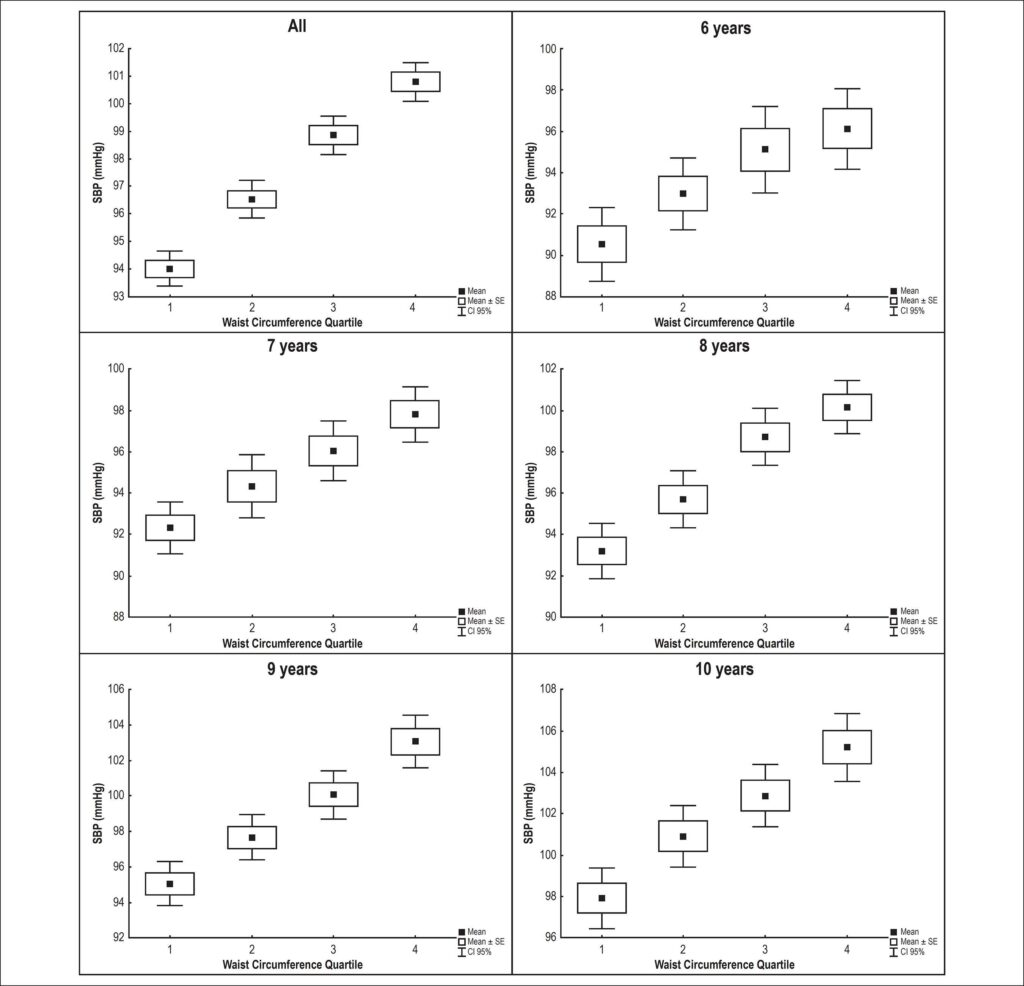
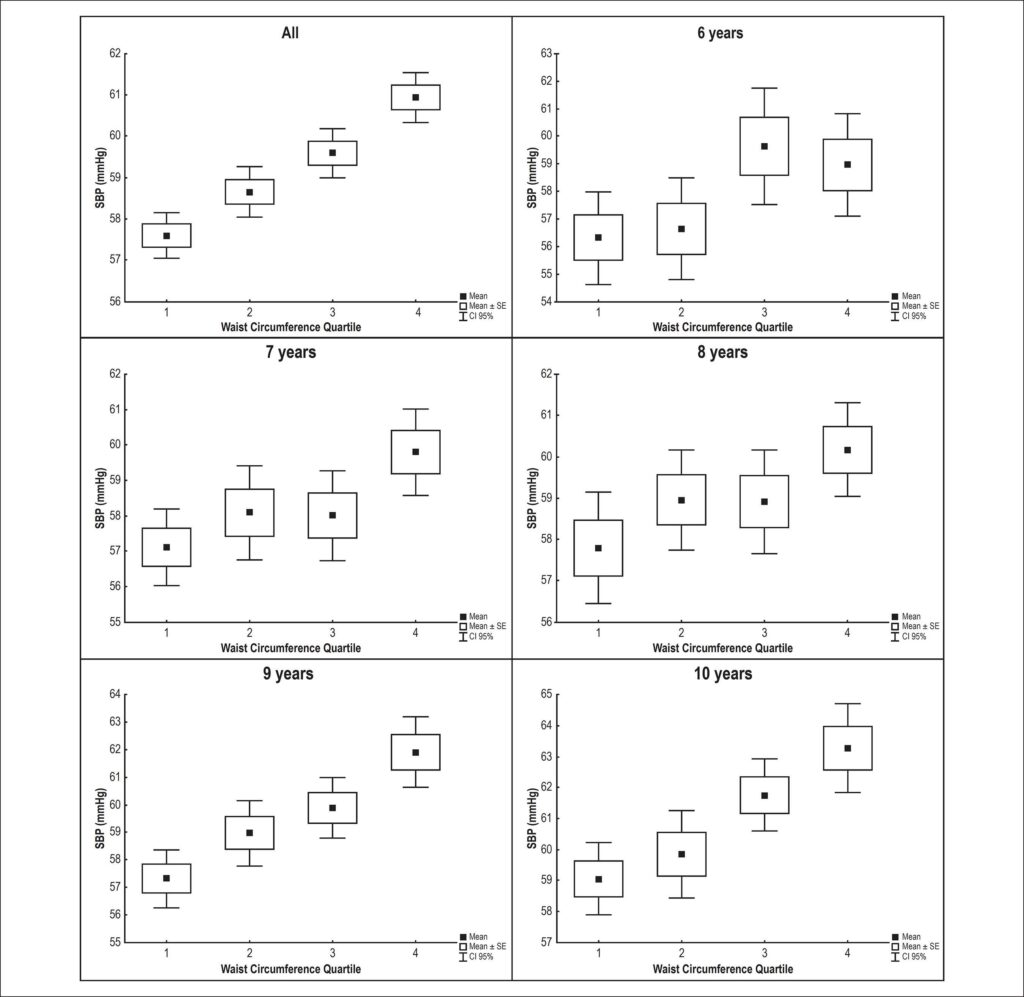
Cross-sectional evaluation of students between 6 and 11 years with normal BMI. WC was categorized by quartile for each age group. Normal BP was defined as values < 90th percentile, and levels above this range were considered elevated. Values of p < 0.05 were considered statistically significant.
Results:
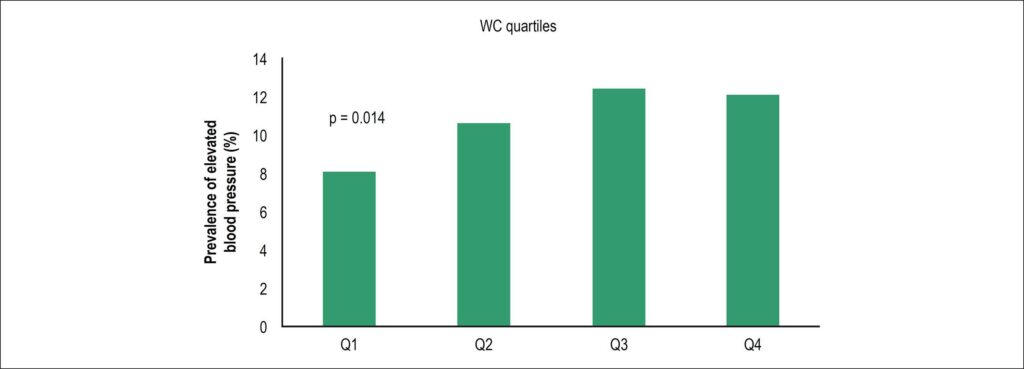
Of the 5,037 children initially assessed, 404 (8%) were excluded for being underweight and 1,216 (24.1%) were excluded for being overweight or obese. A final sample of 3,417 children was evaluated. The prevalence of elevated BP was 10.7%. In children with WC in the lowest quartile, the prevalence of elevated BP was 8.1%. This prevalence increased in upper quartiles: 10.6% in the second, 12.4% in third and 12.1% in the upper quartile. So, in this group, being in the highest WC quartile was associated with a 57% higher likelihood to present elevated BP when compared to those in the lowest quartile (Q4 vs Q1; OR 1.57 – 95%CI 1.14 – 2.17).
Conclusion:
In children aged 6 to 11 years, increased waist circumference is associated with elevated BP even when BMI is normal.
Images
Image gallery fullscreen viewer
Comments are moderated by the editorial team before publication. Discussions should be evidence-based and use scientific language. Conflicts of interest should be declared.