Effects of Noninvasive Electrostimulation on Symptoms of lower Limb Peripheral Arterial Disease: a Systematic Review
Abstract
Background:
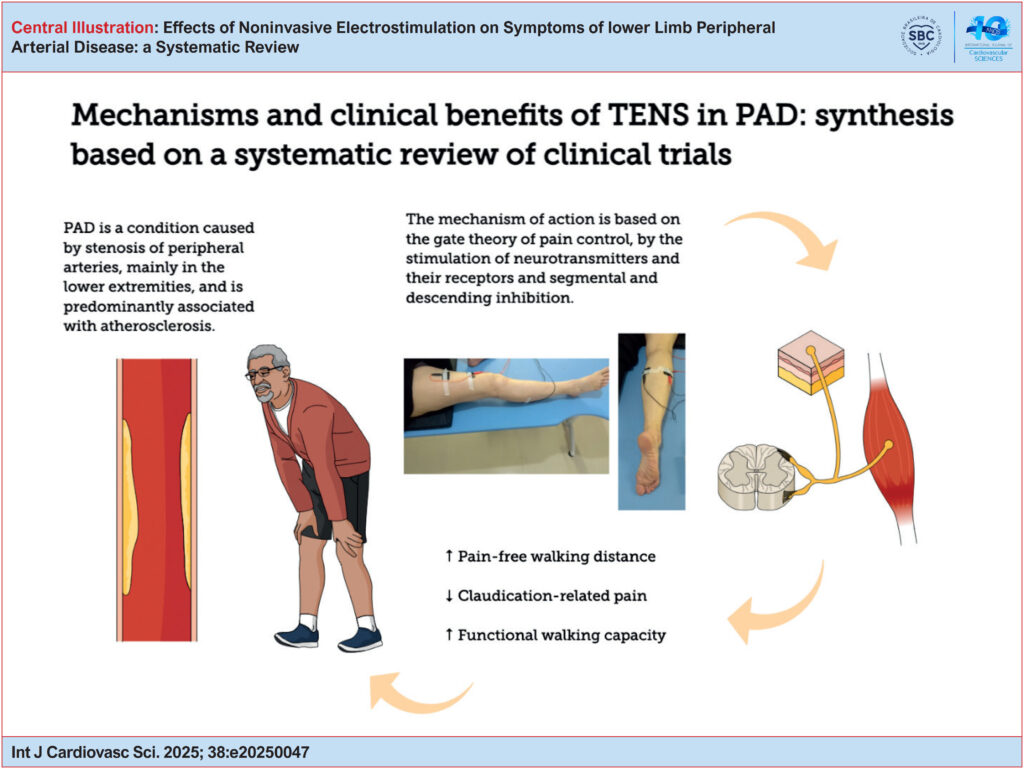
Peripheral arterial disease (PAD) is primarily characterized by intermittent claudication (IC), a symptom resulting from insufficient oxygen supply to skeletal muscles during physical activity. IC manifests as discomfort in the lower limbs during exertion due to muscle ischemia and is typically relieved by rest.
Objectives:
To evaluate the effects of noninvasive electrostimulation on walking distance and claudication-related pain in individuals with lower limb PAD.
Methods:
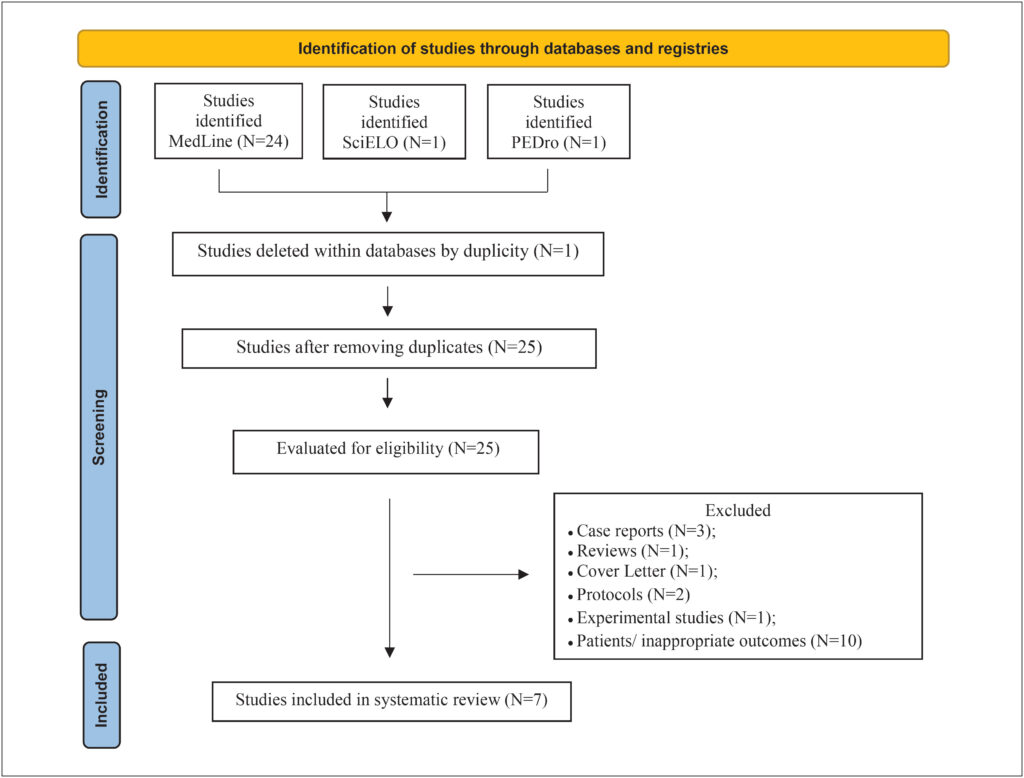
This systematic review was conducted in accordance with PRISMA guidelines. Clinical trials published in English, Portuguese, or Spanish were selected from the MedLine, PEDro, and SciELO databases up to December 2024. The search strategy was guided by the PICO framework, using descriptors related to “peripheral artery disease,” “intermittent claudication,” and “noninvasive electrostimulation.” Studies were included if they involved human participants diagnosed with PAD and presenting with Fontaine stage II intermittent claudication.
Results:
Seven clinical trials involving a total of 314 participants (mean age: 66.8 ± 3.6 years) were included. Four types of noninvasive electrostimulation were identified: neuromuscular electrical stimulation (NMES), transcutaneous electrical nerve stimulation (TENS), functional electrical stimulation (FES), and electroacupuncture. Most studies reported that electrostimulation improved both pain-free and maximum walking distances, as well as reduced claudication symptoms.
Conclusion:
Noninvasive electrostimulation appears to be a promising adjunctive therapy for individuals with peripheral arterial disease, offering potential benefits in symptom relief and walking capacity. Given its safety, low cost, and ease of application, this intervention may serve as a practical strategy to complement traditional treatment approaches. However, further high-quality clinical trials are needed to establish standardized protocols and optimize clinical outcomes.
Images
Image gallery fullscreen viewer
Comments are moderated by the editorial team before publication. Discussions should be evidence-based and use scientific language. Conflicts of interest should be declared.