Association of Age with Optimal Medical Therapy in Patients with Chronic Heart Failure
Abstract
Background:
The adherence to guideline-directed medical therapy in patients with heart failure (HF) remains suboptimal.
Objectives:
We evaluated the association between age and adherence to guideline-directed medical therapy in patients with chronic HF and explored whether polypharmacy and comorbidities might explain this association.
Methods:
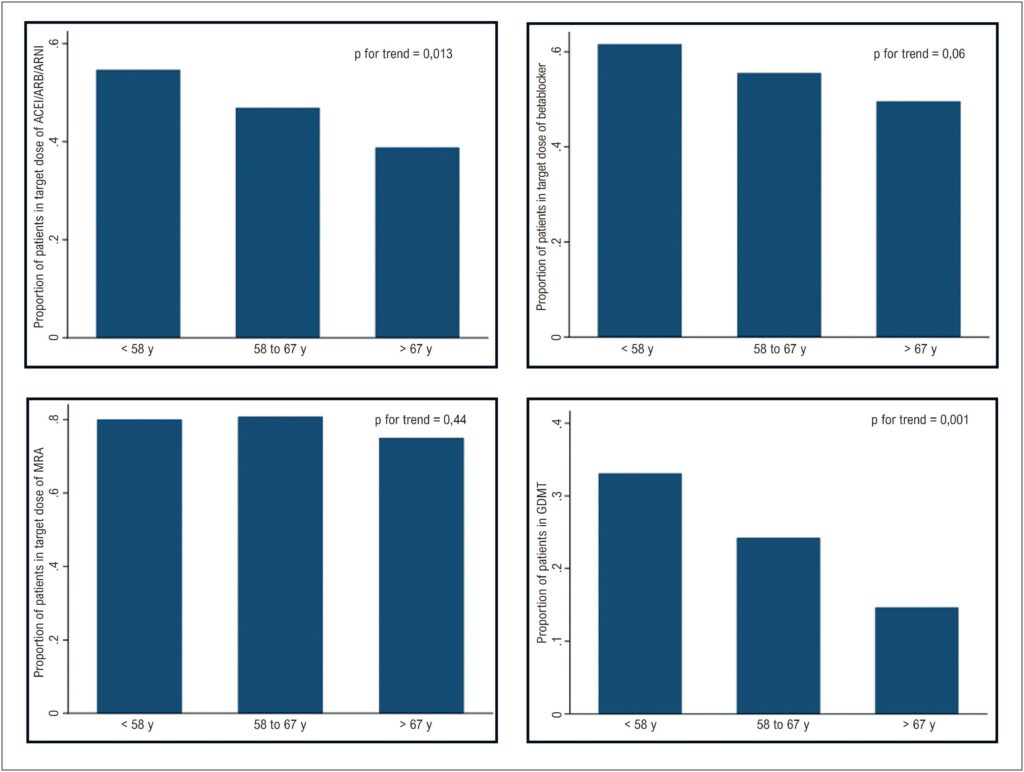
We performed a cross-sectional study of 374 patients with chronic HF and left ventricle ejection fraction < 50% (23 to 89 years old, 33% women) between 2018 and 2019. GDMT was defined as using HF-related disease-modifying medications at the target dose according to guidelines. Patients were classified in 3 age groups (23 to 57, 58 to 67, and 68 to 89 years old).
Results:
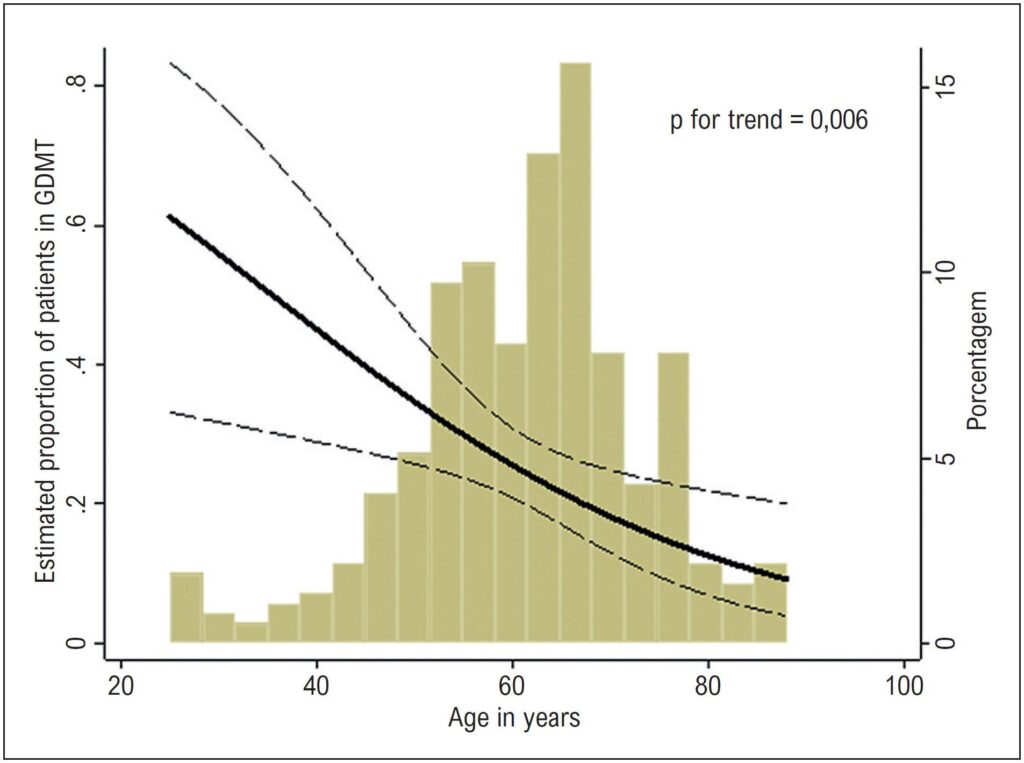
Older patients were less likely to receive optimal therapy (33% versus 24% versus 15%, p < 0.001 for each age category, respectively). After adjusting for potential confounders, the chances of receiving medical therapy at optimal dose significantly reduced for each age-decade increase (OR 0.66 [95% confidence interval 0.48 – 0.92], p = 0.013). The proportion of this association that was explained by polypharmacy (0% [0% – 3.5%]) or comorbidities (7% [0% – 41%]) was negligible.
Conclusion:
We found that age was inversely associated with optimal drug therapy for HF, and polypharmacy or comorbidities do not appear to explain this.
Images
Image gallery fullscreen viewer
Comments are moderated by the editorial team before publication. Discussions should be evidence-based and use scientific language. Conflicts of interest should be declared.