A New Risk Score Based on Machine Learning in Patients with Acute Heart Failure: The ML-HF score
Abstract
Background
Conventional prognostic assessment scores often fall short in performance to predict mortality in patients with acute heart failure (AHF).
Objective
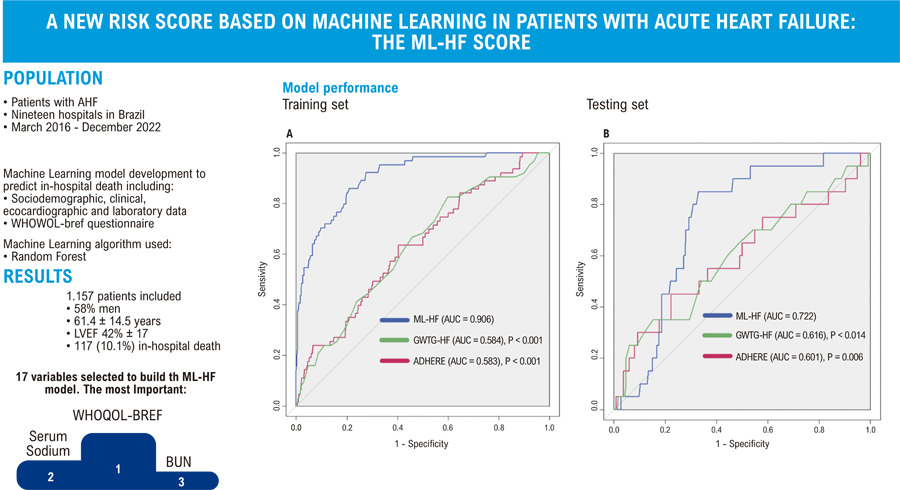
To develop and validate a machine learning-based prognostic score to predict in-hospital death in patients with AHF and compare its performance with the main traditional scores.
Methods
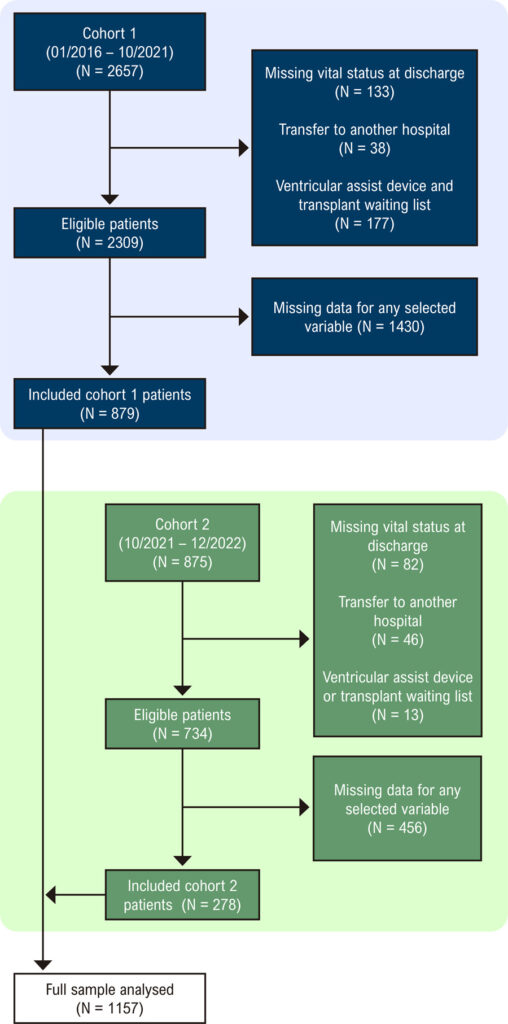
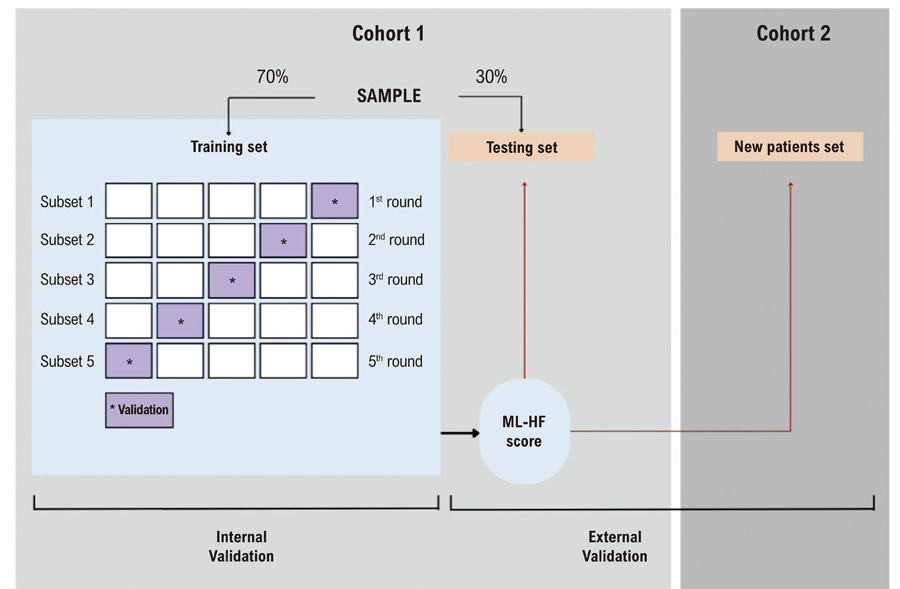
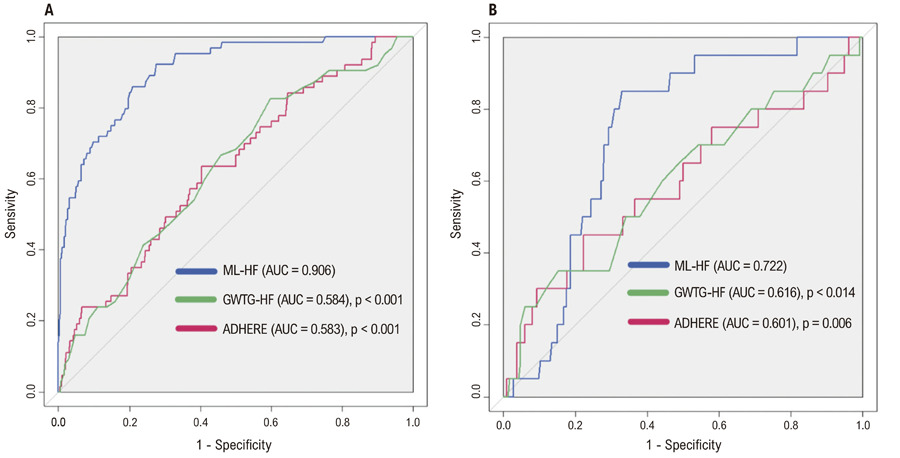
Patients admitted for AHF in Brazilian hospitals from the “Best Practices in Cardiology Program” from 2016 – 2022 were included. Clinical data, laboratory results, and the World Health Organization Quality of Life (WHOQOL-Bref) at hospital admission were collected. The outcome was in-hospital death. The model was trained using 70% of admissions (training set) and validated with the remaining 30% (test set). The ML-HF score area under the ROC curve (AUC) was compared with the AUC of the traditional scores Acute Decompensated Heart Failure National Registry (ADHERE) and Get With the Guidelines–Heart Failure (GWTG-HF). The level of significance was p<0.05.
Results
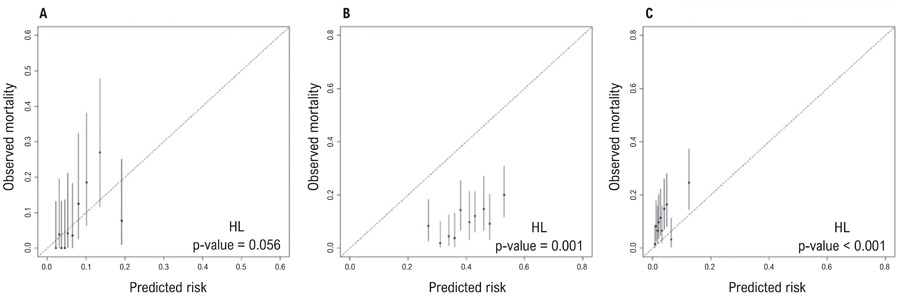
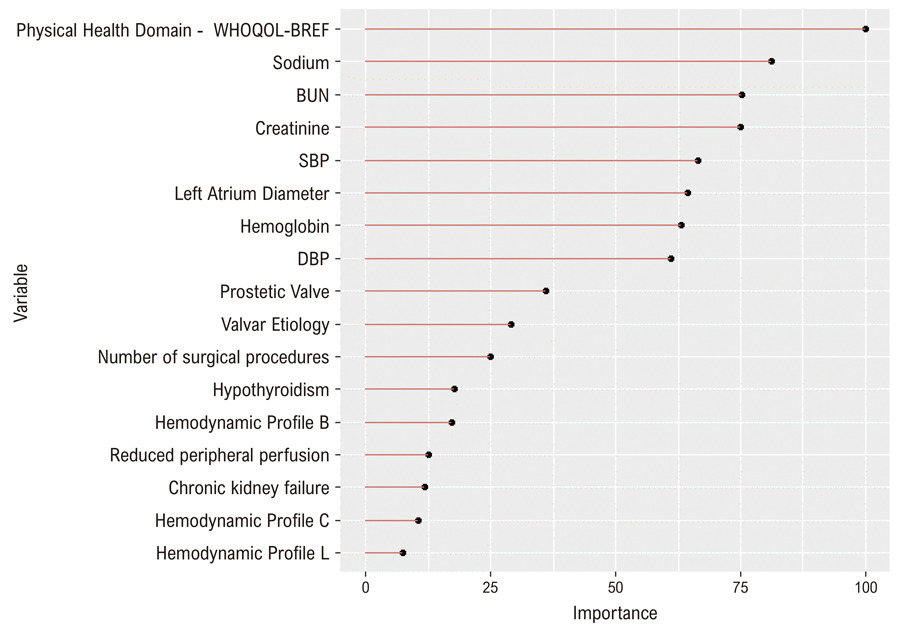
One thousand and one hundred fifty-seven patients hospitalized for AHF were included. The five most important variables of the ML-HF score were: Physical Health Domain Quality (WHOQOL-BREF), serum sodium, serum urea, serum creatinine, and systolic blood pressure at hospital admission. In the test set, the ML-HF score showed an adequate model calibration (Hosmer-Lemeshow test p value=0.056) and discrimination (AUC=0.722 [CI95%, 0.661-0.783]), which was superior to GWTG-HF (AUC=0.616 [CI95%, 0.529-0.702; p=0.014]) and the ADHERE (AUC=0.601 [CI95%, 0.511-0.691; p=0.006]) scores.
Conclusion
We developed and validated a score using machine learning to predict in-hospital death in patients with AHF, which outperformed the traditional scores.
Images
Image gallery fullscreen viewer
Comments are moderated by the editorial team before publication. Discussions should be evidence-based and use scientific language. Conflicts of interest should be declared.