ABC Family Arquivos Brasileiros de Cardiologia International Journal of Cardiovascular Sciences ABC Heart Failure & Cardiomyopathy ABC Imagem Cardiovascular
Português English
  • ABC Family
  • Arquivos Brasileiros de Cardiologia
  • International Journal of Cardiovascular Sciences
  • ABC Heart Failure & Cardiomyopathy
  • ABC Imagem Cardiovascular
Português English
  • About
    • About ABC Family
    • Internal Regulation
    • Editorial Board
    • Brazilian Society of Cardiology (SBC)
  • Issues
  • SBC Guidelines
  • Content
    • Videos
    • Podcasts
    • News
  • About
    • About ABC Family
    • Internal Regulation
    • Editorial Board
    • Brazilian Society of Cardiology (SBC)
  • Issues
  • SBC Guidelines
  • Content
    • Videos
    • Podcasts
    • News
Search in

No content found.

Journals
Ordering
Article types
Others

  1. Home
  2. Optic Nerve
Figure 1
ABCIC
Editorial

Increased Blood Pressure and Increased Optic Nerve Sheath Diameter: Intracranial Involvement or a Nonspecific Marker?

Gustavo Cartaxo Patriota et al. Rafael Hortêncio Melo

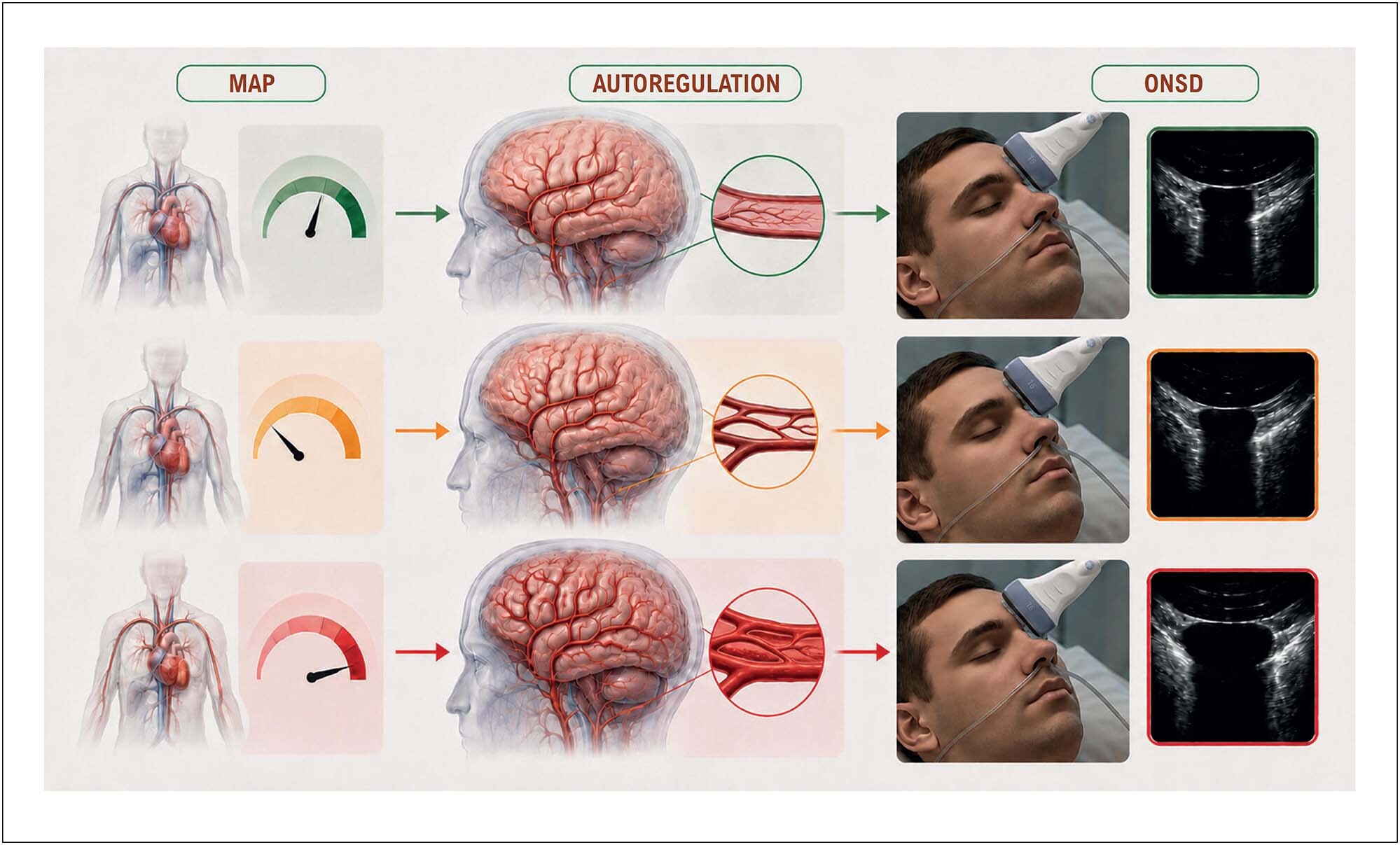
Effects of increased blood pressure extend beyond the systemic arteries

A hypertensive emergency is defined by presence of acute target-organ damage, not merely by an increased blood pressure reading. In brain, however, identifying such involvement at bedside remains challenging. Headache, nausea, visual disturbances, seizures, and altered consciousness are clinically important but nonspecific manifestations. Although fundoscopy has traditionally played an important role in clinical assessment, its reliability depends on adequate training, appropriate technical conditions, and patient cooperation. Moreover, papilledema may be absent during initial hours of increased intracranial pressure (ICP). Within this diagnostic window, ultrasonographic measurement of optic nerve sheath diameter (ONSD) represents an appealing option: it is rapid, portable, and repeatable and capitalizes on anatomical continuity between intracranial subarachnoid space and perioptic compartment.,

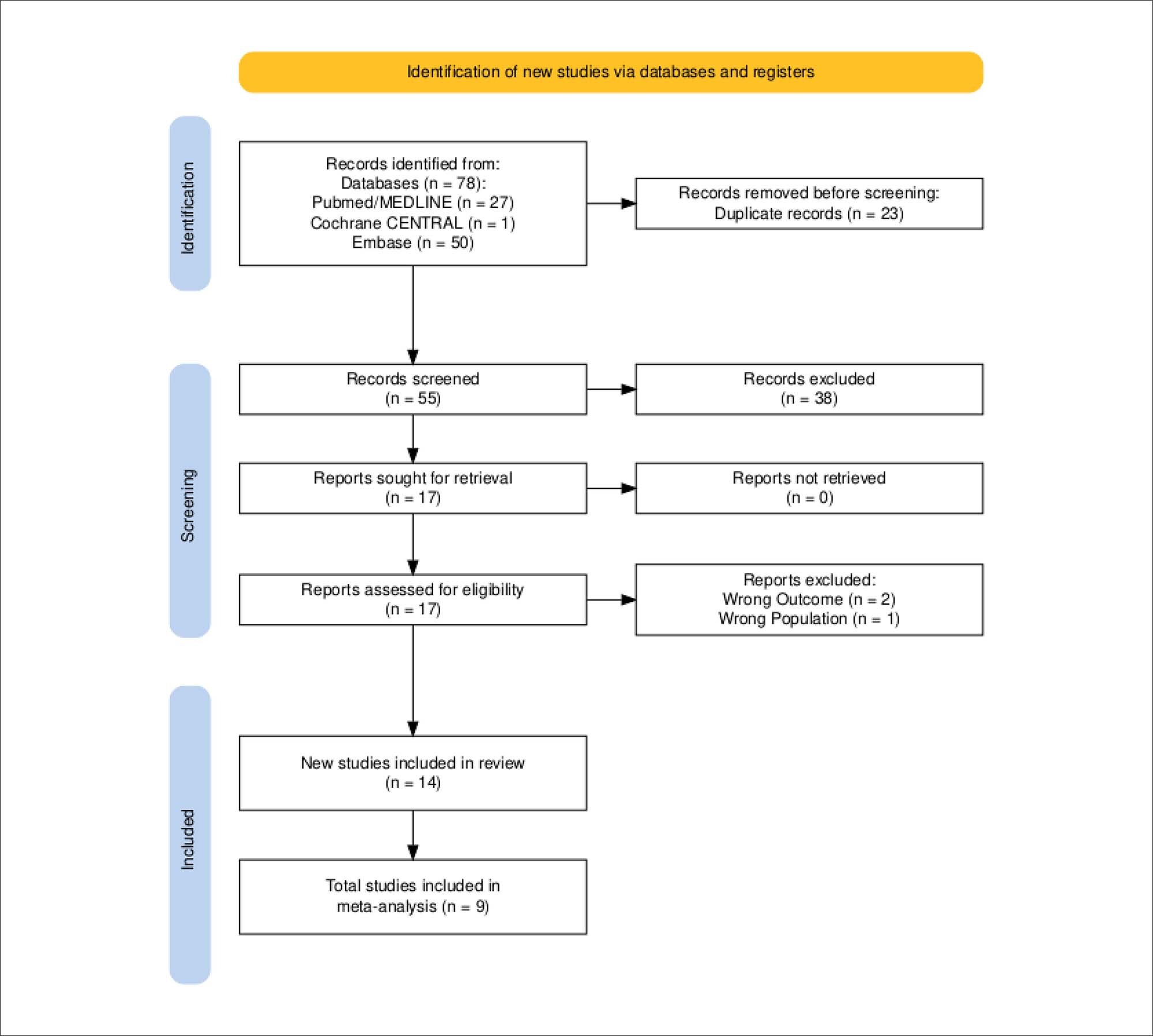
Article accompanying this short editorial provides most focused synthesis to date of ONSD findings in acute hypertensive states. Its results are consistent with those of previous studies involving acute hypertension, severe preeclampsia, and eclampsia.– Review included 14 studies comprising 995 participants, predominantly patients with preeclampsia or eclampsia, together with a considerably smaller group of nonpregnant patients with hypertension. Across nine studies with continuous data suitable for pooling comprising 426 hypertensive patients and 283 controls, ONSD was significantly greater in hypertensive group, with a large standardized mean difference (Hedges’g: 1.55; 95% CI: 1.06-2.04; p < 0.001). This is not a trivial finding: it suggests that association between acute hypertension and optic nerve sheath distension is sufficiently consistent that it cannot readily be dismissed as an isolated artifact.

[…]

  • Arterial Pressure
  • Intracranial Pressure
  • Optic Nerve
  • Ultrasonography
Read Full Article
Creative Commons Attribution (CC BY) Creative Commons license
13/10/2026 DOI: 10.36660/abcimg.20260107i Views 1
Figure 1
ABCIC
Original Article

Ultrasound Measurement of Optic Nerve Sheath Diameter in Acute Hypertensive States For Detection of Intracranial Involvement: A Meta-Analysis

João Victor de Oliveira Ramos et al. Marcelo Tavares

Abstract

Background:

Detection of intracranial involvement in acute hypertension traditionally relies on fundoscopy, a method with limited applicability at the bedside. Ultrasonographic measurement of the optic nerve sheath diameter (ONSD) has emerged as a rapid, non-invasive alternative.

Objective:

To synthesize evidence on ONSD in adults and pregnant women with acute hypertensive states, assessing the difference in measurements between groups and its diagnostic performance for elevated intracranial pressure (ICP).

Methods:

Systematic review and meta-analysis following PRISMA guidelines. Three databases were searched through July 2026, including observational studies. The primary outcome was the standardized mean difference (Hedges’ g) in ONSD between hypertensive and control groups, using a random-effects model.

Results:

Fourteen studies (995 participants) were included. Nine studies (426 hypertensive and 283 control participants) provided combinable continuous data: ONSD was significantly higher in hypertensive patients (g = 1.55; 95% CI 1.06 to 2.04; p < 0.001; I² = 87.0%). Excluding a single discordant study reduced heterogeneity and strengthened the effect (g = 1.77; 95% CI 1.50 to 2.04; I² = 51.8%). In five studies with observed counts, the odds of ONSD above the threshold were higher in hypertensive patients (OR 11.58; 95% CI 1.45 to 92.85; I² = 73.7%). No study included ONSD with invasive ICP measurement.

Conclusion:

ONSD is consistently higher in acute hypertensive patients, with a robust effect. However, substantial heterogeneity, reliance on statistical conversions, the presence of a discordant study, and the absence of validation against the invasive gold standard warrant caution, underscoring the need for methodological standardization and dedicated validation.

  • hypertensive crisis
  • Intracranial Pressure
  • Optic Nerve
  • Pre-Eclampsia
  • Ultrasonography
Read Full Article
Creative Commons Attribution (CC BY) Creative Commons license
24/09/2026 DOI: 10.36660/abcimg.20260097i Views 1

How to cite this article

EndNote RIS

Electronic Document Format (Vancouver)

Patriota GC, Melo RH. Increased Blood Pressure and Increased Optic Nerve Sheath Diameter: Intracranial Involvement or a Nonspecific Marker?. ABC Imagem Cardiovascular 2026;39(3):e20260107.

Electronic Document Format (ABNT)

Patriota, Gustavo Cartaxo; Melo, Rafael Hortêncio. Increased Blood Pressure and Increased Optic Nerve Sheath Diameter: Intracranial Involvement or a Nonspecific Marker?. ABC Imagem Cardiovascular, v. 39, n. 3, e20260107, Oct. 2026.

Electronic Document Format (APA)

Patriota, G. C., & Melo, R. H. (2026). Increased Blood Pressure and Increased Optic Nerve Sheath Diameter: Intracranial Involvement or a Nonspecific Marker?. ABC Imagem Cardiovascular, 39(3), e20260107.

Electronic Document Format (ISO)

Patriota, Gustavo Cartaxo and Melo, Rafael Hortêncio. Increased Blood Pressure and Increased Optic Nerve Sheath Diameter: Intracranial Involvement or a Nonspecific Marker?. ABC Imagem Cardiovascular [online]. 2026, vol. 39, n. 3, [cited 2026-11-15], e20260107. Available from: <https://journals.cardiol.br/en/article/increased-blood-pressure-and-increased-optic-nerve-sheath-diameter-intracranial-involvement-or-a-nonspecific-marker/>. ISSN 2318-8219

EndNote RIS

Electronic Document Format (Vancouver)

Ramos JVO, Tavares M. Ultrasound Measurement of Optic Nerve Sheath Diameter in Acute Hypertensive States For Detection of Intracranial Involvement: A Meta-Analysis. ABC Imagem Cardiovascular 2026;39(3):e20260097.

Electronic Document Format (ABNT)

Ramos, João Victor de Oliveira; Tavares, Marcelo. Ultrasound Measurement of Optic Nerve Sheath Diameter in Acute Hypertensive States For Detection of Intracranial Involvement: A Meta-Analysis. ABC Imagem Cardiovascular, v. 39, n. 3, e20260097, Sep. 2026.

Electronic Document Format (APA)

Ramos, J. V. O., & Tavares, M. (2026). Ultrasound Measurement of Optic Nerve Sheath Diameter in Acute Hypertensive States For Detection of Intracranial Involvement: A Meta-Analysis. ABC Imagem Cardiovascular, 39(3), e20260097.

Electronic Document Format (ISO)

Ramos, João Victor de Oliveira and Tavares, Marcelo. Ultrasound Measurement of Optic Nerve Sheath Diameter in Acute Hypertensive States For Detection of Intracranial Involvement: A Meta-Analysis. ABC Imagem Cardiovascular [online]. 2026, vol. 39, n. 3, [cited 2026-11-15], e20260097. Available from: <https://journals.cardiol.br/en/article/ultrasound-measurement-of-optic-nerve-sheath-diameter-in-acute-hypertensive-states-for-detection-of-intracranial-involvement-a-meta-analysis/>. ISSN 2318-8219

  • About ABC Family
  • Internal Regulation
  • Editorial Board
  • Brazilian Society of Cardiology (SBC)

Issues

SBC Guidelines

  • Videos
  • Podcasts
  • News
Accessibility Adjustments

Powered by OneTap

How long do you want to hide the toolbar?
Hide Toolbar Duration
Select your accessibility profile
Vision Impaired Mode
Enhances website's visuals
Seizure Safe Profile
Clear flashes & reduces color
ADHD Friendly Mode
Focused browsing, distraction-free
Blindness Mode
Reduces distractions, improves focus
Epilepsy Safe Mode
Dims colors and stops blinking
Content Modules
Font Size

Default

Line Height

Default

Color Modules
Orientation Modules