ABC Family Arquivos Brasileiros de Cardiologia International Journal of Cardiovascular Sciences ABC Heart Failure & Cardiomyopathy ABC Imagem Cardiovascular
Português English
ABC Family
Português English
  • About
    • About ABC Family
    • Internal Regulation
    • Editorial Board
    • Brazilian Society of Cardiology (SBC)
  • Issues
  • SBC Guidelines
  • Content
    • Videos
    • Podcasts
    • News
  • About
    • About ABC Family
    • Internal Regulation
    • Editorial Board
    • Brazilian Society of Cardiology (SBC)
  • Issues
  • SBC Guidelines
  • Content
    • Videos
    • Podcasts
    • News

ABC Family

  • ABC Family
  • Arquivos Brasileiros de Cardiologia
  • International Journal of Cardiovascular Sciences
  • ABC Heart Failure & Cardiomyopathy
  • ABC Imagem Cardiovascular
Search in

No content found.

Journals
Ordering
Article types
Others

  1. Home
  2. Keyword: Minimally Invasive Surgical Procedures
IJCS
Editorial

Pain after Cardiac Surgery

Tirone E. David

Most cardiac operations are performed via median sternotomy and cardiopulmonary bypass. Both thoracic incision and cardiopulmonary bypass cause major disturbances in the homeostasis of the patient. Disruption of the tissues by the incision initiates an immediate neurological reaction perceived as pain and an intense biochemical and cellular response to repair the wound. Cardiopulmonary bypass causes far more serious systemic changes in homeostasis than pain, and that is probably the main reason why cardiac surgery is behind other surgical specialties in the development of minimally invasive procedures. Pain associated with surgical incision is largely self-limited and resolves with time and, luckily, so do the changes caused by cardiopulmonary bypass. Obviously, surgical incisions that cause less tissue damage are associated with lower degrees of pain and metabolic disturbance than larger and more traumatic incisions.

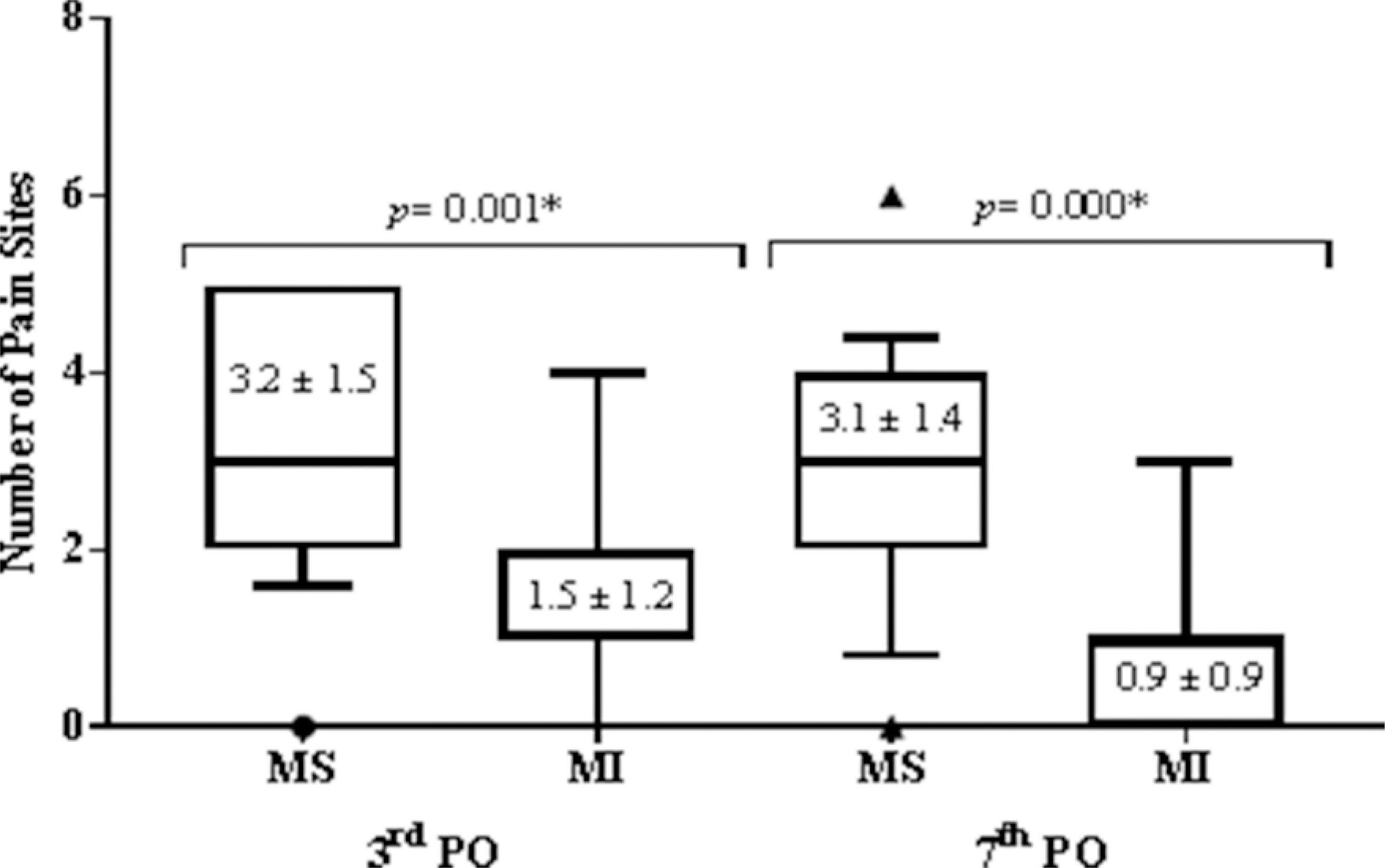
In this issue of the International Journal of Cardiovascular Sciences, Silva and colleagues, from the University of Fortaleza, Brazil, report a comparative study on postoperative pain following conventional median sternotomy and right mini-thoracotomy. The study has limitations because of the sample size (there were only 17 patients in each arm), the endpoint of the study was largely subjective, and patients were not randomized. However, as one would expect, both groups of patients complained of pain in the first three days but fewer patients with mini-thoracotomy complained of pain by the seventh postoperative day. In addition, mini-thoracotomy was associated with pain of lower intensity, fewer sites, and shorter duration than median sternotomy.

[…]

  • Cardiovascular Surgical Procedures
  • Minimally Invasive Surgical Procedures
  • Postoperative Care
  • Sternotomy
Read Full Article
Creative Commons Attribution (CC BY) Creative Commons license
17/02/2020 DOI: 10.36660/ijcs.20190188 Views 1
Figure 1
IJCS
Original Article

Minimally Invasive Cardiac Surgery versus Sternotomy – Pain Investigation

Juliana Fernandes Silva et al. Marcela Paula Cavalcante Roger Benevides Montenegro Romulo Lira … Emanuel Carvalho Mel Josue Viana Castro

Abstract

Background:

Treatment of postoperative (PO) pain is essential after surgery, as it contributes to a faster rehabilitation. Assessment of PO pain after minimally invasive (MI) surgery has not been regularly addressed, especially when compared with median sternotomy (MS).

Objective:

This study aims to evaluate the intensity of thoracic pain in the PO period in patients subjected to MI surgery and MS.

Methods:

This study compared the intensity of thoracic pain in 34 patients subjected to minimally invasive (MI; n = 17) and median sternotomy (MS; n = 17) from June 2015 to June 2016. The intensity and sites of pain in the PO period, assessed using the visual numeric pain scale, and the need for pain medications were analyzed using the Student’s t-test and the z test, with confidence level of 95% (p < 0.05).

Results:

Almost all patients reported pain on the third PO day (MS = 94.1% and MI = 88.2%; p = 0.5410). On the seventh PO day, there were significantly more patients free of pain in the group of patients subjected to the MI procedure (MS = 94.1% and MI = 64.7%; p = 0.0341). also, these patients reported fewer pain sites (3rd PO day: MS = 3.2 ± 1.5; MI = 1.5 ± 1.2; p = 0.001; 7th PO day: MS = 3.1 ± 1.4; MI = 0.9 ± 0.9; p = 0.000). Patients undergoing MS reported higher pain intensity and longer lasting pain (3rd PO: MS = 4.8 ± 2.2; MI = 3.0 ± 1.6; 7th PO: MS = 5.3 ± 2.0; MI = 1.2 ± 1.3; p = 0.001), with no difference in pain intensity between the third and the seventh PO days (p = 0.4931). In addition, patients subjected to MI procedure had a significant decrease in pain intensity from the third to the seventh PO days (p = 0.001).

Conclusion:

According to these results, we concluded that a MI procedure leads to lower intensity of pain in the PO period (from the third PO day on) when compared to a MS; also, patients undergoing MI patients reported fewer pain sites.

  • Cardiovascular Surgical Procedures
  • Minimally Invasive Surgical Procedures
  • Postoperative Care
  • Sternotomy
Read Full Article
Creative Commons Attribution (CC BY) Creative Commons license
19/08/2019 DOI: 10.5935/2359-4802.20190048 Views 1
Figure 1
ABC
Image

Three-dimensional Echocardiography for Percutaneous Occlusion of Patent Foramen Ovale

Robinson Poffo et al. Paola Keese Montanhesi Renato Bastos Pope Alisson Parrilha Toschi Marcelo Campos Vieira

Female patient, 31 years old, with a history of ischemic stroke 7 years before, was referred for treatment of Patent Foramen Ovale (PFO). She only had a complaint of migraine with aura, with no focal neurological abnormalities.

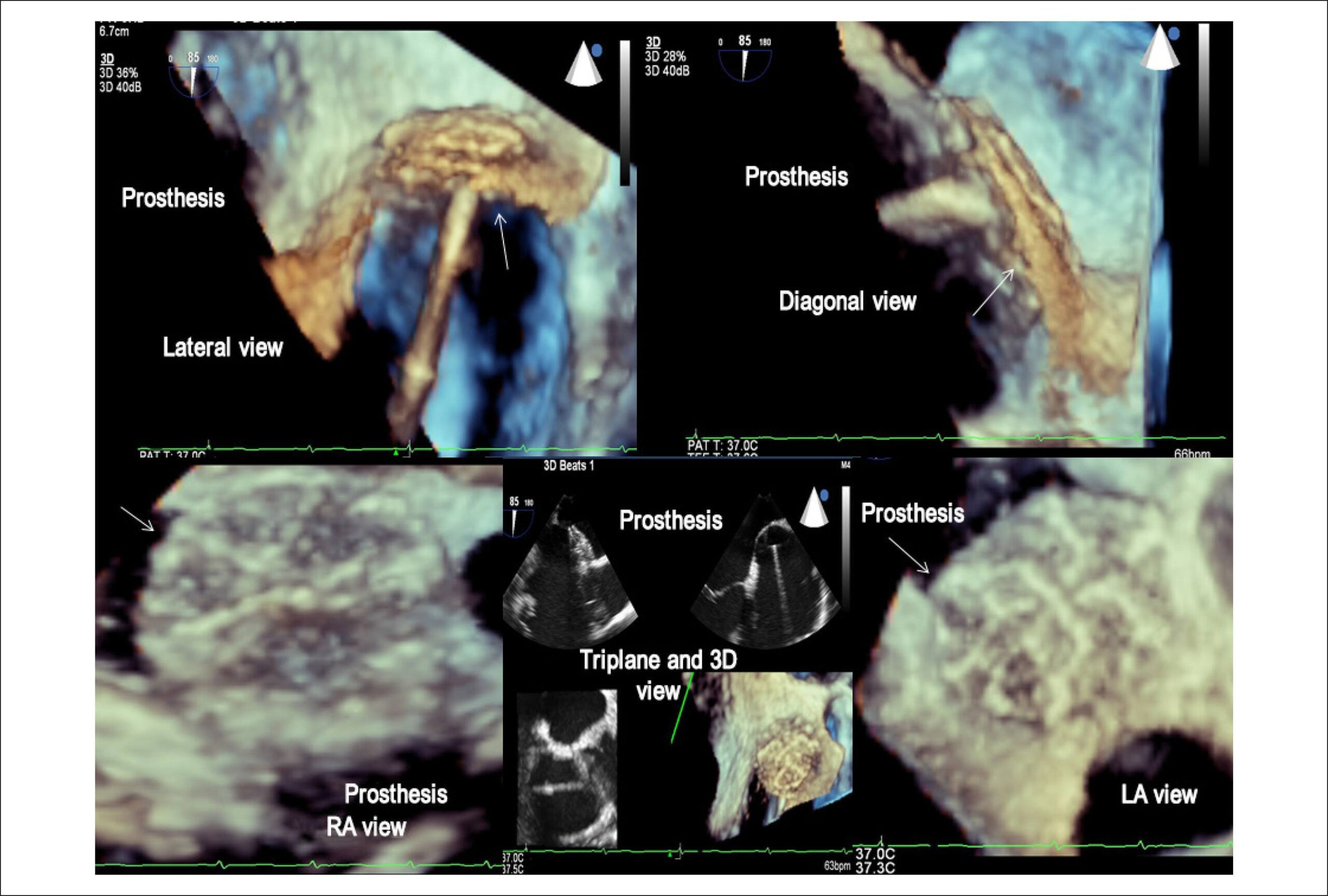
On July 2, 2015, she was submitted to an uneventful percutaneous PFO occlusion using a Cardia IntraseptTM prosthesis (CARDIA, Inc., Burnsville, MN, USA). Intraoperative three-dimensional transesophageal echocardiography confirmed correct prosthesis positioning and absence of residual shunt through the bubble test. Current guidelines of the two most important international societies of echocardiography, the European Association of Cardiovascular Imaging and the American Society of Echocardiography, determine that the three-dimensional echocardiography is the echocardiographic modality of choice for monitoring, following and guiding percutaneous procedures performed in hemodynamics and hybrid rooms, as in this case.

[…]

  • Echocardiography, Three-Dimensional
  • Foramen Ovale, Patent / surgery
  • Minimally Invasive Surgical Procedures
Read Full Article
Creative Commons Attribution (CC BY) Creative Commons license
01/03/2016 DOI: 10.5935/abc.20160036

How to cite this article

EndNote RIS

Electronic Document Format (Vancouver)

David TE. Pain after Cardiac Surgery. International Journal of Cardiovascular Sciences 2020;33(1):22-3.

Electronic Document Format (ABNT)

David, Tirone E.. Pain after Cardiac Surgery. International Journal of Cardiovascular Sciences, v. 33, n. 1, p. 22-23, Feb. 2020.

Electronic Document Format (APA)

David, T. E. (2020). Pain after Cardiac Surgery. International Journal of Cardiovascular Sciences, 33(1), 22-23.

Electronic Document Format (ISO)

David, Tirone E.. Pain after Cardiac Surgery. International Journal of Cardiovascular Sciences [online]. 2020, vol. 33, n. 1, [cited 2026-10-14], pp. 22-23. Available from: <https://journals.cardiol.br/en/article/pain-after-cardiac-surgery/>. ISSN 2359-4802

EndNote RIS

Electronic Document Format (Vancouver)

Silva JF, Cavalcante MP, Montenegro RB, Lira R, Mel EC, Castro JV. Minimally Invasive Cardiac Surgery versus Sternotomy – Pain Investigation. International Journal of Cardiovascular Sciences 2019;33(1):24-33.

Electronic Document Format (ABNT)

Silva, Juliana Fernandes; Cavalcante, Marcela Paula; Montenegro, Roger Benevides; Lira, Romulo; Mel, Emanuel Carvalho; Castro, Josue Viana. Minimally Invasive Cardiac Surgery versus Sternotomy – Pain Investigation. International Journal of Cardiovascular Sciences, v. 33, n. 1, p. 24-33, Aug. 2019.

Electronic Document Format (APA)

Silva, J. F., Cavalcante, M. P., Montenegro, R. B., Lira, R., Mel, E. C., & Castro, J. V. (2019). Minimally Invasive Cardiac Surgery versus Sternotomy – Pain Investigation. International Journal of Cardiovascular Sciences, 33(1), 24-33.

Electronic Document Format (ISO)

Silva, Juliana Fernandes and Cavalcante, Marcela Paula and Montenegro, Roger Benevides and Lira, Romulo and Mel, Emanuel Carvalho and Castro, Josue Viana. Minimally Invasive Cardiac Surgery versus Sternotomy – Pain Investigation. International Journal of Cardiovascular Sciences [online]. 2019, vol. 33, n. 1, [cited 2026-10-14], pp. 24-33. Available from: <https://journals.cardiol.br/en/article/minimally-invasive-cardiac-surgery-versus-sternotomy-pain-investigation/>. ISSN 2359-4802

EndNote RIS

Electronic Document Format (Vancouver)

Poffo R, Montanhesi PK, Pope RB, Toschi AP, Vieira MC. Three-dimensional Echocardiography for Percutaneous Occlusion of Patent Foramen Ovale. Arquivos Brasileiros de Cardiologia 2016;106(3):263-4.

Electronic Document Format (ABNT)

Poffo, Robinson; Montanhesi, Paola Keese; Pope, Renato Bastos; Toschi, Alisson Parrilha; Vieira, Marcelo Campos. Three-dimensional Echocardiography for Percutaneous Occlusion of Patent Foramen Ovale. Arquivos Brasileiros de Cardiologia, v. 106, n. 3, p. 263-264, Feb. 2016.

Electronic Document Format (APA)

Poffo, R., Montanhesi, P. K., Pope, R. B., Toschi, A. P., & Vieira, M. C. (2016). Three-dimensional Echocardiography for Percutaneous Occlusion of Patent Foramen Ovale. Arquivos Brasileiros de Cardiologia, 106(3), 263-264.

Electronic Document Format (ISO)

Poffo, Robinson and Montanhesi, Paola Keese and Pope, Renato Bastos and Toschi, Alisson Parrilha and Vieira, Marcelo Campos. Three-dimensional Echocardiography for Percutaneous Occlusion of Patent Foramen Ovale. Arquivos Brasileiros de Cardiologia [online]. 2016, vol. 106, n. 3, [cited 2026-10-14], pp. 263-264. Available from: <https://journals.cardiol.br/en/article/three-dimensional-echocardiography-for-percutaneous-occlusion-of-patent-foramen-ovale/>. ISSN 0066-782X

  • About ABC Family
  • Internal Regulation
  • Editorial Board
  • Brazilian Society of Cardiology (SBC)

Issues

SBC Guidelines

  • Videos
  • Podcasts
  • News