Chocolate Consumption Does Not Reduce the Risk of Cardiovascular Events and Increases the Risk of Gastrointestinal Bleeding One Year After the First Myocardial Infarction
Abstract
Background
Coronary artery disease is the leading cause of death worldwide, with high social and financial costs. Although previous studies have demonstrated the potential of chocolate to reduce coronary events, data on its effects in patients who have suffered an acute myocardial infarction (AMI) are lacking.
Objective
To evaluate the impact of chocolate consumption on the incidence of events in patients with AMI followed for one year.
Methods
A subanalysis of the Catarina Heart study, which evaluated patients hospitalized with a diagnosis of the first AMI, was conducted. During hospitalization, patients were asked about their chocolate consumption before the event. The incidence of events was compared between consumers and non-consumers of chocolate before the AMI. The analyzed outcomes included major adverse cardiovascular events (MACE), all-cause mortality, cardiovascular mortality, reinfarction, stroke, in-stent restenosis, acute stent thrombosis, gastrointestinal bleeding, and bleeding requiring transfusion. Cox regression models were applied, and p < 0.05 was considered statistically significant.
Results
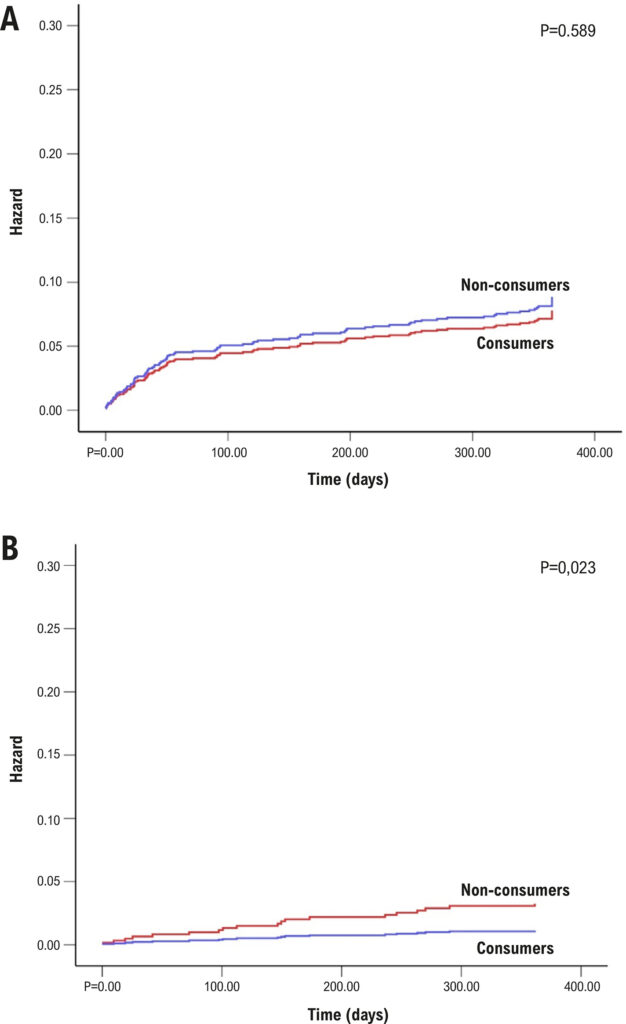
A total of 1404 patients were analyzed, of whom 490 (34.9%) consumed chocolate. Chocolate consumption neither reduced the risk of MACE (hazard ratio [HR] = 0.88 [0.57 – 1.37], p = 0.569) nor showed benefits in other outcomes, such as cardiovascular mortality, reinfarction, or stroke. However, its consumption was significantly associated with an increased risk of gastrointestinal bleeding (HR = 2.89 [1.16 – 7.24], p = 0.023) without increasing the risk of bleeding requiring transfusion or acute stent thrombosis.
Conclusion
Chocolate consumption before AMI did not reduce major cardiovascular events and was associated with an increased risk of gastrointestinal bleeding.
Images
Image gallery fullscreen viewer
Comments are moderated by the editorial team before publication. Discussions should be evidence-based and use scientific language. Conflicts of interest should be declared.